AACR Annual Meeting 2026: An Overview From the Chairs
Precision • Partnership • Purpose: Advancing Cancer Science to Save Lives Globally
In April 2026, the American Association for Cancer Research (AACR) will host the global oncology community in San Diego at a pivotal moment for cancer science and medicine.
The AACR Annual Meeting 2026 is the preeminent gathering for the cancer research community highlighting science spanning the entire continuum of the field from fundamental research to translational and clinical research as well as survivorship and patient advocacy. The meeting will be held at the San Diego Convention Center from April 17 to 22.
The theme for this year’s meeting is “Precision, Partnership, Purpose: Advancing Cancer Science to Save Lives Globally.” The program will feature more than 100 scientific sessions and over 7,400 abstracts will be presented.
Paul S. Mischel, MD, of Stanford University and a Fellow of the AACR Academy, and Alice T. Shaw, MD, PhD, of the Dana-Farber Cancer Institute and newly elected as a Fellow of the AACR Academy, are this year’s AACR Annual Meeting Program Chairs.
Precision, Partnership, and Purpose
The 2026 meeting is structured around three core themes that reflect the current state of cancer research.
Precision highlights the ongoing transition to tailored therapies, Dr. Shaw said. This incorporates the molecularly targeted agents that have become the standard of care for many types of cancers as well as next-generation immunotherapies like CAR T-cell therapies and mRNA vaccines.
“Because of the increasing precision of cancer therapies, we’re seeing improved efficacy in the clinic as well as improved safety,” said Dr. Shaw, “which translates into better outcomes and better quality of life for our patients.”
Partnership emphasizes that the complexity of modern science has outpaced the capacity of any individual laboratory. Dr. Mischel noted that the ability to study molecular features directly in humans has “utterly changed the game,” but it also means that researchers, clinicians, and industry must work in tandem.
“No one lab possesses all of the expertise to do everything that goes from fundamental mechanism through drug discovery and clinical trial,” Dr. Mischel explained, adding that collaborations, including global partnerships, are the only way to accelerate progress for patients.
Purpose serves as a grounding force, according to both Dr. Shaw and Dr. Mischel. In an era where research faces challenges such as reduced funding and public skepticism toward science, they said cancer research must be guided by a clear goal of benefiting patients everywhere.
“Every experiment that we do in the lab, every clinical trial that we run at our cancer centers, they all have to be guided by a clear purpose, which is to improve the lives of patients with cancer and, ultimately, to prevent and cure cancer altogether,” she said.
Saving Lives Globally
For Dr. Mischel, saving lives from cancer is deeply personal. When he was 14, his father was hospitalized with stomach cancer. He can never forget the moment he looked at his dad’s chart and saw the word “terminal.”
The experience of losing his father at a young age fueled his path toward becoming a physician-scientist, and his work to discover and develop more effective and less toxic therapies.
“Now, what’s amazing is that patients once considered terminal are actually living with their cancers,” Dr. Mischel said.
He added that innovative research being showcased at the AACR Annual Meeting 2026 will continue to drive the progress that is benefiting people impacted by cancer around the world.
Dr. Shaw noted that the meeting integrates cutting-edge science with the “voice of the patient,” including the renowned AACR Scientist↔Survivor Program® that provides patient advocates the opportunity to learn about the innovative science being presented and to share their “lived experience” with researchers.
Highlighting Innovative Cancer Science and Medicine
“There are a lot of really exciting sessions that will feature breakthrough discoveries made in the lab, as well as in the clinic,” said Dr. Shaw. “Many of the clinical advances that have the potential to benefit patients in the near term will be showcased in our clinical trial sessions.”
By bringing together the best minds in the world—from basic scientists to clinical researchers to patient advocates—the AACR is sending a powerful message of unity.
“There is something extremely important about us coming together right now as a community,” said Dr. Mischel. “The message we’re sending is that we are in this together, we care, we are here to make a difference for people with cancer, and nobody can stop us.”
Follow #AACR26 on your Bluesky, LinkedIn, X, Instagram, and your other social media channels to get updates from the AACR Annual Meeting.
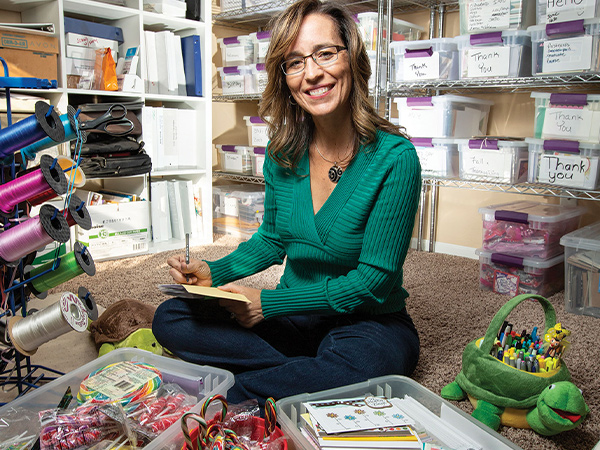
Brain cancer survivor Lanette Veres started the Gray Matters Foundation, a nonprofit that provides encouragement to brain tumor patients through gift packages and cards. Read Lanette's story and the stories of other cancer survivors.
Learn More
Learn about physician-scientists and cancer researchers like Fellow of the AACR Academy Lewis C. Cantley, PhD, who are driving progress against cancer.
Learn More