Immunotherapy Approved for Platinum-resistant Gynecologic Cancers
Pembrolizumab plus paclitaxel, with or without bevacizumab, was approved for PD-L1-positive ovarian, fallopian tube, and peritoneal cancers.
The U.S. Food and Drug Administration (FDA) has approved pembrolizumab (Keytruda) as well as pembrolizumab and berahyaluronidase alfa-pmph (Keytruda Qlex) in combination with paclitaxel—with or without concurrent bevacizumab (Avastin)—for treating platinum-resistant epithelial ovarian, fallopian tube, or primary peritoneal cancer in adult patients who have received one or two prior systemic therapies and whose tumors have been confirmed to express PD-L1.
An FDA-authorized immunohistochemistry test for confirming PD-L1 expression in epithelial ovarian, fallopian tube, or primary peritoneal carcinoma was also approved.
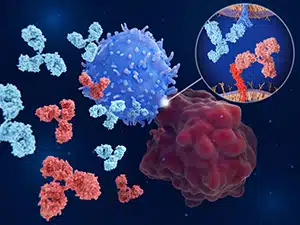
Both pembrolizumab and pembrolizumab and berahyaluronidase alfa-pmph belong to a class of immunotherapies called immune checkpoint inhibitors. Pembrolizumab, a monoclonal antibody, prevents suppression of T-cell activity by binding to PD-1 on T cells and preventing it from binding to the PD-L1 and PD-L2 receptors on tumor and other cells. Berahyaluronidase alfa-pmph is an enzyme that allows for subcutaneous, rather than intravenous, delivery of pembrolizumab. The chemotherapy paclitaxel is a taxane, which targets rapidly dividing cells, and bevacizumab is a monoclonal antibody that aims to prevent the formation of new blood vessels in the tumor microenvironment.
This new indication for pembrolizumab expands the number of approved immunotherapy options for gynecologic cancers, and it offers patients who develop resistance to the standard-of-care platinum chemotherapy a new treatment option. Previously, the only other immune checkpoint inhibitor approved for a gynecologic cancer was dostarlimab (Jemperli), indicated in combination with carboplatin and paclitaxel for patients with advanced or recurrent endometrial cancer.
The approval of pembrolizumab was based on the results of the multicenter, randomized, double-blind, placebo-controlled, phase III KEYNOTE-B96 clinical trial. The trial enrolled 643 participants with platinum-resistant cancer of the ovary, fallopian tube, or the peritoneum who had received one or two prior lines of systemic therapy, at least one of which must have been platinum-based chemotherapy. All patients had experienced disease progression within six months of completing prior systemic therapy. Participants were randomly assigned on a 1:1 basis to receive either pembrolizumab plus paclitaxel or placebo plus paclitaxel; in both arms, some patients received bevacizumab while others did not.
Efficacy was evaluated in the population of 466 patients with confirmed PD-L1 expression in their tumors. After a maximum 27 months of follow-up, the median progression-free survival was 8.3 months among patients in the pembrolizumab arm and 7.2 months in the placebo arm—a statistically significant 28% decrease in the risk of cancer progression or death for those treated with pembrolizumab. The median overall survival was also significantly higher in the pembrolizumab arm (18.2 months) than it was in the placebo arm (14 months), representing a 24% reduction in the risk of death from any cause.
The recommended dosage of pembrolizumab is an infusion of 200 mg every three weeks or 400 mg every six weeks. Subcutaneous pembrolizumab and berahyaluronidase alfa-pmph may be administered in lieu of pembrolizumab infusion at a dose of either 395 mg of pembrolizumab with 4,800 units of berahyaluronidase alfa-pmph every three weeks or 790 mg of pembrolizumab with 9,600 units of berahyaluronidase alfa-pmph every six weeks. Regardless of whether pembrolizumab or pembrolizumab and berahyaluronidase alfa-pmph is used, treatment should be administered until disease progression or unacceptable toxicity for a maximum of 24 months.
Cancers of the ovary, fallopian tube, and peritoneum (the membrane that covers the abdominal wall) form in the epithelial cells lining these tissues. As cancers that start in the same type of tissue, they can be treated with similar therapeutic regimens. According to federal statistics, it was estimated that 20,890 individuals would be diagnosed with ovarian cancer and 12,730 patients would die of the disease in the United States in 2025.
The FDA rendered its decision on February 10, 2026. Check this resource for updated information on all therapeutics regulated by the FDA.