
March 12: The Week in Cancer News
Lung cancer screening recommendations expand to include more smokers, and more news of the week from Cancer Today.

Lung cancer screening recommendations expand to include more smokers, and more news of the week from Cancer Today.
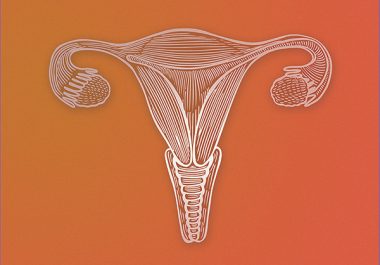
A patient advocate and researcher argue that the U.S. has set insufficiently ambitious cervical cancer screening goals, and more news of the week from Cancer Today.

Nonprofits provide support to young cancer patients in need of fertility preservation, and more news of the week from Cancer Today.
Organizations call to prioritize cancer patients for COVID-19 vaccination, researchers analyze rates of “low-value” breast surgeries, and UCLA cancer survivors write letters to patients undergoing treatment.
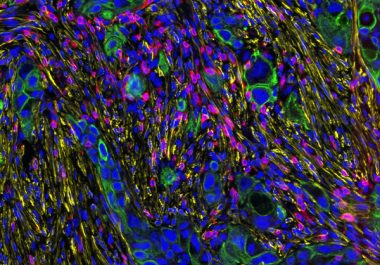
The first AACR virtual meeting of 2021, held Jan. 11-12, focused on the tumor microenvironment, the complex framework of immune cells, blood vessels, fibroblasts, and other cell types that surround a tumor and can...

An FDA committee votes to recommend holding off on approval of an immunotherapy for early-stage triple-negative breast cancer, and more news of the week from Cancer Today.
Trial results raise questions about two immune checkpoint inhibitors approved for treatment of some people with advanced breast cancer.

Fecal transplants may improve immunotherapy responses, and more news of the week from Cancer Today.

Increasing representation in the biomedical workforce would have many benefits, including reducing implicit biases and cultural incompetency in the treatment of minority patients with cancer, as well as ensuring the inclusion of diverse perspectives and enhancing innovation and creativity in cancer research.

Advocates are asking that cancer patients be prioritized for COVID-19 vaccination, and more news of the week from Cancer Today.

AACR Fellow Lewis C. Cantley, PhD, leads a national effort targeting triple-negative breast cancer and ovarian cancer with a novel drug combination.
Learn More