Being a Statistic of One
Elise Tedeschi inspires others to fight despite the odds.
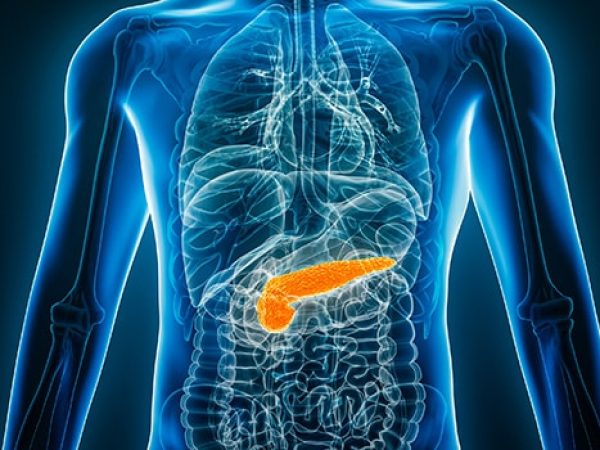
On January 5, 2012, my life changed in an instant. At 43 years old, I was diagnosed with stage 4 inoperable pancreatic ductal adenocarcinoma. I had a 7 cm tumor wrapped around my superior mesenteric artery, and the cancer had already spread to my liver, chest, and lungs. My oncologist reluctantly told me that most people in my condition did not survive longer than nine months.
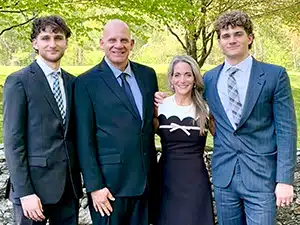
I was in complete shock. I had been married to my husband for 11 years, and our two boys were just in kindergarten and second grade. I just couldn’t imagine not being there for them and seeing them grow up.
I quickly learned that pancreatic cancer was one of the deadliest cancers, with very few long-term survivors. But I also learned something else: statistics are not guarantees. My doctor told me, “You are a statistic of one.” I decided I was going to fight with everything I had.
I went through 12 rounds of FOLFIRINOX chemotherapy, which was even stronger back then than it is today. I endured 25 rounds of radiation while attached to a continuous 24/5 chemotherapy pump. The treatments were brutal, but I kept going. I continued working, raising my children, and trying to hold onto hope, even on the hardest days.
Then, on October 4, 2012, I heard the words that changed everything again: “No active cancer detected.”
Shortly afterward, I underwent a cutting-edge surgery called irreversible electroporation (IRE), or NanoKnife surgery, to remove my primary tumor, which still had vascular involvement. It was an aggressive and risky approach, but it gave me another chance at life. In addition, I did four months of post-surgery chemotherapy.
Today, more than 14 years later, I remain cancer-free.
My journey transformed me in ways I never expected. Cancer taught me to live with my eyes wide open and showed me the importance of hope, resilience, research, and advocacy. It also revealed how desperately patients need better information, better treatments, and stronger patient voices at the table.
Since my diagnosis, I have completely changed my career by supporting and advocating for others facing pancreatic cancer. I have spoken publicly about survivorship, mentored patients and families, and worked alongside researchers, physicians, and biotech companies to help improve outcomes for future patients. Along the way, I have been honored to contribute in several advocacy and research roles, including being selected for the American Association for Cancer Research (AACR) Scientist↔Survivor Program in both 2025 and 2026; serving on the National Cancer Institute (NCI) Gastrointestinal Steering Committee Pancreatic Task Force; participating as an ad hoc grant reviewer for the Department of Defense Congressionally Directed Medical Research Programs (CDMRP) Programmatic Panel; and serving as a Patient Advocacy Author for the American Society for Radiation Oncology (ASTRO) Pancreatic Cancer Guideline Task Force.
I am living proof that statistics do not get the final say. My story is not just about surviving pancreatic cancer—it is about refusing to give up, even when the odds say otherwise.
Editor’s note: Elise is an alumnus of the AACR Scientist↔Survivor Program®. This special educational program is held during the AACR Annual Meeting. It is designed to build enduring partnerships among the leaders of the scientific, cancer survivor, and patient advocacy communities worldwide. Learn more about the AACR Scientist↔Survivor Program®.
Whether you are a patient, survivor, caregiver, or loved one touched by cancer, your story can have an enormous impact. You can provide hope and inspiration to someone recently diagnosed with cancer or a patient undergoing therapy.
SHARE YOUR STORY
Learn about physician-scientists and cancer researchers like Fellow of the AACR Academy Lewis C. Cantley, PhD, who are driving progress against cancer.
Learn More
There are many ways in which you can lend your talents to support lifesaving research. Learn how you can become an advocate for cancer research, participate in events to raise awareness, volunteer your time, and share your story of how cancer has affected your life.
Get Involved