From Lived Experience to Research Impact
Victoria (Tori) Lee and Patty Spears discussed their experiences as patients and how the AACR Scientist↔Survivor Program® empowers patient advocates to propel progress in cancer science and medicine.
What happens when lived experience meets scientific discovery? For patient advocates Tori Lee and Patty Spears, the answer is a deeper understanding of cancer research, stronger connections with fellow advocates and scientists, and new opportunities to make a difference for people affected by cancer.
Tori, a pediatric cancer survivor diagnosed with acute lymphoblastic leukemia at age five, underwent intensive chemotherapy, cranial radiation, and ultimately chimeric antigen receptor (CAR) T-cell therapy through a clinical trial. Now 13 years cancer-free, she is passionate about clinical trial advocacy, advanced cellular and gene therapies, and ensuring that the voices of pediatric patients are heard in research and treatment decisions.
Patty, a 26-year breast cancer survivor and four-year liver cancer survivor, also has firsthand experience with clinical research. After exhausting available treatment options for her breast cancer in 1999, she traveled from North Carolina to Seattle to participate in a vaccine clinical trial. That experience helped shape her longstanding commitment to research advocacy, particularly clinical trials and the basic science that makes future treatments possible.
Their paths converged through the American Association for Cancer Research (AACR) Scientist↔Survivor Program® (SSP), an educational program that connects patient advocates with cancer researchers and clinicians to foster mutual understanding and collaboration.
For Patty, who first participated in SSP in 2007, the program has been a valuable resource throughout her advocacy journey. Having participated four times, as both an advocate and an advocate mentor, Patty appreciates how the program deepens advocates’ understanding of science and helps them strengthen their skills. As she explained to Tori, SSP allows advocates to learn the science, return home to apply what they have learned, and continue building their expertise.
That opportunity is especially meaningful for advocates like Tori, who are still developing their roles in the research community. “I’m fairly novice in the advocacy role. I’ve done a lot, but I am just a student still,” Tori reflected. For her, SSP offers the chance to learn from different experiences and perspectives while exploring how her own experience can inform research and science policy.
Their conversation also illustrates why these connections matter. Tori and Patty discussed patient-reported outcomes (PROs), which capture patients’ perspectives on their symptoms, functioning, and quality of life. Patty said that while PROs are mostly collected during clinical trials, she is interested in bringing PROs into routine clinical care so patients’ voices can help inform their care. Tori noted that although she never filled out PROs during the clinical trials she participated in, she has reported her lived outcomes for survivorship programs. However, she emphasized the importance of addressing gaps in survivorship research by capturing information like the mental health effects of childhood cancer and the long-term consequences of treatment. These discussions demonstrate how scientific education and the exchange of lived experiences can help advocates and scientists identify unanswered questions, articulate patient priorities, and contribute to conversations about research and care.
For those beginning their advocacy journey, Patty offered practical advice: “start local and make those connections,” build relationships, and embrace opportunities to learn such as the AACR SSP. Tori echoed that message, encouraging new advocates to learn from the lived experiences of others and allow those perspectives to guide their work.
Through SSP, advocates gain more than scientific knowledge. They build relationships, develop confidence, and discover new ways to contribute to cancer research. As Tori and Patty demonstrate, when advocates and scientists learn from one another, lived experience becomes an essential tool to advance research that better reflects and serves the needs of people impacted by cancer.
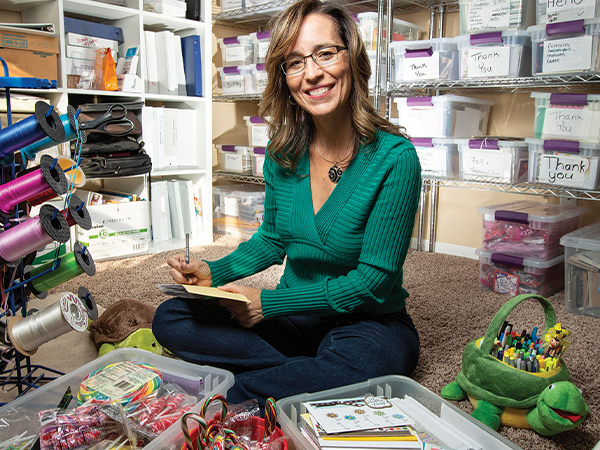
Brain cancer survivor Lanette Veres started the Gray Matters Foundation, a nonprofit that provides encouragement to brain tumor patients through gift packages and cards. Read Lanette's story and the stories of other cancer survivors.
Learn More
Learn about physician-scientists and cancer researchers like Fellow of the AACR Academy Lewis C. Cantley, PhD, who are driving progress against cancer.
Learn More