Immunotherapy Approved in Combination With Chemotherapy for Certain Gastric Cancers
Durvalumab was approved as neoadjuvant and adjuvant treatment with chemotherapy for resectable gastric or gastroesophageal junction cancer.
The U.S. Food and Drug Administration (FDA) has approved durvalumab (Imfinzi) as a neoadjuvant and adjuvant therapy with fluorouracil, leucovorin, oxaliplatin, and docetaxel for adults with resectable gastric or gastroesophageal junction adenocarcinoma (GC/GEJC).
As a type of immunotherapy known as an immune checkpoint inhibitor, durvalumab, a monoclonal antibody, binds to the human programmed death ligand-1 (PD-L1), which tumor and normal cells can express in inflammatory environments to regulate immune activity. Blocking PD-L1 from interacting with the PD-1 and CD80 proteins on T cells prevents the suppression of those T cells.
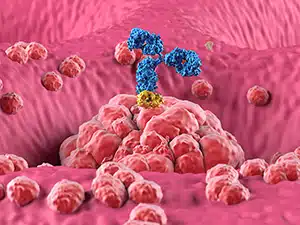
Other immune checkpoint inhibitors, including nivolumab (Opdivo) and pembrolizumab (Keytruda), are approved to treat unresectable or metastatic GC/GJEC tumors that express PD-L1. The new approved indication for durvalumab expands immune checkpoint therapy to patients with resectable disease.
The approval was based on results from the double-blind, placebo-controlled, multicenter phase III MATTERHORN clinical trial. Patients were eligible if they had previously untreated, resectable GC/GEJC ranging from stage 2 to stage 4A. All 948 patients received chemotherapy treatment with fluorouracil, leucovorin, oxaliplatin, and docetaxel, and researchers randomly assigned them 1:1 to receive either a placebo or durvalumab with the chemotherapy.
Compared with patients in the placebo arm, those receiving durvalumab were 29% less likely to have experienced disease recurrence, disease progression, or death during the 31.5 median months of follow-up. More than half of patients in both arms were still living at the time of follow-up, but patients in the durvalumab arm experienced a significant improvement in overall survival, as they were 22% less likely to have died at the time of follow-up than their counterparts in the placebo arm. The pathological complete response rate was significantly higher in the durvalumab arm at 19.2% than in the placebo arm at 7.2%.
The recommended dose of durvalumab depends on patients’ body weight.
- For those with a body weight ≥30 kg: Both neoadjuvant and adjuvant treatment should be administered as 1,500 mg every four weeks alongside chemotherapy for up to four cycles. Adjuvant therapy should then continue as 1,500 mg of single-agent durvalumab every four weeks for up to 10 cycles.
- For those with a body weight <30 kg: Both neoadjuvant and adjuvant treatment should be administered as 20 mg/kg with chemotherapy every four weeks for up to four cycles. Adjuvant therapy should then continue as 20 mg/kg of single-agent durvalumab every four weeks for up to 10 cycles.
Treatment should continue until disease progression, recurrence, unacceptable toxicity, or a maximum of 12 cycles after surgery.
Gastric cancer, also known as stomach cancer, forms in the cells of the stomach lining, whereas gastroesophageal junction cancer forms in the cells in the region where the stomach and esophagus meet. The National Cancer Institute estimated that 30,300 individuals would be diagnosed with stomach cancer and 10,780 patients would die of the disease in the United States in 2025. From 2016 to 2021, the researchers identified 17,959 cases of gastroesophageal junction cancer and 65,899 cases of gastric cancer in SEER data.
The FDA rendered its decision on November 25, 2025. Check this resource for updated information on all therapeutics regulated by the FDA.