Eye on AI: AI Agents as Doctors’ Deputies in the Cancer Clinic
The truism that two heads are better than one has proven itself time and again, serving as the basis for everything from dynamic duos (the Curies, Lennon and McCartney, Ben and Jerry) to the statistical superiority of the “Ask the Audience” lifeline on the game show “Who Wants to Be a Millionaire?” With the tradition of tumor board meetings, which bring together a wide array of cancer specialists from different subfields to discuss complex cases, oncologists make frequent use of combined brainpower to ensure that patients’ treatments are guided by as much context as possible.
But with the dawn of agentic artificial intelligence (AI)—the AI-powered tools that can complete tasks on their own—the potential for contextualized treatment is greater than ever before. Empowered to process clinical data, model drug-tumor dynamics, and scan the literature for high-similarity comparison cases, AI agents are being designed to serve as context delivery machines for the oncologists who decide which treatment course to recommend.
Oracular Oncology: AI Agents for Clinical Decision-making

A professor of surgery and the endowed director of AI research at Vanderbilt University Medical Center, where he also serves as founding director of the Molecular AI Initiative, Tae Hyun Hwang, PhD, received an AACR Innovation and Discovery Grant in 2024 for his work on AI-driven analysis of the tumor microenvironment in gastric cancer. But the rapid advancements in AI in the intervening years have allowed Hwang to dramatically expand the analytic capabilities of his lab—to the point that his current work aims to give oncologists the most contextualized guidance possible for treatment options across all cancer indications.
This new agentic AI project—which Hwang presented at the AACR Annual Meeting 2026 during the session, “Agentic AI as the Oncologist: Clinical Decision Support and Human-AI Collaboration”—has developed nearly as rapidly as the technology undergirding it.
“A year before the Annual Meeting in San Diego, this idea did not exist,” he said. But the explosion of advances in AI generally and agentic AI in particular enabled him to develop a veritable orchestra of coworking agentic AIs.
Hwang’s system processes patient tumor data by using four discrete agentic AI platforms, each of which flows into the next:
- Cartographer, which begins from the patient’s stained histopathology images (diagnostic or archival) and assembles candidate therapeutic options for the cancer by integrating the inferred tumor biology with standard-of-care guidelines, off-label evidence, and investigational agents in active clinical trials;
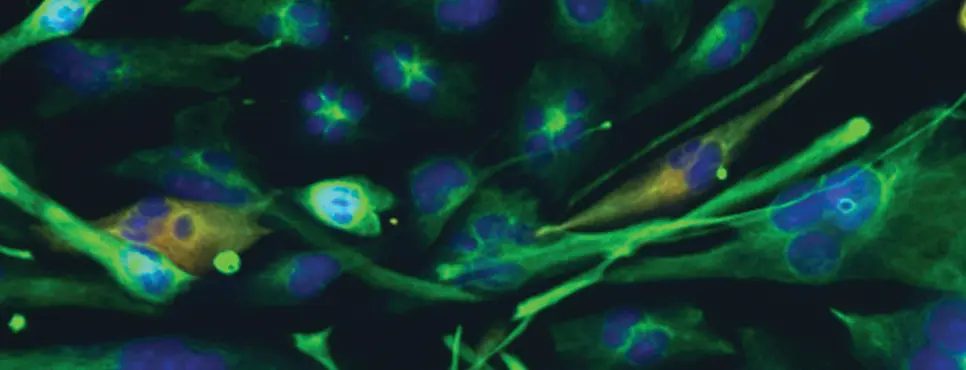
- Witness, which observes how candidate drugs act in patient-derived models—cells, organoids, and live tissue—by capturing drug uptake, cytotoxic activity, and other responses to visualize drug action directly;
- Scout, which models a tumor’s likely metastatic trajectory and how the candidate therapies may influence that spread; and,
- Terrain, which integrates these threads into a unified view of the patient’s tumor from spatial multimodal data—the microenvironment, clonal architecture, genomic programs, and tissue structure—and convenes the “virtual tumor board” that brings human and AI assessments together.
As the culminating agent in the series of agents, Terrain targets a challenge with cancer treatment that Hwang abhors: the prospect of wasted time.
“Knowing how the tumor is structured has critical implications for treatment’s effectiveness, and Terrain aims to provide an understanding of that up front,” said Hwang. “Far better to know ahead of time that clinicians will need to deal with something like abnormal vasculature than to play catch-up in figuring out why a drug isn’t going where it needs to go.”
Terrain’s virtual tumor board also provides additional context by creating a panel that features not only the input of human oncologists’ assessment of the case, but also the input of agentic AI “oncologists” that have been trained on particular elements of the cancer literature (there’s even an agentic oncologist dedicated to analyzing clinical trial information to look for similar disease presentations or new and ongoing trials).
The system’s principal function, according to Hwang, is taking guesswork out of oncology. Cartographer, Witness, Scout, and Terrain aim to provide oncologists with maximally data-informed estimates for what may and may not work for a given patient, Hwang said.
“I hate guessing,” he said. “We have all of this actionable information that we can get from patients thanks to research that has already been done. Evaluating all of it completely when you have a limited window of opportunity to decide how to treat—that’s always been a challenge. But now, AI gives us the power to look through nearly everything. So why guess?
“We built this system because we want to minimize missed opportunities in cancer care. We feed the agents the standard clinical data from patients—biopsy data, histopathology, their general health information, etc.—and we can see, ‘oh, this patient is very likely to express a particular protein that responds well to targeted therapy in clinical trials, so we should order an immunohistochemistry test to confirm that,’” Hwang said. “And then that test can give us even more information, which translates to higher confidence. The point of the system is to provide critical context and evidence for better treatment decisions.”
Agentic AI’s Helping Hand in Personalizing Cancer Care
Hwang also hopes that his team of agents can provide a basis for the scaling of personalized approaches to cancer care.
“Of course we have important guidelines in cancer care, but those are population-level and impersonal,” he said. “Patients wondering about their personal diagnoses now commonly turn to Google or ChatGPT: ‘which drug should I get? What’s the therapy that will work for me?’ Understandably, they want to get ahead of their cancer by starting treatment as fast as possible and with the greatest likelihood of success.
“Obviously, clinicians can’t act on ChatGPT inquiries that patients have done themselves at home, even if they’ve wound up identifying promising clinical trials or therapies. That’s not a basis for care. But our system is designed to answer this very question that the patient is asking while, at the same time, providing oncologists with evidence they can point to—which is critical for making decisions in the U.S. health care system.”
As for how long it may take before a system like Hwang’s sees use in the clinic, he cannot say for sure—but he both believes and hopes that testing for the platform is not too far away.
“It’s not a question of whether we have the technology. That exists right now. But, as with any new technology, even ones that develop very quickly, there are regulations and procedures for setting up rigorous testing and trials,” said Hwang.
Ultimately, Hwang said, AI agents offer an opportunity to maximize what information can do for cancer patients.
“I am always building with a central goal: Get the best information and the best technology to patients right now,” he said. “That’s how I’d want my family to be treated, and that’s what I want to provide for everyone. So we’re hopeful that this series of AI agents, which was built with clinical application in mind, can slot very easily into the existing infrastructure that oncologists use right now.”
AACR Annual Meeting sessions are available for virtual viewing for all registered attendees through October 2026.