What to Know About the New FDA-approved Sunscreen Ingredient Bemotrizinol
For the first time in over 25 years, people in the United States will soon have a new option of over-the-counter sunscreen. The U.S. Food and Drug Administration (FDA) announced that it has added bemotrizinol, a compound long used in sunscreens in Europe and Asia, to the permitted list of U.S. sunscreen active ingredients for adults and children 6 months and older.
“I am so excited we now have access to bemotrizinol,” said melanoma expert Ashani T. Weeraratna, PhD, who is the Bloomberg Distinguished Professor of Cancer Biology at Johns Hopkins Bloomberg School of Public Health and a member of the Board of Directors for the American Association for Cancer Research (AACR). “I no longer have to stock up on sunscreen in Europe,” she jokingly added.
Exposure to ultraviolet (UV) radiation from the sun can damage the DNA in skin cells and lead to the development of skin cancer, including basal cell carcinoma, squamous cell carcinoma, and melanoma. In fact, UV radiation has been found to account for 92% of melanoma cases—which is the most aggressive type of skin cancer—as well as 4.6% of cancer cases overall, according to the AACR Cancer Progress Report 2025. The National Cancer Institute estimates that 112,000 people will be diagnosed with melanoma in the United States in 2026, and about 8,510 will die from this cancer.
The use of a broad-spectrum sunscreen is one of the recommended actions people can take to reduce the risk of skin cancer. But how does this new sunscreen ingredient compare to what is currently available in the United States? Which options offer the most protection? And what else should people know when it comes to sunscreen? Cancer Research Catalyst spoke with Weeraratna to learn more about bemotrizinol.
Does Bemotrizinol Work Differently From Other Sunscreen Ingredients?
Bemotrizinol is now the third sunscreen active ingredient that the FDA considers generally recognized as safe and effective (GRASE), a regulatory designation that indicates an ingredient can be used without the need for additional testing. The other two GRASE sunscreen ingredients are zinc oxide and titanium dioxide. While sunscreens can include another 12 ingredients, such as chemical filters like oxybenzone and avobenzone, the FDA has stated that more data are needed to understand their long-term safety risks.
Weeraratna explained that zinc and titanium dioxide are physical blockers that create a reflective barrier that directs the sun’s rays away from the body before they can penetrate the skin. Meanwhile, bemotrizinol remains on the upper layer of the skin and acts by essentially disrupting UV.
“A simple way to explain how bemotrizinol works without going into chemical reactions is that it can convert the UV rays into heat that quickly dissipates,” Weeraratna said.
Is Bemotrizinol Safer Compared to Other Sunscreen Ingredients?
Some concern about the safety of sunscreens was raised in 2019 after researchers from the FDA published a study that found certain chemical sunscreen ingredients (avobenzone, oxybenzone, octocrylene, ecamsule) were absorbed into the bloodstream. Weeraratna, however, explained that these results were not as concerning as they may sound.
“While the study found that those chemicals were absorbed into the bloodstream at levels exceeding the FDA’s threshold for waiving additional safety testing, it’s important to remember that just because it’s in the bloodstream, doesn’t mean it is harmful,” Weeraratna said. “And the FDA has not stopped recommending sunscreens with these ingredients because no real-world harm has been reported.”
With that said, Weeraratna explained how bemotrizinol’s large molecular size means it has minimal skin penetration, which makes it much less likely to enter the bloodstream compared to smaller chemical filters.
“If people are worried about absorption into the bloodstream, I hope this property of bemotrizinol means more people will use sunscreen,” Weeraratna said. “More generally, while it’s natural to have concerns about ingredients, don’t let those worries stop you from protecting your skin altogether. Ultimately, the best sunscreen is simply the one you’ll actually wear regularly.”
Weeraratna added that other benefits of bemotrizinol include the fact it remains photostable, so like most modern sunscreen ingredients, it doesn’t break down into potentially problematic byproducts in sunlight. Further, it tends to be gentler on sensitive skin and is less likely to cause allergic reactions compared with some other chemical filters.
Does Bemotrizinol Offer Better Protection?
The most effective sunscreens are broad spectrum, meaning they protect against both UVA rays (which contribute to skin aging and wrinkling) as well as UVB rays (which are more likely to cause sunburn). While zinc oxide can protect against both, it can leave a chalky residue on the skin, and titanium dioxide only protects against UVB and some wavelength bands of UVA rays. That is why most sunscreens in the United States need to combine multiple chemical filters to be considered broad-spectrum options. Bemotrizinol, on the other hand, has been found to protect against both types of UV radiation.

Additionally, Weeraratna explained that bemotrizinol can also stabilize other less photostable ingredients, which makes it easier to combine with other ingredients to make it more effective. Bemotrizinol also feels lighter than some other ingredients, like zinc oxide, and is very efficient even at low concentrations.
“While bemotrizinol provides better protection, it is important to note that as with every sunscreen you still need to reapply at least every two hours to ensure it is effective,” Weeraratna said.
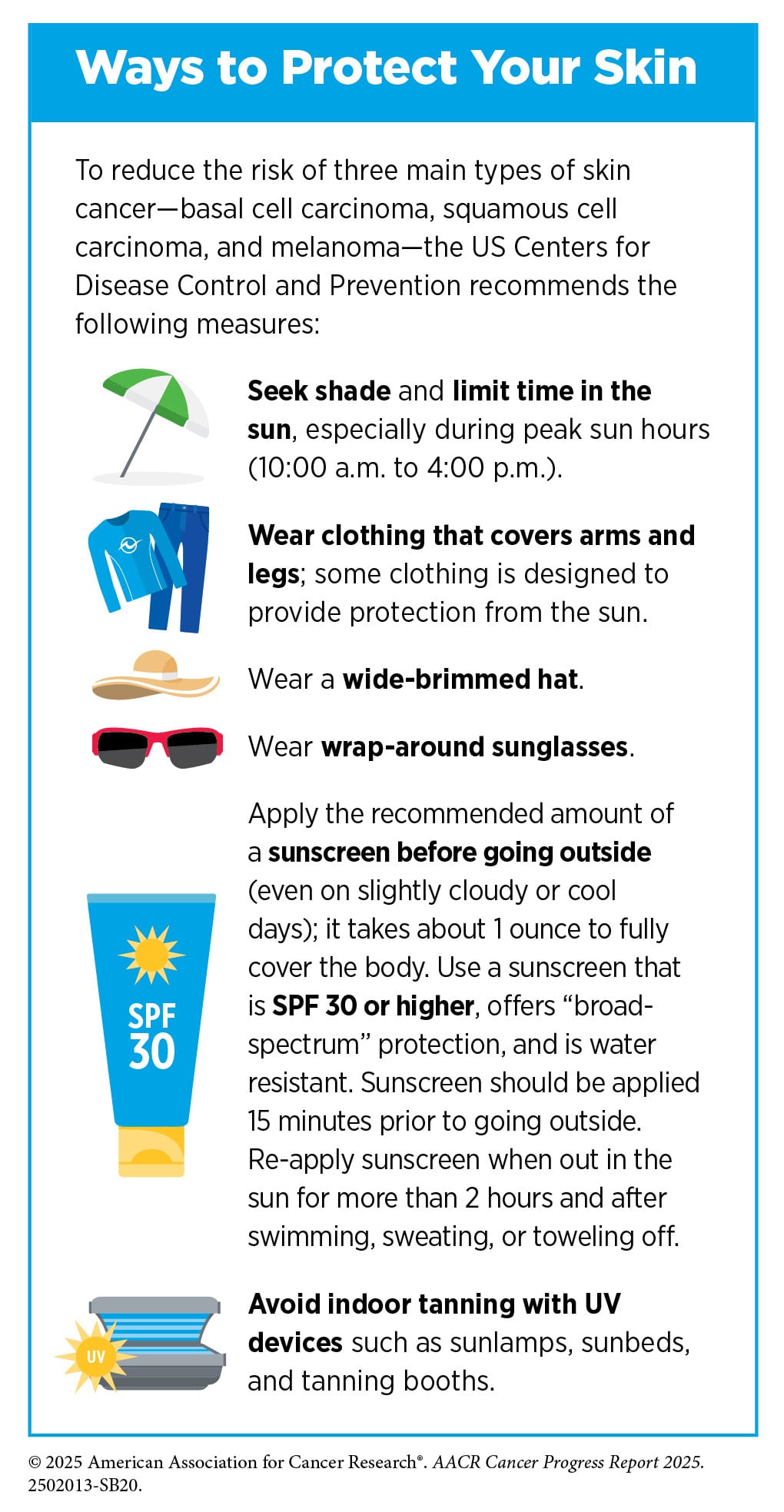
Besides checking if a sunscreen is broad-spectrum, Weeraratna also advised that people look at the sun protection factor (SPF) and use sunscreens that are at least SPF 30. For anyone specifically looking for bemotrizinol-based sunscreens, the first product in the United States is not expected to be available until later this year.
What Else Should People Consider About Sunscreen Use?
The two most common things Weeraratna sees people misunderstand about sunscreen use are how much to use and how often they need to use it.
“You should apply at least a shot glass full of sunscreen for your arms, torso, and legs and reapply every two hours or more if you are swimming or sweating,” she explained.
That also includes applying sunscreen on cloudy days. According to the to the AACR Cancer Progress Report 2025, up to 80% of harmful UV rays can penetrate clouds, so it is recommended people protect their skin anytime they are outside.
“Skin cancer is a real and common threat, and we know for certain that regular sunscreen use prevents it,” Weeraratna said. “The benefits of wearing sunscreen far outweigh any theoretical risks from its ingredients.”
So, this summer, whether it is sunny or not during your Juneteenth barbecue, 250th anniversary celebrations on this 4th of July, or any day you are out and about, make sure to wear sunscreen.