AACR-PCWG Across the Map: Researcher Spotlight
research
What are you most excited about with respect to your research?
What excites me most is knowing that every experiment brings us one step closer to developing better treatments for children with brain tumors. My greatest hope is that these discoveries will help prevent recurrence so that more of these children can live long, healthy lives.
What emerging opportunities might your laboratory or research program explore next?
Seeing the poor outcomes associated with metastatic medulloblastoma has inspired my laboratory to expand into this area of research. Our goal is to uncover the biological mechanisms that drive metastatic disease and translate those discoveries into therapies that offer children with metastatic brain tumors better treatment options.
vision
What would you want policymakers or funders to understand about the state of pediatric cancer research today?
Too often, the rarity of pediatric cancers is mistaken for a lack of urgency. Although many children with medulloblastoma are cured, nearly 30% will still die from their disease, and for those families, statistics offer little comfort. That 30% matters, and they deserve the same commitment to research, innovation, and new therapies as patients with any other cancer.
What are the main challenges that remain to be addressed in your field, and how is your work helping to address them?
One of the major challenges in medulloblastoma research is that many experimental models fail to preserve the tumor microenvironment, limiting our ability to identify the non-cell-autonomous mechanisms that drive therapy resistance, relapse, and metastatic progression. My laboratory is developing and applying ex vivo and in vivo models that preserve the tumor microenvironment as faithfully as possible to uncover how interactions between tumor cells and their surrounding microenvironment promote relapse and metastasis, ultimately identifying new therapeutic opportunities for children with high-risk medulloblastoma.
What is one of the most important lessons you have learned during your scientific career?
One of the most important lessons I have learned is that failure is an essential part of science. Early in my career, I expected experiments to answer my questions. Instead, I learned that many experiments do not work, hypotheses turn out to be wrong, and projects often take unexpected directions. Rather than seeing those moments as setbacks, I have learned to treat them as opportunities to ask better questions and discover something I had not anticipated. Looking back, many of the most important advances in my research began with results that were not what I expected.
life
What is one interesting thing about you that nobody would guess?
One thing people might not guess about me is that I still think about biology through the lens of the French animated series Once Upon a Time… Life. The way it brought biological processes to life made complex mechanisms easy to visualize, and I still catch myself thinking about the series when I am trying to understand how tumor cells propagate and communicate with their microenvironment. I am now introducing the series to my daughter, hoping it will make biology just as intuitive and enjoyable for her as it was for me.
What is one unexpected way that your location opened an opportunity for you?
When I established my laboratory, there was not an established basic science community focused on brain tumors at my cancer center. That encouraged me to build collaborations with researchers from diverse fields, creating a two-way exchange of ideas that has shaped both my research and the questions we pursue together.
Biography
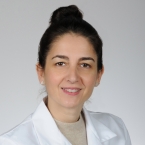
Dr. Jezabel Rodriguez Blanco is a faculty member at the Medical University of South Carlina Hollings Cancer Center. She received her PhD in Neuroscience from the University of Oviedo (Spain), where she investigated the mechanisms of cell death induced by oxidative stress in dopaminergic neuron models. As part of her doctoral training, she completed two visiting research appointments in the laboratory of Dr. Lloyd A. Greene at Columbia University (NY), where she further developed her expertise in ex vivo and in vivo neuroscience models. Seeking to apply her neuroscience background to cancer research, Dr. Blanco subsequently joined the laboratory of Dr. David J. Robbins at the University of Miami (FL), where she transitioned into cancer research, recognizing medulloblastoma as the ideal intersection between her training in neuroscience and Dr. Robbins’ expertise in developmental signaling.
Dr. Blanco established her independent laboratory in 2020, where her research focuses on understanding the mechanisms that drive medulloblastoma growth and relapse, while more recently expanding to the study of metastatic progression. Her laboratory integrates bioinformatic analyses with experimental approaches in cancer biology and neuroscience to identify therapeutic vulnerabilities in pediatric brain tumors. Among the major focuses of her current research is understanding how therapy-resistant progenitor cell populations and the tumor microenvironment cooperate to promote tumor recurrence. Her laboratory also develops novel therapeutic strategies for high-risk medulloblastoma, with recent discoveries advancing toward clinical translation.