New Kinase Inhibitor Approved for Certain Metastatic Breast Cancers
Gedatolisib received its first FDA approval for advanced HR-positive, HER2-negative breast cancer without mutations in PIK3CA.
The U.S. Food and Drug Administration (FDA) has approved gedatolisib (Revtorpyk) in combination with fulvestrant (Faslodex), with or without palbociclib (Ibrance), for adults with locally advanced or metastatic breast cancer that is hormone receptor (HR)-positive, human epidermal growth factor receptor 2 (HER2)-negative, and negative for a PIK3CA mutation following disease progression either during or after at least one line of endocrine therapy in the metastatic setting.
Gedatolisib is a kinase inhibitor that targets multiple components within the PI3K/AKT/mTOR (PAM) signaling pathway. Upregulation of the PAM pathway can drive tumor growth and is associated with resistance to endocrine therapy and CDK4/6 inhibition. Inhibitors of individual proteins within the PAM pathway are clinically available, but gedatolisib is the first FDA-approved inhibitor to target multiple proteins in the pathway as a strategy to reduce the risk of resistance. This is gedatolisib’s first FDA approval.
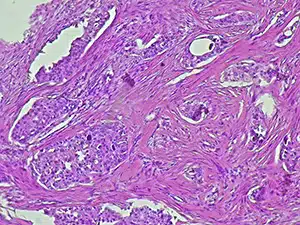
Fulvestrant is an endocrine therapy that blocks the hormone signaling that can drive HR-positive breast cancers, and palbociclib is a CDK4/6 inhibitor.
The approval was based on results from Study 1 of the open-label, randomized, multicenter trial phase III clinical trial, VIKTORIA-1. Study 1 enrolled 392 adults with locally advanced or metastatic, HR-positive, HER2-negative breast cancer that had wild-type PIK3CA and had progressed during or after prior treatment with a CDK4/6 inhibitor and an aromatase inhibitor. Patients had not received prior chemotherapy nor treatment with an inhibitor of the PAM pathway.
Patients were randomly assigned 1:1:1 to receive one of three treatment regimens: gedatolisib with fulvestrant and palbociclib (Arm A); gedatolisib with fulvestrant (Arm B); or fulvestrant alone (Arm C).
Compared with patients in Arm C, those in Arm A and Arm B had a 76% and 67% lower risk of disease progression of death, respectively, during the median follow-up of 10.1 months. Median progression-free survival was 9.3 months in Arm A, 7.4 months in Arm B, and 2 months in Arm C. Among patients with measurable disease, the objective response rate in Arms A and B was 32% and 28%, respectively, compared with 1% in Arm C. The median duration of response was 17.5 months in Arm A, 12 months in Arm B, and not estimable in Arm C.
These data were presented at the San Antonio Breast Cancer Symposium 2025, which is co-organized by the American Association for Cancer Research (AACR).
The recommended dosage for gedatolisib is a 30-minute intravenous infusion of 180 mg administered once a week for the first three weeks of every four-week cycle, in combination with fulvestrant and/or palbociclib. The combination regimen should continue until disease progression or unacceptable toxicity.
Breast cancer is the most commonly diagnosed non-skin cancer in women in the United States, and HR-positive, HER2-negative disease is its most common subtype, accounting for 70% of U.S. cases. According to federal statistics, it was estimated that 321,910 individuals would be diagnosed with female breast cancer and 42,140 patients would die of the disease in the United States in 2026.
The FDA rendered its decision on July 14, 2026. Check this resource for updated information on all therapeutics regulated by the FDA.