Driving CAR T-cell Therapy in New Directions
When the first chimeric antigen receptor (CAR) T-cell therapy was approved in 2017, it marked the start of a new path in cancer treatment. Now, with seven CAR T-cell therapies approved by the U.S. Food and Drug Administration (FDA), this treatment is firmly cemented within the cancer treatment landscape.
As discussed in a recent blog post, CAR T-cell therapy is an innovative form of immunotherapy that enhances the ability of the patient’s own immune cells to target cancer. While transformative for some patients, the benefits of this treatment approach remain out of reach for many patients due to reasons ranging from disease type to treatment costs and logistics. Fortunately, researchers continue to explore new, creative tactics to expand the impact of CAR T-cell therapy.
We spoke with CAR T-cell pioneer Carl H. June, MD, FAACR, of the University of Pennsylvania, to learn about the ongoing challenges facing CAR T-cell therapy and some of the latest approaches that strive to overcome these hurdles.
What Are the Limitations of CAR T-cell Therapy?
“The field has now outlined the main challenges facing CAR T-cell therapy,” said June. Among these, he added, is the issue of treatment resistance, which develops in more than half of patients whose cancers initially respond to CAR T-cell therapy.
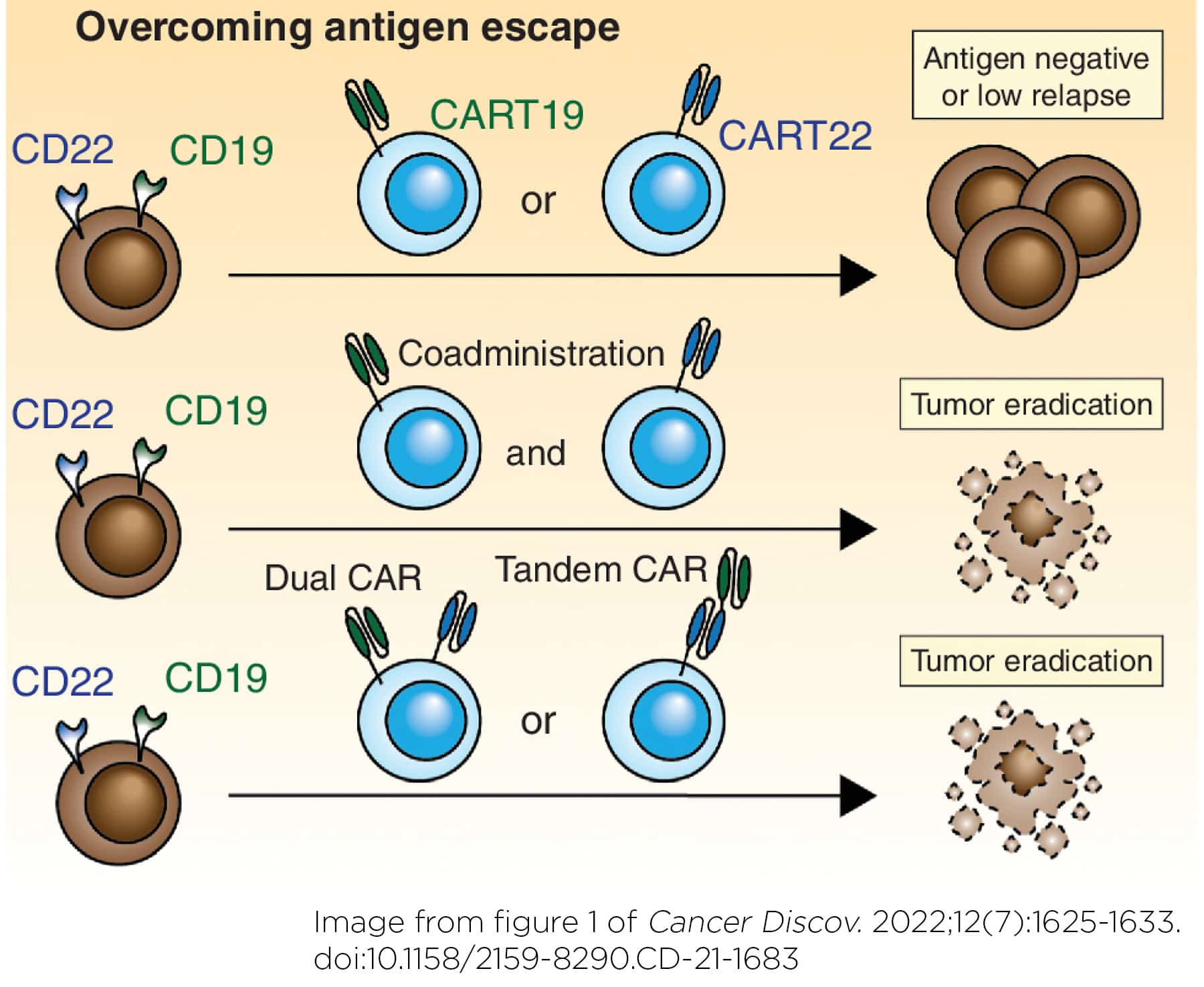
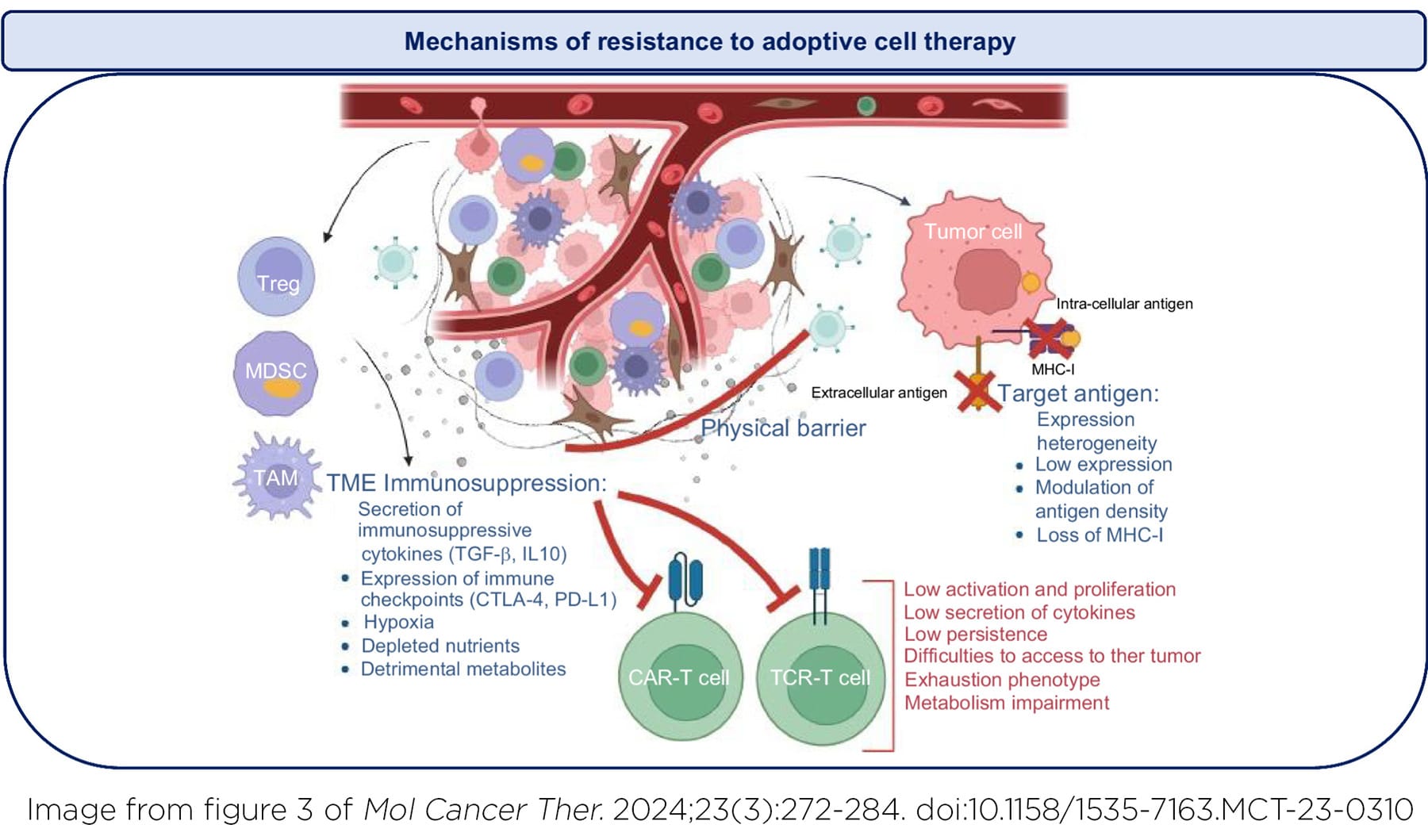
Resistance frequently occurs due to antigen escape, which is when cancer cells stop expressing the target antigen. When this happens, the CAR T cells designed to attack them can no longer carry out that function.

And while T-cell activation is beneficial, there is a delicate balance between activation and overactivation, the latter of which can, in essence, tire out the CAR T cells before they’ve completed their cancer-killing job. This is known as T-cell exhaustion and is another mechanism that commonly leads to treatment resistance.
An additional challenge is that the bespoke nature of currently available CAR T-cell therapies requires a complex manufacturing process that can take several weeks—weeks that patients with rapidly progressing cancers may not have. It also increases costs and requires specialized equipment and experts not available everywhere.
The limitations discussed above are relevant to both solid and blood cancers, but there are also some obstacles unique to the development of CAR T-cell therapy for solid tumors. Due to these hurdles, CAR T-cell therapy has been far less effective against these tumors, and, to date, no CAR T-cell therapies have been approved by the FDA for a solid tumor (although one was recently approved in China to treat certain gastric and gastroesophageal cancers).
One of the primary challenges in using CAR T cells to treat solid tumors is the hard-to-penetrate tumor microenvironment (TME) that surrounds these tumors and the immune-suppressing components therein that prevent CAR T cells from reaching and attacking cancer cells.
Another important challenge is the lack of optimal target antigens. Solid cancers tend to be heterogeneous—meaning different cells within the tumor express different antigens—so targeting any one antigen means that the therapy may not be effective against the cancer cells without this antigen. Plus, many of the proteins highly expressed by solid cancers are also expressed on healthy cells.
“We don’t have the dream antigens like we do in blood cancer,” said June. “In solid cancers, it looks like there are several targets that have to be targeted at one time.”
June, however, is optimistic that recent innovations, including new gene editing capabilities, the use of different immune cell types, and the development of off-the-shelf CAR therapies, could help break down these roadblocks.
Putting Off Bedtime: Using Gene Editing and Other Strategies to Prevent T-cell Exhaustion
To combat the issue of T-cell exhaustion, researchers, including June, are applying gene editing to keep CAR T cells “awake.”
“There are a number of genes that you can delete that then allow the cells to continue to function,” said June. “I’m excited now that we have the ability to do multiplex CAR editing so we can edit many genes at one time. I never thought that would be possible.”
June and team previously used CRISPR/Cas9 editing to delete three genes in CAR T cells, including the gene expressing the immune checkpoint protein PD-1. He is hopeful about the potential of newer technologies, such as base editing, to enable further progress.
Researchers are also devising ways to limit the extent of CAR T-cell activation to prevent the type of continuous activation that can induce T-cell exhaustion. The KIR-CAR, for example, is a different CAR design that mimics the regulatory system of the killer immunoglobulin-like receptor (KIR) of natural killer (NK) cells. Unlike traditional CARs, the antigen-binding and T cell-stimulating domains of KIR-CARs come together only upon antigen binding. This ensures that the T cell remains inactive until it encounters the target antigen.

The KIR-CAR approach was effective in preclinical models, and at the AACR Annual Meeting 2026, Janos L. Tanyi, MD, PhD, of the University of Pennsylvania, reported results that demonstrated its clinical potential as well. In a phase I clinical trial led by Tanyi, nine patients with advanced, treatment-refractory solid tumors were treated with the mesothelin-targeted SynKIR-110 therapy. Tanyi shared that five patients experienced disease control, and that one patient’s partial response was ongoing after more than three months of follow-up.
As another strategy to limit chronic CAR T-cell activation, a team of researchers led by Crystal Mackall, MD, FAACR, of Stanford University, recently reported self-regulating CAR T cells that shed their CAR shortly after activation. They developed these cells by taking advantage of a naturally occurring negative feedback process in which the enzyme ADAM17 cleaves the T-cell receptor to turn off chronic T-cell signaling and prevent harmful levels of inflammation. Mackall and colleagues identified a sequence of 15 amino acids that, when inserted into the CAR, allowed rapid ADAM17-mediated cleavage of the CAR after activation. In mice, this approach reduced exhaustion and improved the efficacy of the CAR T cells.
A different approach is to induce CAR shedding with drugs. In a recent study, Bruno Correia, PhD, of École Polytechnique Fédérale de Lausanne (EPFL) in Switzerland; Melita Irving, PhD, of the Ludwig Institute for Cancer Research in Switzerland; and colleagues designed a CAR that released its antigen-targeting domain upon exposure to the drug venetoclax (Venclexta), enabling the researchers to turn off CAR T-cell activation by administering venetoclax to CAR T-treated mice. The effect was reversible, as withdrawal of venetoclax led to reactivation of CAR T-cell activity.
Blocking the Escape Hatch: Multiple Targets to Overcome Antigen Escape
To keep CAR T cells functional even in the face of antigen escape, researchers are exploring ways to equip CAR T cells with the ability to target more than one antigen.
As one approach, researchers led by Anthony Kossiakoff, PhD, of the University of Chicago, have devised a system that enables CAR T cells to target a different antigen once the original one is lost. In this system, the extracellular portion of the CAR is an engineered protein called GA1 instead of an antigen-binding domain. The antigen-binding domain is administered separately and binds to GA1 inside the body to confer antigen-binding capability to the CAR T cell. In mouse models, this multicomponent design allowed the researchers to change which antigen the CAR T cells recognized simply by administering a different antigen-binding domain.
Another strategy is to incorporate a second antigen-binding domain—either through a tandem CAR or a dual CAR—to target multiple antigens simultaneously. This CAR design ensures that even if one target is lost through antigen escape, CAR T cells can retain their antitumor activity by targeting the second antigen. The tandem and dual CAR designs may also help circumvent antigen heterogeneity in solid tumors, which we will discuss in more detail below.
Timing is Everything: Shortening the Manufacturing Process
To make CAR T-cell therapy more widely accessible, researchers are exploring new strategies to shorten the prolonged, and costly, manufacturing time. One approach is to develop off-the-shelf therapies, which would be readily available to patients because they use cells from a healthy donor (also called allogeneic cells) to produce the therapy, instead of using a patient’s own (autologous) cells. Efforts to achieve an off-the-shelf CAR T-cell therapy, however, have been hindered by the patient’s immune system rejecting the donor cells or the donor cells attacking the patient’s healthy cells, the latter of which can cause life-threatening graft-versus-host disease (GvHD).
Researchers have explored using gene editing to remove genes that contribute to immune rejection or GvHD to prevent these issues. For example, Wensheng Wei, PhD, of Peking University in China, and colleagues recently deleted the signal peptide peptidase-like 3 (SPPL3) gene from CAR T cells to modify glycosylation on the cell surface. The altered glycosylation allowed allogeneic CAR T cells to escape recognition by the host immune system in mice. In a clinical trial, SPPL3-deleted CAR T cells led to responses in all nine patients with relapsed lymphoma who received the treatment, and no patients experienced dose-limiting toxicities or GvHD.
Researchers have also used gene editing to delete the gene that expresses the T-cell receptor from donor T cells since this receptor is known to contribute to GvHD. Alternatively, using cells whose T-cell receptors react to fewer antigens could help avoid GvHD without the need for gene deletion.
To this end, Lili Yang, PhD, of UCLA, and colleagues turned to a rare subset of T cells called invariant NK T (NKT) cells, whose T-cell receptors are less reactive and therefore less likely to induce GvHD. Because of the extremely low frequency of NKT cells in the body, isolating them from peripheral blood was not practical, so the researchers used stem cells derived from umbilical cord blood to generate off-the-shelf CAR-NKT cells. In preclinical models, the resulting cells were less toxic and less likely to induce GvHD or to be rejected by the host immune system than conventional allogeneic CAR T cells.
As researchers explore off-the-shelf therapies, they also continue to develop ways to improve manufacturing of autologous CAR T cells, with recent advances on the in vivo CAR T-cell generation front. In one approach, June and colleagues delivered into the patient’s body the genetic instructions to produce a CAR and demonstrated that CAR T cells could be generated inside the body without having to isolate the patient’s T cells and without needing to deplete the patient’s immune system prior to treatment. (Learn more about this research in a prior blog post.)
Breaking Down the Walls: Bypassing the TME of Solid Tumors
Unlike many hematologic malignancies, where cancer cells circulate throughout the blood or lymph, the cancer cells comprising solid tumors are embedded within a TME that can prevent CAR T cells from infiltrating.
To circumvent the TME, researchers are turning to varied strategies, including physically breaking down the TME to allow CAR T cells to pass through. June and colleagues, for example, have developed CAR T cells to eradicate cancer-associated fibroblasts (CAFs), which are key components of the TME. During the Opening Plenary Session of the AACR Annual Meeting 2026, June reported that administering CAF-targeted CAR T cells prior to cancer-targeted CAR T-cell therapy led to responses in mice whose tumors were otherwise not responsive to the therapy.
Researchers are also exploring the potential of hyaluronidase—an enzyme that digests components of the extracellular matrix—to break down the TME and facilitate CAR T-cell trafficking into solid tumors.
Beyond posing a physical barrier, the TME of solid tumors also suppresses immune activity through multiple mechanisms, leading to CAR T-cell dysfunction much more rapidly than occurs in blood cancers, June noted.
“We now have strategies to overcome these limitations. Those work really well in mice and are now underway in many trials in early stages,” he added.
Among these strategies is to use different types of immune cells, like NK cells or macrophages, that may be able to overcome some of the limitations of T cells. Recent advances are helping researchers home in on the immune cell populations best suited for this task. In one recent study, researchers led by Jennifer A. Foltz, PhD, of Washington University of St. Louis, and John B. Sunwoo, MD, of Stanford University, identified a subset of NK cells—CD39+/ CD49a+/CD103+ cytotoxic tissue-resident NK cells—that had enhanced ability to infiltrate into the TME of several solid tumors. Using this subset of NK cells for CAR-NK therapy in mice led to greater activity against solid tumors than when the CAR was inserted into other NK cells.
Another approach to overcome immune suppression in the TME is the armored CAR T cell, which equips cells with the ability to produce immune-modulating molecules to boost antitumor activity. In a study published last month in the AACR journal Cancer Research, researchers led by Yvonne Y. Chen, PhD, of the University of California, Los Angeles (UCLA), demonstrated the potential of armored CAR T cells for glioblastoma, an aggressive cancer type characterized by an immune-suppressing TME.
In this study, the researchers engineered T cells to not only express an antigen-directed CAR, but also to secrete the IL-12 cytokine and DR-18 (a modified version of the IL-18 cytokine designed to overcome inhibitory mechanisms). In mouse models, administration of IL-12/DR-18-armored CAR T cells induced reprogramming of tumor-associated macrophages from a protumor to an antitumor phenotype, increased T-cell infiltration into the TME, and led to tumor shrinkage of this often difficult-to-treat cancer type.
The Needle in the Haystack: An Optimal Target Antigen in Heterogeneous Solid Tumors
As we discussed earlier, tandem and dual CAR T cells can help overcome antigen escape due to their ability to target more than one antigen. These designs can also be useful for overcoming the tumor heterogeneity of solid tumors that makes identifying an appropriate target antigen challenging. The idea is that if different cells within the tumor express different antigens, then targeting multiple antigens with the same CAR T cell would allow the immunotherapy to attack more cells.
In support of this concept, June and colleagues have developed dual CAR T cells that target both EGF and IL-13 for glioblastoma, a disease characterized by high tumor heterogeneity. During his presentation at the AACR Annual Meeting Opening Plenary, June shared that these CAR T cells led to disease control in nine of 13 patients with recurrent glioblastoma enrolled in a phase I clinical trial.

Another hurdle to finding an optimal target antigen is that the proteins associated with solid tumor cells may also be commonly expressed by healthy cells. Therefore, targeting these proteins risks affecting healthy cells too, leading to what’s known as on-target, off-tumor toxicity. To address this challenge, researchers are developing logic-gated CARs that require two conditions—such as the presence of two target antigens, or the presence of one antigen and the absence of another—to be met before CAR T-cell signaling is activated. This allows researchers to more precisely target cancer cells and spare normal cells. that require two conditions—such as the presence of two target antigens, or the presence of one antigen and the absence of another—to be met before CAR T-cell signaling is activated. This allows researchers to more precisely target cancer cells and spare normal cells.
June is also using artificial intelligence (AI) and large language models (LLMs) to identify promising target antigens in solid tumors. In a recently published study, June and colleagues reported that their LLM identified a protein called GPNMB (which stands for glycoprotein nonmetastatic melanoma protein B) as a promising target and showed that GPNMB-targeting CAR T cells effectively treated skin and colorectal tumors in mice.
As exemplified by the many new and creative approaches discussed here, the journey of CAR T-cell therapy has just begun. Researchers continue to push the pedal on its potential, driving progress toward more effective, more durable, and more accessible iterations of this transformative therapy.