September is Thyroid Cancer Awareness Month
join with the aacr to find better ways to prevent and treat thyroid cancer
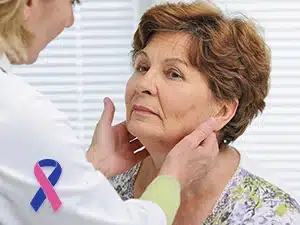
The thyroid is a butterfly-shaped gland at the base of the throat. The gland uses iodine, a mineral found in some foods and in iodized salt, to help make several hormones that control heart rate, body temperature, metabolism, and the amount of calcium in the blood.
It is estimated that 44,020 individuals will be diagnosed with thyroid cancer and 2,290 patients will die of the disease in 2025. The five-year relative survival rate for this type of cancer is 98.4%.
There are four main types of thyroid cancer: papillary thyroid cancer, follicular thyroid cancer, medullary thyroid cancer, and anaplastic thyroid cancer. Papillary thyroid cancer is the most common type, accounting for roughly 85% of all diagnoses.
Follicular thyroid cancer begins in follicular cells and usually grows slowly.
Medullary thyroid cancer develops in the thyroid’s C cells, which make a hormone called calcitonin that helps maintain calcium levels in the blood. This rare subtype may develop due to mutations in the RET gene, and about 25% of cases are inherited. About 90% of those with this mutation will go on to develop medullary thyroid cancer. Blood testing can usually detect the presence of this altered gene.
Anaplastic thyroid cancer is a very rare and aggressive type of thyroid cancer that usually affects those over age 60. This type of cancer grows and spreads quickly and is difficult to treat.
Exposure to radiation and a family history of thyroid issues are risk factors for thyroid cancer.
One Person’s Story
Treatment for thyroid cancer involved surgery, radiation, and medication for a young woman from Virginia. Read her story in Cancer Today magazine: A Personal Journey of Thyroid Cancer Treatment.
The latest on thyroid cancer
- Researchers are studying how molecularly targeted treatments can help physicians overcome evolving defensive techniques in thyroid cancer. Learn more on the AACR blog, Cancer Research Catalyst.
- Studies have indicated an increased risk of thyroid cancer among the police officers, firefighters, paramedics, and volunteers who responded to the destruction of the World Trade Center in 2001. To learn more about this association, see the AACR blog, Cancer Research Catalyst.
for more information
For more information on screening and treatment, please see the page on thyroid cancer.

Your gift helps the American Association for Cancer Research fund pioneering science that is saving lives every day.
Donate Now
There are many ways in which you can lend your talents to support lifesaving research. Learn how you can become an advocate for cancer research, participate in events to raise awareness, volunteer your time, and share your story of how cancer has affected your life.
Get Involved