Bile Duct Cancer (Cholangiocarcinoma)

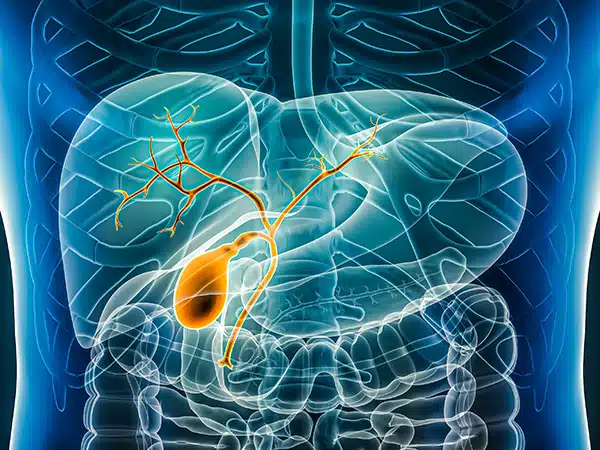
Bile duct cancer, which is also called cholangiocarcinoma, is a disease where malignant cells form in the network of small ducts that connect the liver, gallbladder, and small intestine.
There are two types of bile duct cancer:
- intrahepatic bile duct cancer, which forms in the bile ducts that are inside the liver; and
- extrahepatic bile duct cancer, which is the more common form of this cancer and develops in the bile ducts outside the liver.
Extrahepatic bile duct cancer is further classified into two types depending on where the cancer is found. In the case of perihilar bile duct cancer, also known as a Klatskin tumor or perihilar cholangiocarcinoma, the malignancy is found in the area where the right and left bile ducts exit the liver and join to form the common hepatic duct. While distal bile duct cancer, also known as extrahepatic cholangiocarcinoma, is found in the area where the ducts from the liver and gallbladder join to form the common bile duct.
Approximately, 50% of bile duct cancer cases are perihilar, 40% are distal, and 10% are intrahepatic, according to the National Cancer Institute.
Risk factors for bile duct cancer include a history of the chronic liver disease primary sclerosing cholangitis, having chronic ulcerative colitis, or infections with Clonorchis sinensis (also known as the Chinese or oriental liver fluke).
Bile Duct Cancer (Cholangiocarcinoma) Treatment (PDQ®)Source: National Cancer Institute

You can support the AACR's mission by contacting your representatives and senators and advocating for increased funding for lifesaving cancer research.
Learn More