Gallbladder Cancer

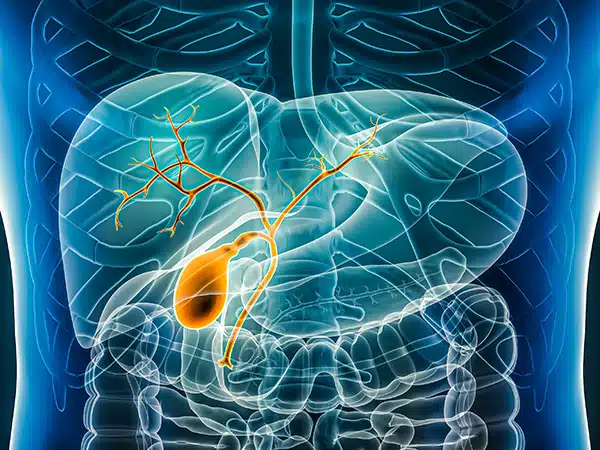
Gallbladder cancer is a rare disease in which malignant cells form in the tissues of the gallbladder, the pear-shaped organ that lies just under the liver in the upper abdomen. The gallbladder stores bile, which is a fluid made by the liver to help digest fat.
Gallbladder cancer begins in the inner, or mucosal, layer of the organ, and then spreads into the muscle and outer layers. Cancer can also form within the bile ducts, which are a network of tubes that connect the liver, gallbladder, and small intestine.
About 12,610 cases of gallbladder and other biliary cancers were estimated to be diagnosed in the United States in 2025, and about 4,400 people were estimated to die from these diseases, according to the National Cancer Institute. Incidence of gallbladder cancer is higher among Hispanics, Native Americans, and Asian-Pacific Islanders compared to white individuals.
Both gallbladder and bile duct cancer are often diagnosed at later, more advanced stages because most people display few, if any, recognizable symptoms at early stages. While gallstones can be a risk factor for gallbladder cancer, most people with gallstones do no develop gallbladder cancer. Risk factors for bile duct cancer include having chronic ulcerative colitis, certain liver diseases, and infection with a worm parasite known as the Clonorchis sinensis (or the Chinese liver fluke).
Gallbladder Cancer Treatment (PDQ®)Source: National Cancer Institute

You can support the AACR's mission by contacting your representatives and senators and advocating for increased funding for lifesaving cancer research.
Learn More