A New HER2 Inhibitor Approved for Lung Cancer
The FDA granted accelerated approval to sevabertinib for previously treated adults with HER2‑mutant non‑squamous non‑small cell lung cancer.
The U.S. Food and Drug Administration (FDA) has granted accelerated approval to sevabertinib (Hyrnuo) for the treatment of locally advanced or metastatic, non‑squamous non‑small cell lung cancers (NSCLCs) with activating mutations in the tyrosine kinase domain (TKD) of the human epidermal growth factor receptor 2 (HER2), in adults who have received a prior systemic therapy.
The FDA has also approved the Oncomine Dx Target Test as a companion diagnostic device for identifying patients whose tumors have the TKD mutations that would make them eligible to receive sevabertinib.
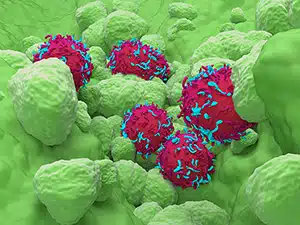
Mutations in the TKD can alter HER2 such that its activity is switched on continuously. This persistent activation drives uncontrolled cell growth and survival, fueling cancer progression and making HER2 a critical therapeutic target.
As reported in the American Association for Cancer Research journal Cancer Discovery, sevabertinib is a tyrosine kinase inhibitor that selectively targets mutant forms of HER2 and the related epidermal growth factor receptor (EGFR). Sevabertinib is the second tyrosine kinase inhibitor of HER2 approved for this patient population, following the August 2025 approval of zongertinib (Hernexeos) for previously treated, advanced NSCLC with HER2-activating mutations. These two HER2 inhibitors are administered orally and do not inhibit wild-type EGFR, potentially reducing the risk of severe side effects associated with trastuzumab deruxtecan (Enhertu), a HER2-directed antibody-drug conjugate (ADC) that is also approved for NSCLC.
The accelerated approval of sevabertinib was based on results from SOHO‑01, an open‑label, single‑arm, multicenter, multi‑cohort phase I/II clinical trial in patients with locally advanced, recurrent, or metastatic, non‑squamous NSCLC with HER2 TKD activating mutations. Early results from this clinical trial were published in Cancer Discovery.
The patients who were enrolled in the trial were split into cohorts based on the nature of the prior treatment they received to gauge sevabertinib’s efficacy across real‑world settings. The primary endpoint, which was the objective response rate (ORR), was defined as the proportion of patients with a confirmed complete or partial response.
In the cohort of 70 patients whose prior therapy did not include HER2-targeted therapy, 71% experienced responses with half of these responses lasting at least 9.2 months.
In the cohort of 52 patients who were previously treated with HER2‑targeted ADCs, 38% experienced responses that lasted a median of seven months.
The recommended dose for sevabertinib is 20 mg taken alongside food twice daily until disease progression or unacceptable toxicity.
NSCLCs make up of over 80% of lung cancers in the United States. Approximately 2% to 4% of NSCLCs harbor mutations in HER2. According to federal statistics, it was estimated that 226,650 individuals would be diagnosed with lung cancer and 124,730 patients would die of the disease in 2025, making it the leading cause of cancer death in the United States.
The FDA rendered its decision on November 19, 2025. Accelerated approval means that continued approval may be contingent upon a confirmatory trial. Please check this FDA web page for information about any accelerated approvals in oncology that may have been subsequently withdrawn and are no longer FDA-approved. Check this resource for updated information on all therapeutics regulated by the FDA.