First AKT Inhibitor Approved for Prostate Cancer
The FDA approved capivasertib with abiraterone and prednisone for adults whose metastatic prostate cancer may be sensitive to hormone therapy.
The U.S. Food and Drug Administration (FDA) has approved capivasertib (Truqap) with abiraterone and prednisone for adults with metastatic androgen pathway modulation-naïve or -sensitive (mAPMN/S) prostate cancer that is confirmed to be PTEN-deficient with an FDA-authorized test.
Concurrently, the FDA approved the VENTANA PTEN (SP218) RxDx Assay to identify patients who have PTEN-deficient prostate cancer.
Capivasertib inhibits AKT, a signaling protein that promotes tumor growth. Although the PTEN protein can keep AKT activity in check, PTEN-deficient cancers lack this control mechanism, which accounts for PTEN-deficient prostate cancer’s poorer prognosis. Abiraterone inhibits CYP17, an important androgen synthesis enzyme in prostate cancer, and prednisone is a corticosteroid given alongside abiraterone to manage abiraterone’s effects.
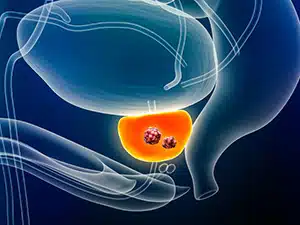
Previously known as metastatic hormone-sensitive prostate cancer, mAPMN/S prostate cancer may still respond to hormone therapies; however, the approval of capivasertib with abiraterone and prednisone offers patients a more targeted therapeutic option delivered alongside standard androgen deprivation therapy. Capivasertib is the first AKT inhibitor to receive FDA approval for any prostate cancer indication.
The approval was based on results from CAPItello-281, a randomized, double-blind, placebo-controlled, multicenter phase III clinical trial that enrolled 1,012 patients with newly diagnosed, PTEN-deficient, mAPMN/S prostate cancer. Patients were randomly assigned on a 1:1 basis to receive either capivasertib with abiraterone or a placebo with abiraterone. In both arms, abiraterone was administered with either prednisone or prednisolone.
After a median follow-up of 18.4 months in the capivasertib arm and 18.5 months in the placebo arm, patients in the capivasertib arm experienced significantly longer median radiographic progression-free survival (rPFS) with a median of 33.2 months than patients in the placebo arm, whose median rPFS was 25.7 months. This translated to a 19% lower risk of radiographic progression among those in the capivasertib arm.
The recommended dose of capivasertib is 400 mg taken twice daily about 12 hours apart. Capivasertib should be taken for four consecutive days, followed by three consecutive days of no capivasertib, until disease progression or unacceptable toxicity. Abiraterone should be taken daily throughout treatment at a dose of 1,000 mg with 5 mg of prednisone. Patients who have not had their testicles surgically removed should undergo concurrent treatment with a gonadotropin-releasing hormone (GnRH) analog.
Prostate cancer is the most commonly diagnosed cancer in men in the United States other than nonmelanoma skin cancer, and it is the second leading cause of cancer death in U.S. men. According to federal statistics, it was estimated that 333,830 individuals would be diagnosed with prostate cancer and 36,320 patients would die of the disease in the United States in 2026.
The FDA rendered its decision on June 12, 2026. Check this resource for updated information on all therapeutics regulated by the FDA.