First Approval for Rare Blood Cancer in Nearly 30 Years
Ropeginterferon alfa-2b-njft treats essential thrombocythemia by targeting blood-forming cells in the bone marrow.
The U.S. Food and Drug Administration (FDA) has approved ropeginterferon alfa-2b-njft (Besremi) injection to treat adults with a rare blood cancer, essential thrombocythemia (ET), which is caused by platelet overproduction in the bone marrow.
Ropeginterferon alfa-2b-njft is a modified immunomodulating interferon that binds to the interferon alpha receptor (IFNAR) on the surface of blood-forming cells in the bone marrow. Binding to IFNAR induces cellular signaling that reduces platelet production. Ropeginterferon alfa-2b-njft is modified so that it lasts longer in the body than a natural interferon and can be administered less often. It was previously approved to treat polycythemia vera, another rare blood cancer.
This is the first FDA-approved drug for ET in nearly 30 years. Prior to this approval, treatment options for ET were limited to hydroxyurea, the standard first-line therapy, which reduces platelet production by blocking DNA synthesis, and anagrelide, the typical second-line treatment, which lowers platelet counts by inhibiting blood cell maturation. However, both therapies are associated with severe side effects and tolerability issues.
The approval of ropeginterferon alfa-2b-njft is supported by SURPASS ET, an open-label, multicenter, randomized study that enrolled 174 patients with ET who did not have a response to or did not tolerate hydroxyurea. Ninety-one patients were given ropeginterferon alfa-2b-njft and 83 patients received anagrelide. Treatment response was defined as blood count remission, improvement or nonprogression of splenomegaly (enlarged spleen), and absence of bleeding or clotting events.
At both months 9 and 12, 37.4% of patients treated with ropeginterferon alfa-2b-njft had a response compared to 3.6% of those treated with anagrelide.
The prescribing information for ropeginterferon alfa-2b-njft includes a boxed warning for the risk of serious disorders such as fatal or life-threatening neuropsychiatric, autoimmune, ischemic, and infectious disorders.
The recommended starting dose of ropeginterferon alfa-2b-njft is 250 micrograms (µg) administered as a subcutaneous injection. The dose should be increased to 350 µg after two weeks and then to the maintenance dose of 500 µg after four weeks. The maintenance dose should be administered every two weeks unless a dose adjustment is needed due to poor tolerability.
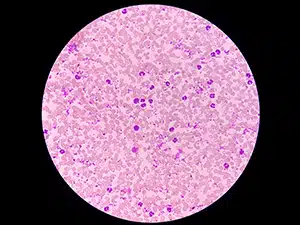
ET is a rare type of myeloproliferative neoplasm characterized by an increased number of platelets in the bone marrow, which puts patients at an increased risk for blood clots and progression to more advanced blood cancers. According to federal statistics, the estimated incidence is approximately 1.55 cases per 100,000 individuals.
The FDA rendered its decision on August 31, 2026. Check this resource for updated information on all therapeutics regulated by the FDA.