First-in-class Drug Iberdomide Approved for Multiple Myeloma
The new agent was approved in combination with daratumumab and hyaluronidase-fihj and dexamethasone for patients with resistant or refractory disease.
The U.S. Food and Drug Administration (FDA) has granted accelerated approval to iberdomide (Zenbexus) in combination with daratumumab and hyaluronidase-fihj (Darzalex Faspro) and dexamethasone for adults with multiple myeloma that has been treated with at least one prior line of therapy, including a proteasome inhibitor and an immunomodulatory agent.
Iberdomide works by binding to a protein called cereblon, which functions within the E3 ubiquitin ligase complex. This complex marks damaged or unneeded proteins for degradation by tagging them with a molecular label called ubiquitin. Ubiquitinated proteins are then recognized and broken down by the proteasome. Iberdomide’s binding to cereblon causes it to tag for degradation certain transcription factors, including Ikaros and Aiolos, resulting in increased production of cytokines that stimulate activation of T cells and natural killer (NK) cells.
Other drugs commonly used for multiple myeloma, called immunomodulatory imide drugs and including lenalidomide (Revlimid) and pomalidomide (Pomalyst), also work through a cereblon-binding mechanism to target proteins for degradation. Iberdomide is a first-in-class cereblon E3 ligase modulator that binds to cereblon in a unique way that induces more potent degradation of the target transcription factors and stronger T-cell and NK-cell stimulation, which may overcome resistance to immunomodulatory imide drugs.
Daratumumab and hyaluronidase-fihj is an immunotherapy that combines the monoclonal antibody daratumumab and the hyaluronidase-fihj enzyme. Daratumumab binds to the CD38 protein on plasma cells, a subset of B cells from which multiple myeloma arises, while hyaluronidase-fihj breaks down a component of the extracellular matrix to help daratumumab reach the multiple myeloma cells.
Dexamethasone is a steroid that boosts the effectiveness of other antimyeloma treatments and helps manage inflammation, pain, and therapy side effects.
The approval of iberdomide in combination with daratumumab and hyaluronidase-fihj and dexamethasone was based on results from EXCALIBER-RRMM, a randomized, multicenter, open-label phase III clinical trial that involved adults with relapsed or refractory multiple myeloma who had previously received one or two prior lines of therapy. Patients whose disease had developed resistance to prior anti-CD38 monoclonal antibody therapy or to bortezomib (Velcade) were excluded from the study.
The trial included two stages: In stage 1,279 patients were randomly assigned to receive either iberdomide (at one of three dose levels: 1 mg, 1.3 mg, or 1.6 mg) in combination with daratumumab and hyaluronidase-fihj and dexamethasone (IberDd) or the comparator treatment of daratumumab and hyaluronidase-fihj, bortezomib, and dexamethasone (DVd); in stage 2,660 participants were randomly assigned to receive IberDd (with iberdomide administered at a 1 mg dose) or DVd.
Efficacy was evaluated in the first 207 patients who received IberDd at the 1 mg iberdomide dose level and in the first 213 patients who were treated in the comparator DVd arm across both stages of the trial. The percent of patients who experienced a complete response with no detectable myeloma cells (minimal residual disease-negative complete response) at any time was 41% in the IberDd (1 mg iberdomide) arm and 21% in the DVd arm, a difference that was statistically significant.
The prescribing information of iberdomide includes a boxed warning for toxicity to the developing embryo or fetus of pregnant patients and serious thromboembolism (blood clot formation) in veins and arteries.
The recommended dose of iberdomide is 1 mg taken by mouth once daily on days 1 through 21 of a 28-day cycle in combination with daratumumab and hyaluronidase-fihj and dexamethasone until disease progression or unacceptable toxicity. Daratumumab and hyaluronidase-fihj is given as an injection under the skin at 1,800 mg on days 1, 8, 15, and 22 of the first two treatment cycles; on days 1 and 15 of cycles three to six; and on day 1 of the next cycles. Dexamethasone is administered by mouth at 20 mg or 40 mg on days 1, 8, 15, and 22 of each treatment cycle.
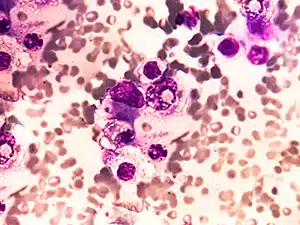
Multiple myeloma is a type of blood cancer in which plasma cells that normally produce antibodies to fight infection grow out of control and crowd out healthy blood cells. According to federal statistics, it was estimated that 36,000 individuals would be diagnosed with myeloma and 10,850 patients would die of the disease in the United States in 2026.
The FDA rendered its decision on August 13, 2026. Accelerated approval means that continued approval may be contingent upon a confirmatory trial. Please check this FDA web page for information about any accelerated approvals in oncology that may have been subsequently withdrawn and are no longer FDA-approved. Check this resource for updated information on all therapeutics regulated by the FDA.