New ROS1 Inhibitor Approved for Lung Cancer
The FDA has approved taletrectinib for certain patients with ROS1-mutated lung cancer.
The U.S. Food and Drug Administration (FDA) has approved taletrectinib (Ibtrozi) for the treatment of adult patients with locally advanced or metastatic non-small cell lung cancer (NSCLC) that harbors a fusion or rearrangement involving the ROS1 gene.
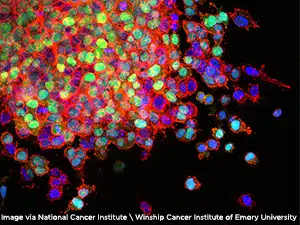
Taletrectinib is a targeted therapy known as a tyrosine kinase inhibitor (TKI) that inhibits ROS1, which can promote malignant growth due to gene fusion or rearrangement. This next-generation ROS1 TKI has been shown to be effective in lung cancer that harbors ROS1 mutations, like G2032R, associated with resistance to other approved ROS1 TKIs. This is the first FDA approval for taletrectinib, which is the fourth ROS1 inhibitor to receive FDA approval for patients with NSCLC, and the second specifically for patients with locally advanced or metastatic ROS1-mutated NSCLC regardless of prior TKI treatment.
The approval is based on results from two multicenter, single-arm, open-label phase II clinical trials, TRUST-I and TRUST-II. Together, the two trials included 270 evaluable patients with locally advanced or metastatic ROS1-mutated NSCLC, 157 who had no previous ROS1 TKI therapy experience and 113 who had received one previous ROS1 TKI.
Among patients who had no prior ROS1 TKI treatment, 90% of the 103 patients in the TRUST-I cohort and 85% of the 54 patients in TRUST-II cohort responded to taletrectinib, and responses lasted at least one year in 72% of the TRUST-I trial cohort and 63% of the TRUST-II trial cohort. Among patients who had previously received ROS1 TKI treatment, 52% of the 66 patients in the TRUST-I cohort and 62% of the 47 patients in the TRUST-II cohort responded to therapy, which led to responses lasting at least six months in 74% and 83% of patients who experienced a response.
The recommended dose for taletrectinib is 600 mg orally once per day, without food two hours before and after, until disease progression or unacceptable toxicity.
NSCLC is the most common type of lung cancer, which itself is the third most commonly diagnosed non-skin cancer. Approximately 0.9% to 2.6% of NSCLC cases are characterized by ROS1 gene fusions. According to federal statistics, it was estimated that 226,650 individuals would be diagnosed with lung cancer and 124,730 would die of the disease in the United States in 2025.
The FDA rendered its decision on June 11, 2025. Check this resource for updated information on all therapeutics regulated by the FDA.