
Pregnancy After a Breast Cancer Diagnosis
Study finds pausing endocrine therapy is safe for early-stage breast cancer patients eager to expand their families.

Study finds pausing endocrine therapy is safe for early-stage breast cancer patients eager to expand their families.

A second inhibitor of the difficult-to-target KRAS protein was approved to treat certain lung cancers. The U.S. Food and Drug Administration (FDA) has granted accelerated approval to adagrasib (Krazati) for adult patients with locally...

Black breast cancer patients had worse outcomes in a recent study, even when cancer features aligned with white patients.

Medical marijuana used as a substitute for opioids, and chemo and endocrine therapy together increase cancer-related cognitive impairment.

The FDA approved the PD-L1 inhibitor atezolizumab to treat alveolar soft part sarcoma The U.S. Food and Drug Administration has approved atezolizumab (Tecentriq) for the treatment of patients 2 years of age or older...

AACR patient advocate forum explores how new clinical trial designs are accelerating drug testing.

Oncologists report that prior authorization interrupts cancer care, plant-based diet is associated with lower colorectal cancer risk in men, and more from this week in cancer news.
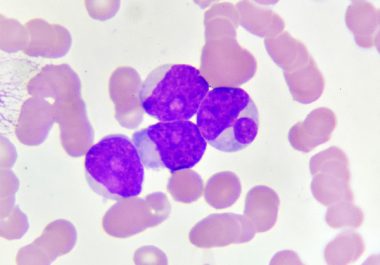
A second inhibitor of mutant IDH1 was approved to treat certain blood cancers. The U.S. Food and Drug Administration (FDA) has approved olutasidenib (Rezlidhia) for patients with relapsed or refractory acute myeloid leukemia (AML)...

While some people realize that drinking increases the risk of cancer, a few think it actually lowers the risk, a study finds. Many Americans are unaware of the fact that consuming alcoholic beverages of...

California passes ballot initiative banning flavored tobacco products, and the FDA approves combination treatments for lung cancer.

AACR Fellow Lewis C. Cantley, PhD, leads a national effort targeting triple-negative breast cancer and ovarian cancer with a novel drug combination.
Learn More