Pembrolizumab and Enfortumab Vedotin-ejfv Approved for Muscle-invasive Bladder Cancer
The combination therapy is approved for pre- and post-surgery bladder cancer treatment.
The U.S. Food and Drug Administration (FDA) has approved a combination therapy that uses either pembrolizumab (Keytruda) or pembrolizumab and berahyaluronidase alfa-pmph (Keytruda Qlex) in combination with enfortumab vedotin-ejfv (Padcev) as neoadjuvant treatment and post-cystectomy adjuvant treatment for adults with muscle-invasive bladder cancer (MIBC) who are ineligible for cisplatin.
Both pembrolizumab and pembrolizumab and berahyaluronidase alfa-pmph belong to a class of immunotherapies called immune checkpoint inhibitors. By binding to the human programmed death receptor-1 (PD-1) on T cells, pembrolizumab, a monoclonal antibody, prevents suppression of T-cell activity by blocking PD-1 from binding to the PD-L1 and PD-L2 receptors on the tumor and other cells. Berahyaluronidase alfa-pmph is an enzyme that allows for subcutaneous, rather than intravenous, delivery of pembrolizumab.
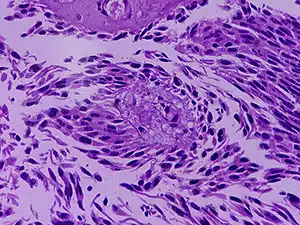
Enfortumab vedotin-ejfv is an antibody-drug conjugate that targets cells expressing the Nectin4 adhesion molecule, which urothelial cancers like bladder cancer tend to overexpress. Upon binding to Nectin4, enfortumab vedotin-ejfv is absorbed into the cell, which is killed by the toxic small-molecule component of the drug.
Pembrolizumab with enfortumab vedotin-ejfv was previously approved for metastatic MIBC, and the new approval expands its use to earlier stages. The approval marks a new option for patients diagnosed with early-stage MIBC, for which other immune checkpoint inhibitors have also been approved. Unlike those therapeutics, however, pembrolizumab with enfortumab vedotin-ejfv is approved to be given both before and after primary treatment without cisplatin, a chemotherapy widely used in the treatment of bladder cancer. This gives patients who either cannot or do not want to take cisplatin (which can cause serious side effects like hearing loss) a cisplatin-free option.
The approval was based on results from the open-label, randomized, multicenter phase III KEYNOTE-905/EV-303 clinical trial. The 344 participants presented with previously untreated MIBC who were candidates for radical cystectomy (bladder removal) with pelvic lymph node dissection, but were ineligible for or declined cisplatin-based chemotherapy. Researchers randomly assigned patients 1:1 to receive either surgery alone or pre- and post-surgery treatment with pembrolizumab and enfortumab vedotin-ejfv. Neoadjuvant therapy included both pembrolizumab and enfortumab vedotin-ejfv, and adjuvant therapy consisted of the combination regimen followed by pembrolizumab alone.
Patients in the experimental arm experienced statistically significant improvements in both event-free survival and overall survival (OS) compared with the patients in the surgery-only arm. Patients who received both the combination therapy and surgery had a 40% lower risk of cancer recurrence or cancer symptoms than those in the surgery-only arm, with fewer than half of patients in the experimental arm experiencing recurrence, gross residual disease, progression, or death during the 54 months of follow-up. In contrast, these events were observed in half of patients in the control arm within the first 15.7 months. Likewise, fewer than half of the patients in the experimental arm had died at the time of follow-up, but median OS was 41.7 months in the surgery-only arm—a 50% reduction in mortality.
The recommended dosing schedule for the combination therapy is as follows:
- Neoadjuvant Therapy Dosing: 200 mg of intravenous pembrolizumab every three weeks and 1.25 mg/kg of intravenous enfortumab vedotin-ejfv (up to a maximum of 125 mg for patients ≥ 100 kg) on days one and eight of a 21-day cycle for three cycles. Neoadjuvant treatment lasts for nine weeks or until either unacceptable toxicity or disease progression that would make cystectomy impractical occurs. Subcutaneous pembrolizumab and berahyaluronidase alfa-pmph may be given in place of intravenous pembrolizumab at a dose of 395 mg of pembrolizumab and 4,800 units of berahyaluronidase alfa-pmph.
- Adjuvant Therapy Dosing: After surgery, intravenous enfortumab vedotin-ejfv continues at a dose of 1.25 mg/kg for six additional cycles every three weeks, which is administered as part of the combination therapy with pembrolizumab until 18 weeks have passed. Intravenous pembrolizumab continues after surgery as either 200 mg every three weeks for 14 cycles or 400 mg IV every six weeks for seven cycles. Pembrolizumab continues to be administered after treatment with enfortumab vedotin-ejfv ceases until the full duration of the adjuvant therapy regimen, 42 weeks, has been completed. Treatment should be stopped before 42 weeks if disease progression or unacceptable toxicity occurs. Subcutaneous pembrolizumab and berahyaluronidase alfa-pmph may be given in place of intravenous pembrolizumab at a dose of either 395 mg/4,800 units every three weeks for 42 weeks or 790 mg/9,600 units every six weeks for 42 weeks.
Enfortumab vedotin-ejfv, if administered on the same day as pembrolizumab, should be given first.
The enfortumab vedotin-ejfv component of the treatment comes with a boxed warning for severe or fatal skin reactions, which can include Stevens-Johnson syndrome (SJS) and toxic epidermal necrolysis (TEN). Clinicians should withhold treatment with enfortumab vedotin-ejfv if SJS or TEN is suspected and permanently discontinue the treatment if either condition is confirmed, per the warning.
Bladder cancer occurs when cancer cells form in the lining of the bladder or the adjoining neuroendocrine cells. When the cancer advances to the muscle tissue that surrounds the bladder’s lining, the bladder cancer is categorized as muscle invasive. According to federal statistics, it was estimated that 84,870 individuals would be diagnosed with bladder cancer and 17,420 patients would die of the disease in the United States in 2025.
The FDA rendered its decision on November 21, 2025. Check this resource for updated information on all therapeutics regulated by the FDA.