Ziftomenib Approved for Certain Acute Myeloid Leukemias
The FDA has approved the menin inhibitor ziftomenib for adults with relapsed or refractory acute myeloid leukemias harboring susceptible NPM1 mutations.
The U.S. Food and Drug Administration (FDA) has approved the use of the menin inhibitor ziftomenib (Komzifti) in the treatment of adults with relapsed or refractory acute myeloid leukemia (AML) with a susceptible nucleophosmin 1 (NPM1) mutation who have no satisfactory alternative treatment options.
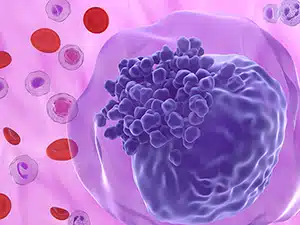
Ziftomenib is a drug that blocks cancer-promoting gene expression mediated by the menin-MLL1 protein complex by selectively binding to menin to prevent its interaction with MLL1. Mutant forms of the NPM1 protein, such as those found in many cases of AML, can enhance oncogenic gene expression by binding to the menin-MLL1 complex, according to a study published in Cancer Discovery, an American Association for Cancer Research (AACR) journal.
This is the second menin inhibitor approved by the FDA, following revumenib (Revuforj), which was recently greenlit by the FDA for the same indication for both adults and children aged 1 year and older.
Ziftomenib is approved based on the results of the open-label, single-arm, multicenter phase I/II KO-MEN-001 trial, which enrolled 112 adults with relapsed or refractory NPM1-mutant AML. The median follow-up period was 4.2 months.
Complete remission or complete remission with partial recovery of blood cell counts was observed in 21.4% of evaluable patients and lasted for a median of five months. Among the 66 patients who needed red blood cell or platelet transfusions at baseline, 14 no longer needed transfusions for at least 56 days. Of the 46 patients who did not need red blood cell or platelet transfusion at baseline, 12 patients remained transfusion-independent for any 56-day period after starting the trial.
The prescribing information includes a black box warning highlighting the risk of differentiation syndrome, which is the rapid release of cytokines—proteins that affect the immune system—brought on by the treatment-induced maturation of leukemia cells.
The recommended dose for ziftomenib is 600 mg taken orally once daily until disease progression or until the patient experiences unacceptable toxicity.
AML is a cancer of the blood and bone marrow. It is the most common type of acute leukemia in adults. According to federal statistics, it was estimated that 22,010 individuals would be diagnosed with AML and 11,090 patients would die of the disease in the United States in 2025. About 30% of AML patients have NPM1 mutations, which makes it one of the most common subtypes of AML. Approximately 50% of patients with NPM1-mutated AML eventually relapse after receiving the current standard of care, which is primarily chemotherapy based.
The FDA rendered its decision on November 13, 2025. Check this resource for updated information on all therapeutics regulated by the FDA.