Champion to Championing Cancer Patients
Stephen Brown describes how his love for competition set him apart after his cancer diagnosis.
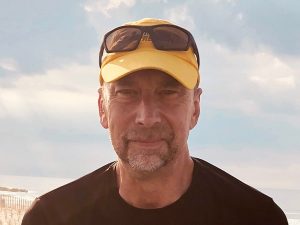
“My MO for as long as I’ve been diagnosed is to build bridges, expand the network, and be something for someone.” Those were the first words 65-year-old Stephen Brown shared when beginning to tell his story.
Stephen is a multi-awarded athlete in Ironmans, triathlons, and marathons, among other intense competitions. Competing isn’t just a hobby of his; it’s his whole world. He had recently completed the Ironman Lake Placid competition when he was diagnosed with chronic lymphocytic leukemia (CLL) in 2006. Nineteen years later, Stephen remarks that while he calls himself a survivor, he’s really in an active state of surviving, having a type of cancer that needs more research to be effectively treated. “It’s not like a tumor I can cut out; I survive every day,” he said.
Stephen’s passion for endurance races, which required him to stay at peak fitness levels, masked his symptoms. It was bloodwork before a tonsillectomy that led to his diagnosis.
A week after completing all the testing his doctors ordered, he went in for the diagnosis, certain it was nothing serious. “All signs pointed to the same thing,” Stephen recalled. “I wasn’t convinced he was looking at the right patient’s chart.”
In the whirlwind that followed his diagnosis, Stephen said his wife, Mary Grace, was his voice of reason—helping him process the information and his options. Mary Grace’s former work in medicine helped her find Stephen’s oncologist, who they have worked with throughout his journey.
After Mary Grace had a stroke six years ago, she was permanently disabled. For over six years, the couple have served as each other’s caretakers, while both being patients.
Stephen describes his doctor’s oncology office as a safe place, where he knows many of those in the facility from the community and has become friendly with the staff. “I feel at home there,” he shared. While he struggled to bond with his oncologist at first, due to the physician’s concerns about his stringent exercise routines, it didn’t take long for the two of them to find common ground. “When he said I should give it a rest, it made me want to bolt out the door even quicker. But over time, guess who learned a whole lot about CLL, and guess who is now a bit of a runner?” Stephen said with pride. The two have developed a great relationship and even joke about Stephen’s wish for his physician to never retire.
When asked about the role exercise plays in his life, Stephen explained his desire to be in great shape before his tonsillectomy. Even though he never had the surgery, he believes the preparation for it was extremely beneficial to the effectiveness and recovery from his cancer treatments. He noted the joy he would get from seeing the nurses’ faces as he laced up his shoes after chemo to run home. His family would follow to supervise. “I wanted to set an example to our daughters that I was still doing the things I loved and felt good enough to do them,” he said. Stephen also discussed the agreements he and his doctor made regarding his continued exercise, including listening to his body and taking breaks in stride.
While he no longer runs marathons, Stephen still participates in shorter races. Throughout his journey, he never stopped doing what he loved, including coaching a triathlon program with the Leukemia and Lymphoma Team in Training and volunteering with different organizations. After retiring in April, he started his own business, reMISSION FIT, where he trains survivors virtually to help them progress toward their goals. “I walk away from those things with a huge smile on my face and probably get more out of it than they do.”
When asked about his desire to continue giving back to the community, Stephen shared: “If I have the platform to be a positive example and a mentor for others—whether that’s physical training or being a patient mentor—and I don’t, that feels criminal to me. I’m being given a gift. This disease has opened more doors than it’s closed and created more opportunities than it’s taken away. If I’m not capitalizing on that, I’m doing myself and others a great injustice.”
Whether you are a patient, survivor, caregiver, or loved one touched by cancer, your story can have an enormous impact. You can provide hope and inspiration to someone recently diagnosed with cancer or a patient undergoing therapy.
SHARE YOUR STORY
Learn about physician-scientists and cancer researchers like Fellow of the AACR Academy Lewis C. Cantley, PhD, who are driving progress against cancer.
Learn More
There are many ways in which you can lend your talents to support lifesaving research. Learn how you can become an advocate for cancer research, participate in events to raise awareness, volunteer your time, and share your story of how cancer has affected your life.
Get Involved