AACR-PCWG Across the Map: Researcher Spotlight
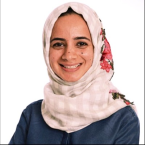
In this feature, Safiya Khurshid, PhD shares how her laboratory is investigating the ways metabolic stress can reshape alternative splicing in pediatric cancers, allowing tumor cells to adapt without changing their underlying genome.
Beyond the science, she also discusses how an unexpected career turn led her into RNA biology and why her early love of debate and journalism still influences the way she communicates science.
Research
What are you most excited about with respect to your research?
That pediatric tumors may adapt to their environment without acquiring new mutations. Cancers like hepatoblastoma carry some of the fewest mutations of any human tumor, yet they survive in nutrient starved and/or hypoxic conditions. It is fascinating to know that these cells can reinvent themselves not by altering their genome, but by changing how it’s read. We find that even a single splicing switch can push cells toward a de-differentiated state on its own. What keeps me at the bench is understanding how tumor micro-environmental signals get translated into specific splicing decisions, and whether targeting those signals could open therapeutic strategies that genetics alone would perhaps miss.
What emerging opportunities might your laboratory or research program explore next?
A few directions excite me. First, moving from a single splicing switch to the broader logic: mapping how metabolic stress is sensed and translated into specific splicing decisions, so we can identify the upstream regulators that govern many of these exon choices at once, not just one gene at a time. Second, testing whether these splicing changes are drivers or passengers of tumor adaptation. Tools like antisense oligonucleotides let us flip a single exon without touching the genome, so we can ask directly whether redirecting splicing changes how tumor cells survive stress or how differentiated they are, and whether it can be reversed. Third, extending this from cell models into patient tumors. By comparing splicing in tumor versus adjacent tissue, we can ask whether the same stress-driven switches we see in the lab are present in patients, and whether they mark more aggressive disease. Longer term, if specific splicing programs prove to be a route pediatric tumors use to adapt, they could become a therapeutic opportunity, especially appealing in cancers with few mutations to target. Splicing-directed therapies are already reaching the clinic in other diseases, which makes this feel within reach rather than hypothetical.
Vision
If you had unlimited resources, what is one clinical trial, experiment, or policy that you would enact today?
I would build a comprehensive splicing atlas of pediatric tumors paired with their matched normal tissue and clinical outcomes, profiling not just which genes are expressed but which exons each tumor keeps. For low-mutation cancers, the mutation lists are short and have told us much of what they can; I believe the splicing landscape holds an underexplored layer of information about how these tumors adapt and become aggressive. With that resource, the field could identify recurrent, stress-driven splicing programs across tumor types and ask which ones are targetable. It would be a shared, open dataset, so the whole community could mine it.
What would you want policymakers or funders to understand about the state of pediatric cancer research today?
That pediatric cancers are not just smaller versions of adult cancers, and the strategies that work in adults can be harder to translate. Many childhood tumors are driven by how genes are regulated and spliced rather than by large numbers of mutations, which means the targeted therapies built around adult mutation profiles frequently don’t apply. These cancers need dedicated investment in their own biology. The patient populations are small, so this research is unlikely to be driven by market forces alone, and sustained public and foundation funding is essential. Investment in the underlying mechanisms, not only in late-stage trials, is what will produce the next generation of treatments.
Life
What is one interesting thing about you that nobody would guess?
People assume I’ve only ever been a scientist. In truth, my first love was the microphone: I was the best debater in my high school and fully intended to become a journalist. I loved standing up and winning an audience over, and that instinct never left me. It’s exactly why I love the storytelling side of science, finding the thread in the data and making the case, as much as the experiments themselves.
What is one unexpected way that your location opened an opportunity for you?
One of the turning points of my career came disguised as a setback. During my postdoc, my mentor relocated and I wasn’t able to move with him. At the time I worried my research path had stalled before it really got going. But staying put is what brought me to Nationwide Children’s, and, as luck would have it, that opened a new door. There I found a new mentor and a new direction: RNA biology and the logic of splicing as a route to cancer therapies. I found it genuinely compelling, more so than the path I’d been on. RNA still fascinates me, the idea that a cell can change what it is simply by choosing which pieces of a gene to keep, and that question is now at the center of my work. What felt like a closed door turned out to be the start of the research I care most about.
Biography
Safiya Khurshid, PhD is a Principal Investigator at Sanford Research and an Assistant Professor of Pediatrics at the University of South Dakota. Her laboratory studies how the tumor microenvironment, particularly metabolic starvation reprograms alternative splicing in pediatric cancers. The lab works across patient cohorts and cell models to identify the isoforms that help tumor cells survive stress, the RNA-binding proteins that produce them, and the signals that connect the two. Her lab’s long-term goal aims to target recurrent, therapy-resistant, and metastatic cancers.
She earned her PhD at the Cologne Graduate School of Aging Research in Germany with Dr. Thomas Benzing, studying how the transcription factor AATF shapes p53 signaling after DNA damage. She began her postdoctoral work with Dr. Gustavo Leone at The Ohio State University where she studied the importance of the tumor microenvironment in breast cancer. She then joined Dr. Dawn Chandler at Nationwide Children’s Hospital where she moved into RNA biology. There her work centered on alternative splicing in pediatric cancer: defining how oncogenic isoforms drive tumor behavior in cancer cells and tissues, generating CRISPR mouse models to study these isoforms in-vivo, and developing splice-switching oligonucleotides that correct oncogenic isoforms of the insulin receptor and MDM2 in pediatric sarcomas.