Cancer Today’s Fall 2026 Issue: Activity-based Groups for Survivors, Expanding Treatment Options in Multiple Myeloma, and More
After completing treatment for stage 1 triple-negative breast cancer in 2017, Lindsay Vlaminck wanted to meet other people who had been through cancer treatment. However, “pass-the-Kleenex kind of support groups,” as she calls them, didn’t appeal to her. Traditional support groups “can be really intimidating and uncomfortable for a lot of people to step into because it’s very vulnerable to share some of those deeply personal parts of yourself,” she said.

Instead, Vlaminck found support in a less structured way by revisiting a sport she first discovered in college. She and Kassie Williams, a friend who also had breast cancer, started a rowing club for breast cancer survivors called Cancer Recovery Empowering Women (CREW) 309 in Peoria, Illinois. In its latest issue, Cancer Today, a magazine and online resource published by the American Association for Cancer Research (AACR), highlights CREW 309 and other activity-based groups that allow survivors to reconnect with their bodies and improve their mental health alongside a community of people with similar experiences. “By using exercise to bring people together, it allows those conversations to happen more naturally, with less pressure,” Vlaminck told Cancer Today.
More Options for People with Relapsed or Refractory Multiple Myeloma
Another story in the fall issue explores treatment advances for people with multiple myeloma whose cancer has returned or stopped responding to treatment. New options, including chimeric antigen receptor (CAR) T-cell therapies and bispecific antibodies, can provide long-lasting remissions. These treatments are increasingly being used earlier after relapse, as well as in later-line settings. These approaches have helped to dramatically extend survival in people with multiple myeloma. In fact, most people diagnosed with the disease are expected to live 10 years or longer after their diagnosis—up from just three to five years in the 1990s and early 2000s. “People really do live 10, 15 years and beyond,” Nisha Joseph, MD, a hematologist-oncologist at Emory Winship Cancer Institute, told Cancer Today. “For a patient population that is predominately in their 60s and 70s, our goal is to get them as close to that natural lifespan as possible.”
The Expanding Role of Antibody-drug Conjugates
Antibody-drug conjugates (ADCs) deliver a toxic drug directly to cancer cells, helping to limit damage to healthy cells. Sometimes referred to as “smart bombs” or “targeted missiles,” ADCs use antibodies to recognize and bind to specific proteins found on cancer cells, allowing them to deliver a drug payload to these cells. In this issue, Cancer Today examines how ADCs are being used earlier in treatment, including for some early-stage breast cancers and as first-line therapy in some advanced cancers. “It’s definitely a very hot field right now,” Aditya Bardia, MD, MPH, a medical oncologist at University of California, Los Angeles (UCLA) Health Jonsson Comprehensive Cancer Center, told Cancer Today. “ADCs are essentially replacing chemotherapy.”
Educating Others About Inherited Cancer Risk
In the fall issue, Cancer Today also features breast cancer survivor Debbie Denardi, who helps other women learn about ways to manage and cope with inherited cancer risk. After being diagnosed with stage 1 triple-negative breast cancer in 2010, Denardi had genetic testing that revealed she carries a BRCA1 gene mutation, which greatly increases her chances of developing ovarian cancer and a second breast cancer. Since completing treatment and then having surgeries to remove her breasts, uterus, ovaries, and fallopian tubes in 2011, she has worked with patient advocacy organizations, including Facing Our Risk of Cancer Empowered (FORCE), to advocate for policy changes to help people with cancer.
“She’s tenacious,” Lisa Schlager, vice president of public policy for FORCE, said of Denardi. “She’s not looking at it as just performing, going through the motions. She’s really looking at it as, ‘I want to make a difference, and I’m going to gather as much information as I can to help make that difference.’” Denardi, who later learned she carried a second inherited mutation that causes Lynch syndrome, also participated in the AACR Scientist↔Survivor Program (SSP), which brings patient advocates—most of whom are cancer survivors—together to engage and learn from cancer researchers who are attending the AACR Annual Meeting. In 2025, she served as an advocate mentor for the program.
(For more on inherited cancer risk, read about Carolyn Searles and her three sisters—who all tested positive for the BRCA1 gene mutation—on the AACR blog.)
Boosting Chemotherapy’s Effectiveness, Support Groups for Caregivers, and More
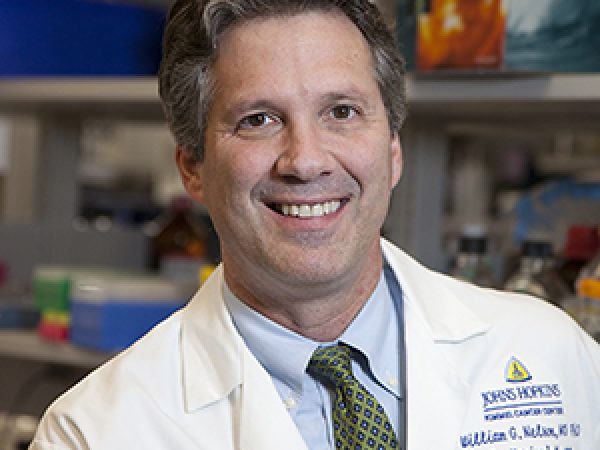
Cancer Today’s latest issue also provides practical takeaways from recent studies, including research that shows a newly approved drug can boost the effectiveness of chemotherapy for platinum-resistant epithelial ovarian cancer. Other articles explain what patients should expect during their first chemotherapy infusion and how support groups can help caregivers process their emotions. Plus, William G. Nelson, MD, PhD, DSc, FAACR, Cancer Today’s editor-in-chief and director of the Johns Hopkins Sidney Kimmel Comprehensive Cancer Center, explores why some cancers stop responding to targeted treatments even after initially dramatic responses.
The AACR offers Cancer Today free of charge to those affected by cancer. To view content from the fall 2026 issue, visit Cancer Today’s website or read the digital edition.
To stay up to date with the latest in cancer research and care, subscribe to the magazine or sign up to receive Cancer Today’s e-newsletter released twice a month.