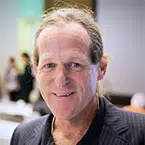
Scientific Areas of Interest: Biotechnology, Chemical Synthesis, Systems Biology
For pivotal contributions to the fields of biotechnology and cancer immunotherapy, bridging chemical synthesis and physics with biology to develop nanoscale technologies including single cell barcoding, the isolation of T cells recognizing neoantigens to generate novel T-cell therapies, and microfluidic chips for diagnostic purposes that provide an opportunity to stratify patients and analyze a patient’s antitumor response to drug treatment.
An admired visionary at the chemistry-biology interface of biotechnology and cancer immunotherapy, Dr. Heath has developed cutting-edge technologies that blend chemical synthesis with physics and biology to advance cancer research and diagnostics. In a series of elegant experiments, Dr. Heath and his team validated a multi-omics approach to determine the responsiveness of cancers to drug treatments. Focusing on melanoma and glioblastoma, he combined multiplex spatial protein profiling, single-cell barcode chip, and customizable metabolic probes with machine learning based image analysis and computational models to elucidate the molecular factors within a tumor microenvironment responsible for cancer treatment effectiveness. A thought-leader in the field, Dr. Heath has emphasized the importance of integrating single-cell transcriptomics with microarray fluidic systems to characterize tumor cells and identify cell populations that impact treatment outcomes. These advancements in diagnostic tools provide an exc
Dr. Heath’s seminal discoveries have also had a tremendous impact on the field of immunotherapy. Using click chemistry, he developed a new class of synthetic molecules called protein catalyzed capture agents (PCCs) that bind proteins in a similar fashion as antibodies yet have lower production costs and result in highly stable complexes. PCCs can be designed to bind virtually any protein epitope, making them an exceptional tool to target “undruggable” proteins in cancer. Furthermore, Dr. Heath contributed to the development of DNA-barcoded, magnetic nanoparticles that are coated with peptide-MHC complexes. These nanoparticles can be used to capture neoantigen-specific T cells to characterize their neoantigen reactivity, which is a vital factor in the development of new immunotherapies. Dr. Heath’s creativity and innovation in cancer research design have delivered new technologies to the personalized medicine toolbox for diagnostics and therapy design.
Selected Awards and Honors
2011 Fellow, Materials Research Society, Warrendale, Pennsylvania
2009 Forbes List of 7 Top Innovators in the World, Forbes Magazine, Jersey City, New Jersey
2009 AACR-Irving Weinstein Foundation Award and Lectureship, American Association of Cancer Research, Philadelphia, Pennsylvania
2006 Top 150 Alumni, Baylor University, Waco, Texas
2005 Spiers Memorial Award, Royal Society of Chemistry, London, United Kingdom
2004 Arthur K. Doolittle Award, American Chemical Society, Washington, DC
2002 Scientific American Top 50, Scientific American Magazine, Bonn, Germany
2002 ISI Highly Cited Researcher, Clarivate Analytics, Philadelphia, Pennsylvania
2002 Commendation from Governor of California, Office of the Governor of California, Sacramento, California
2001 Raymond and Beverly Sackler Prize in the Physical Science, Tel Aviv University, Tel Aviv, Israel
2001 Technologist of the Year, LA Business Journal, Los Angeles, California
2000 Feynman Prize in Nanotechnology, Foresight Institute, San Francisco, California
1999 Elected Fellow, American Physical Society, College Park, Maryland
1994 Packard Fellowship for Science and Engineering, David and Lucile Packard Foundation, Los Altos, California
1994 NSF Young Investigator Award, National Science Foundation, Alexandria, Virginia
1988 Miller Research Fellowship, Miller Institute for Basic Research in Science, University of California Berkeley, Berkeley, California
[Institutional affiliations listed for Fellows reflect those held at the time of their induction into the AACR Academy.]