Epcoritamab-bysp Indications Approved for Follicular Lymphoma
The FDA approved epcoritamab-bysp as a monotherapy or with lenalidomide and rituximab for relapsed or refractory follicular lymphoma.
The U.S. Food and Drug Administration (FDA) has approved epcoritamab-bysp (Epkinly) with lenalidomide (Revlimid) and rituximab (Rituxan) for adults with relapsed or refractory follicular lymphoma. The FDA also converted the June 2024 accelerated approval of epcoritamab-bysp monotherapy to a traditional approval for adults with relapsed or refractory follicular lymphoma after two or more lines of systemic therapy.
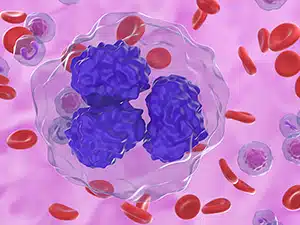
Epcoritamab-bysp is a subcutaneously administered bispecific antibody that binds to the CD20 protein on B cells and also to the CD3 protein on T cells, bringing them physically closer together. This allows the patient’s T cells to recognize and kill malignant B cells. While the earlier accelerated approval of epcoritamab-bysp monotherapy allowed the bispecific antibody to be used in the third-line or later setting, the approval of the combination regimen means it may now be used as early as the second-line setting. The epcoritamab-bysp combination therapy is the first bispecific antibody-based regimen approved as a second-line or later option for patients with follicular lymphoma.
The approval of epcoritamab-bysp plus lenalidomide and rituximab is supported by EPCORE FL-1, a randomized, open-label phase III trial that enrolled 488 patients with stage 2-4 CD20-positive, relapsed or refractory follicular lymphoma that has not transformed into an aggressive form. The patients were randomly assigned to one of two arms, with 243 patients receiving epcoritamab-bysp plus lenalidomide and rituximab (epcoritamab-bysp arm) and 245 receiving lenalidomide and rituximab alone (control arm). The overall response rate (ORR) and the progression-free survival were used to assess the efficacy of the treatment.
The epcoritamab-bysp arm had an ORR of 89%, while the control arm had an ORR of 74%. Treatment with epcoritamab-bysp led to longer progression-free survival compared to the control arm, with a 79% reduction in the risk of disease progression.
The prescribing information includes a black box warning for cytokine release syndrome, which is caused by the rapid release of cytokines into the blood that results in symptoms such as fever, nausea, headache, rash, and rapid heartbeat. The prescribing information also includes a black box warning for immune effector cell-associated neurotoxicity syndrome (ICANS), which is associated with increased cytokine levels in the brain and disruption of the blood-brain barrier.
The recommended dosing schedule for epcoritamab-bysp, when used in combination with lenalidomide and rituximab, is structured into 12 28-day cycles:
- Cycle 1: 0.16 mg on Day 1, 0.8 mg on Day 8, 3 mg on Day 15, and 48 mg on Day 22
- Cycles 2-3: 48 mg weekly
- Cycles 4-12: 48 mg every four weeks
Follicular lymphoma is the most common subtype of indolent (slow-growing) non-Hodgkin lymphoma which occurs when malignant cells form in the lymph nodes, a part of the body’s immune system, and may spread to other areas such as the bone marrow or spleen. According to federal statistics, 2.4 people per 100,000 were diagnosed with follicular lymphoma per year from 2018 to 2022, and the relative five-year survival rate was approximately 89% during this time.
The FDA rendered its decision on November 18, 2025. Check this resource for updated information on all therapeutics regulated by the FDA.