Catching the Drift: How Wildfire Smoke Plumes May Increase Cancer Risk
Inhaling smoke tends not to be good for you. Cigarette smoke, the classic airborne carcinogen, causes cancer directly, but other smoke sources like car traffic and diesel exhaust have also been associated with increased cancer risk. Perhaps it’s not surprising, then, that the smoke from wildfires may also be associated with cancer risk—and not just in the lungs.
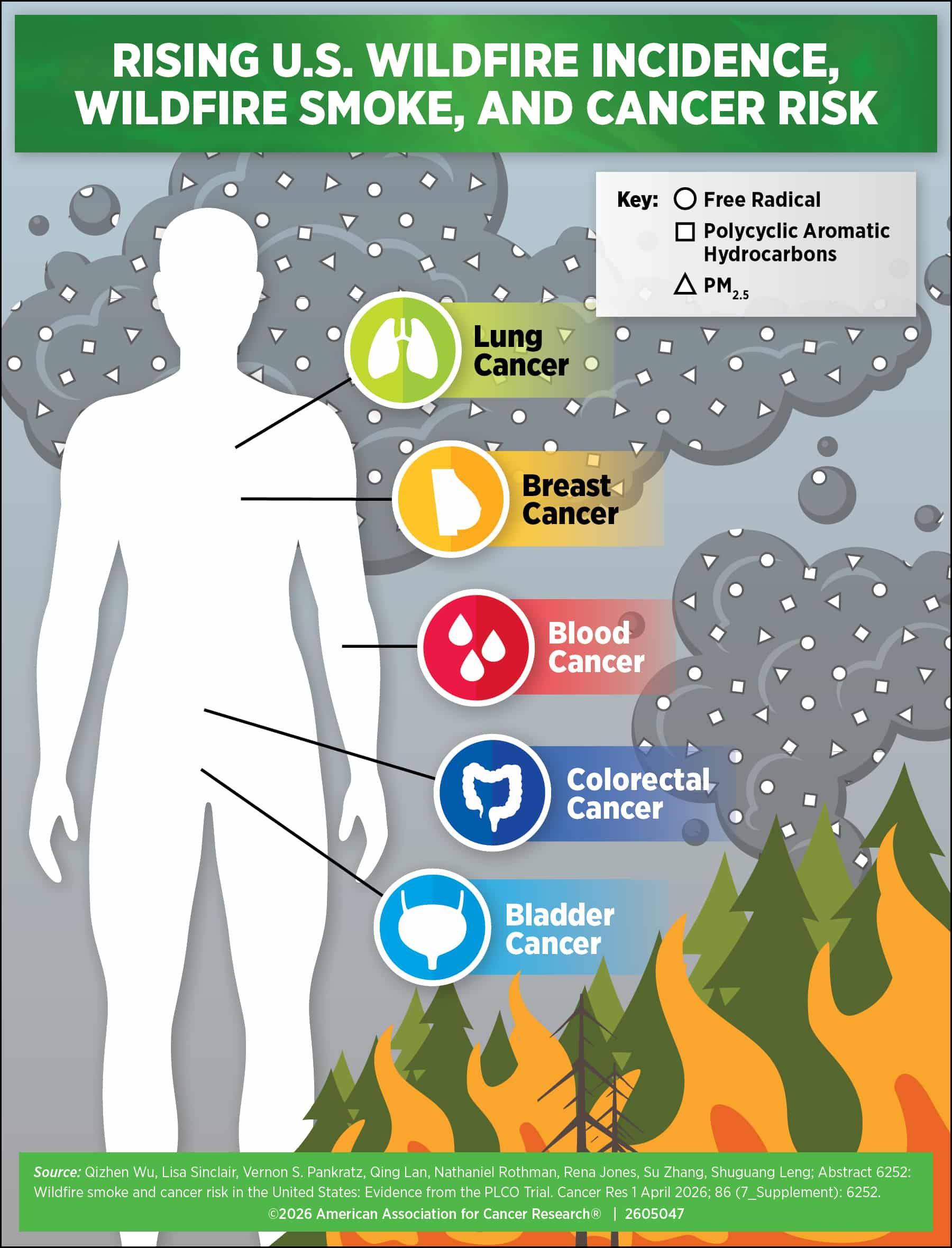
As presented at the AACR Annual Meeting 2026, exposure to drifting wildfire smoke between 2006 and 2018 was associated with increased risks of five different types of cancer. Senior author Shuguang Leng, MBBS, PhD, an associate professor at the University of New Mexico Comprehensive Cancer Center, and first author Qizhen Wu, PhD, a postdoctoral fellow at the same institution, found that participants in the Prostate, Lung, Colorectal, and Ovarian (PLCO) Cancer Screening Trial exposed to smoke from wildfires were at significantly higher risk of developing lung, colorectal, breast, bladder, and blood cancers. The more “plume days” that affected participants—a measurement of days spent under a wildfire smoke cloud, as determined by satellite image data—the greater their cancer risk, according to the authors’ findings.
Burning Up: More Wildfires, More Smoke
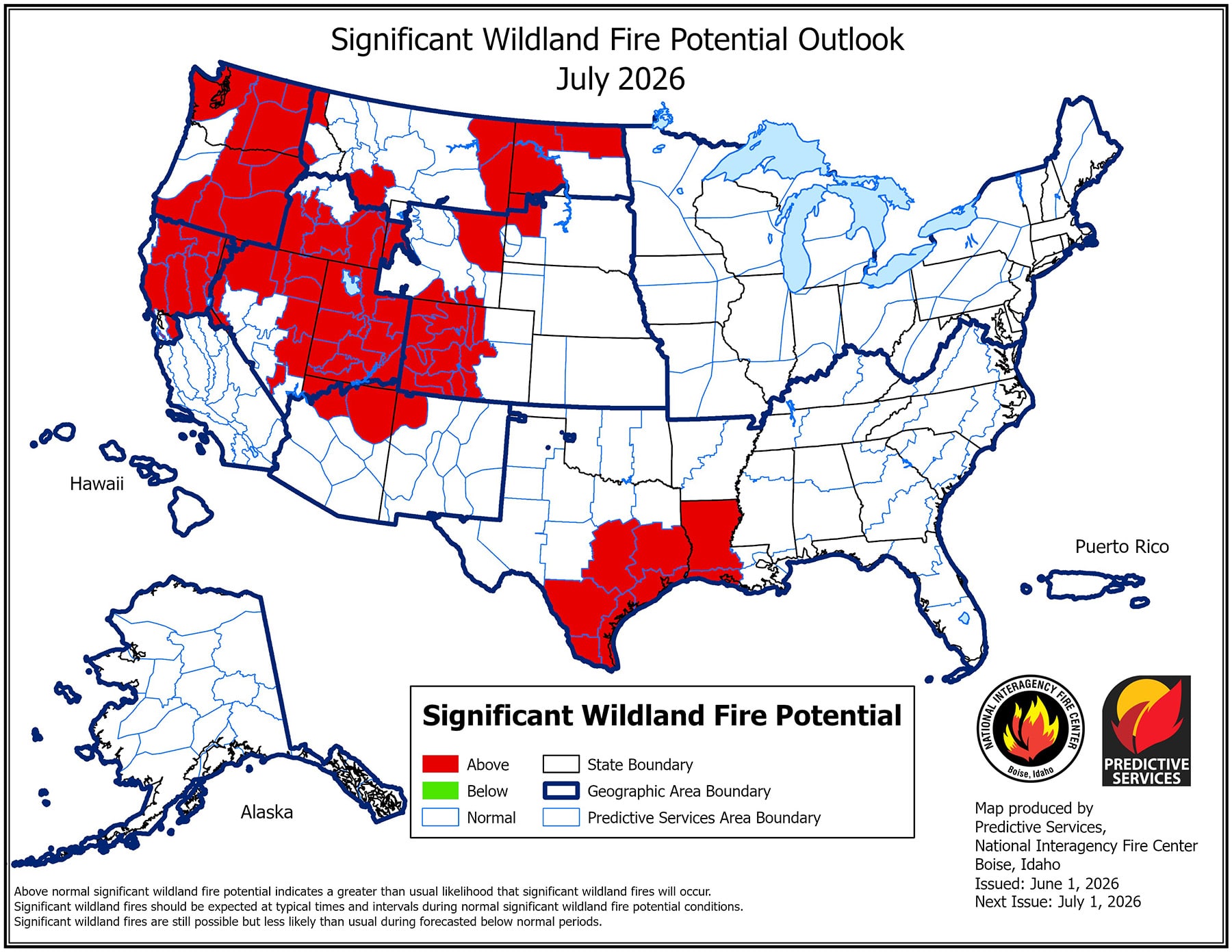
In the United States, wildfires are getting worse. Annual burned acreage has more than doubled since the 1980s, and in the western United States, the wildfire season is beginning earlier and increasing burn area. Some scientists attribute this increase to climate change, which is projected to cause more wildfires, and heatwaves have already made for more flammable land. In 2025, wildfires burned more than 5 million acres across the United States, and this year alone, the U.S. National Interagency Fire Center (NIFC) predicts a fire season that, from June until September, places hundreds of thousands of square miles at an elevated risk of wildfire. The number of U.S. wildfires recorded in 2026 (36,262 at the time of this writing) has already exceeded 130% of the 10-year average for wildfires recorded by this time of year.
And these figures, though daunting in their own right, do not even begin to capture the risk posed by the vast swaths of flammable forest in the Canadian wilderness. Drifting smoke does not care about borders, as illustrated by the eerie, smoke-lit photos from cities in the northeastern United States during the Canadian wildfires of summer 2023.
Drifting smoke, Leng said, is a big part of the risk that wildfires pose for human health. Indeed, one study estimated that exposure to fine particulate matter 2.5 micrometers or smaller (PM2.5) from the 2023 Canadian wildfires killed about 70,000 people in both North America and Europe—with most of them dying from chronic, rather than acute, exposure effects. Smoke’s capacity to drift across far-reaching distances means it can affect many more people than if it remained within a single region. And as smoke drifts over long stretches, Leng said, the sticky cores of black carbon within the smoke can become coated with all manner of unpleasant particles, which can then be inhaled.
Where There’s Smoke, There’s Carcinogens

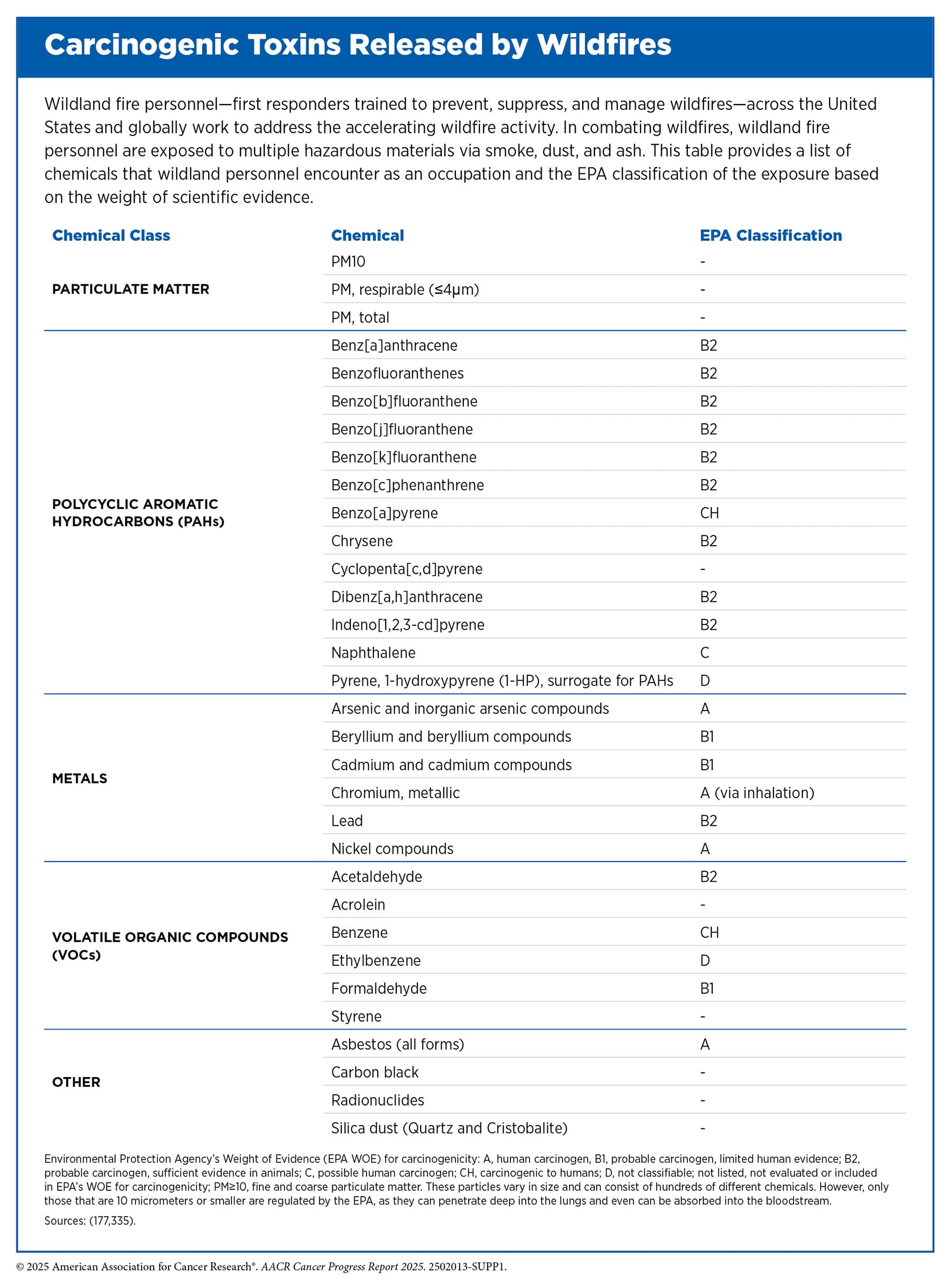
Just as cigarettes marketed as low-tar or natural still carry carcinogens, the smoke from wildfires—though “natural” in the sense that it largely comprises burn products from trees and vegetation rather than manmade environments—can contain noxious compounds and toxins. According to Leng, the carcinogenic potential of wildfire smoke is likely attributable to the plethora of unhealthy particles that the smoke contains: heavy metals, salts, polycyclic aromatic hydrocarbons, and other miscellaneous PM2.5. The International Agency for Research on Cancer classifies air pollution, including PM2.5, as a carcinogen, and one study linked exposure to PM2.5 from U.S. wildfire smoke with significant increases in all-cause mortality. And though it is not a carcinogen, ozone is a lung-irritating byproduct of wildfires that has also been on the rise in recent years due to wildfires’ degradation of air quality.
As for how the smoke may contribute to cancer beyond the initial site of exposure in the lungs, Leng said that there are many ways for wildfire smoke to wreak biological havoc across the human body.
Despite entering through the lungs and causing immediate local damage, Leng said, particles and dissolved compounds can enter the bloodstream through mucus membranes and circulate throughout the body to a variety of organs. He also noted that carcinogenic compounds from wildfire smoke could be swallowed, leading to direct exposure of the digestive tract, or excreted in the urine—a potential explanation of the elevated risk of bladder cancer observed in the study.
“Furthermore, wildfire smoke can induce systemic inflammation and oxidative stress, both of which are established contributors to carcinogenesis across multiple organ systems,” Leng said.
Wildfire smoke’s point of origin, Leng added, may also play a role in how wildfire smoke plumes impact individuals in different areas, although his study did not explicitly address this question.
“Different types of wildfires can produce emissions with different chemical compositions. For example, fires involving different vegetation types or materials may generate varying mixtures of particles and toxic compounds. These differences could influence the toxicity of the smoke and its health effects,” he said. “However, further research is needed to better characterize variation in smoke composition and its implications for toxicity and health outcomes.”
Quitting (Wildfire) Smoking
Thankfully, prescribed burns are a tried-and-true method for preventing wildfires, as are the standard precautions of Smokey Bear. In 2022, in recognition of the threat posed by the growing problem of wildfires, the U.S. Department of Agriculture and the U.S. Forest Service issued a 10-year plan to reduce wildfire risk. But when it comes to dealing with wildfire smoke already hovering above one’s head, there’s also a simple answer: stay indoors and, should outside travel become necessary, mask up.
“Air filtration is not a perfect solution by any means, but the more smoke that can be filtered out, the less one’s exposure,” said Leng. “Properly addressing the growing problem of wildfires will take much more than individual action, and ideally, people would not have to deal with wildfire smoke in the first place. But for anyone who finds themselves facing the prospect of wildfire smoke exposure, filtration and exposure reduction are much better than nothing.”