
Many People Don’t Get Colonoscopy After Receiving Abnormal Blood Tests
About half of people who receive abnormal results from colorectal cancer screening tests don’t follow up with a colonoscopy.

About half of people who receive abnormal results from colorectal cancer screening tests don’t follow up with a colonoscopy.
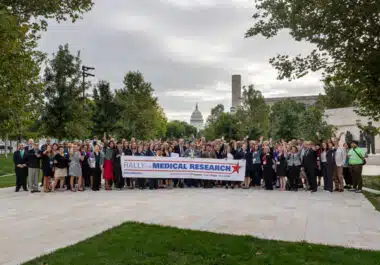
At a defining moment, a broad coalition will come to Capitol Hill to protect science, defend progress and stand up for patients. Congress must hear from you next.

Experts explain how artificial intelligence, nanotechnology and decentralized care are poised to improve research, detection and treatment.

A survey of head and neck cancer survivors reveals that many are not getting adequate survivorship care and may not even know it is available.

After a cancer diagnosis, people who are deaf or have hearing problems can struggle if accommodations don’t meet their communication needs.

Researchers find no evidence that immune checkpoint inhibitors benefit cancer patients getting inpatient care. They urge earlier consideration of palliative care.

News coverage about public figures facing cancer frequently leaves out key details about the diagnosis and fails to provide background information on cancer.

As people with advanced disease live longer, they face physical and mental health side effects. Patient advocates say research and care must focus on their unique needs.

Alfred Lacks Carter Jr. and other family members honor the legacy of Henrietta Lacks by helping others better understand their health care.

People treated for childhood cancer found to have twice the risk of developing melanoma as an adult.
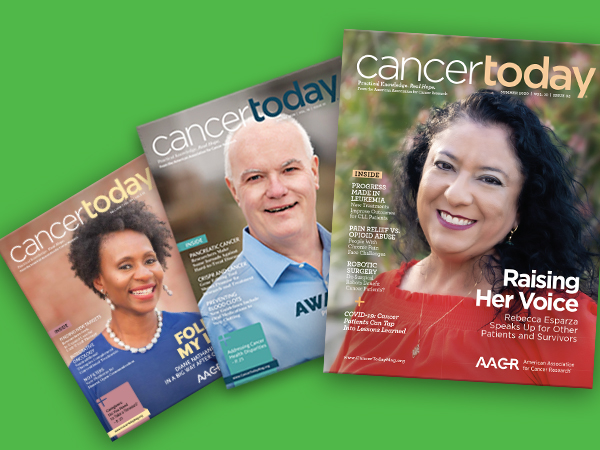
In every issue, Cancer Today offers information and inspiration as readers face the challenges of diagnosis, treatment, survivorship, or caregiving. Cancer Today subscriptions are free to cancer patients, survivors, caregivers, and others in the United States.
Subscribe Today