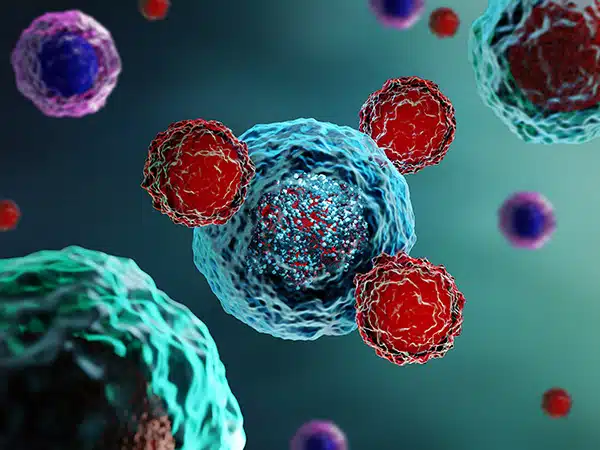
Hodgkin Lymphoma

Hodgkin lymphoma is a disease in which cancer cells form in the lymph system, part of the body’s immune system. Because lymph tissue is found throughout the body, Hodgkin lymphoma can begin in almost any part of the body, but it most commonly forms in the lymph nodes above the diaphragm and the area between the lungs known as the mediastinum. Hodgkin lymphoma can also spread within the lymph system and to other parts of the body.
Lymphomas are divided into two general types: Hodgkin lymphoma and non-Hodgkin lymphoma.
Hodgkin lymphoma can occur in both adults and children. Hodgkin lymphoma may also occur in patients who have acquired immunodeficiency syndrome (AIDS); these patients require special treatment.
The National Cancer Institute (NCI) estimated that 8,720 people would be diagnosed with Hodgkin lymphoma and 1,150 people would die of the disease in the United States in 2025. The NCI estimates that about 90% of all newly diagnosed patients with adult Hodgkin lymphoma can be cured with combination chemotherapy and/or radiation therapy. About 89% of patients survive at least five years from diagnosis.
There are two main types of Hodgkin lymphoma: classical and nodular lymphocyte-predominant. Most Hodgkin lymphomas are the classical type, which includes four subtypes—nodular sclerosing Hodgkin lymphoma, mixed cellularity Hodgkin lymphoma, lymphocyte-depleted Hodgkin lymphoma, and lymphocyte-rich classical Hodgkin lymphoma.
Risk factors for adult Hodgkin lymphoma include being in early (age 20-39 years) or late adulthood (65 or older), being male, having a past infection of the Epstein-Barr virus, and having a family history with Hodgkin lymphoma.
Adult Hodgkin Lymphoma Treatment (PDQ®)Source: National Cancer Institute

You can support the AACR's mission by contacting your representatives and senators and advocating for increased funding for lifesaving cancer research.
Learn More