Imlunestrant Combination Approved for ESR1-Mutated Breast Cancer
The new approval is for certain patients with ER-positive, HER2-negative advanced breast cancer who have received at least one line of endocrine therapy.
The U.S. Food and Drug Administration (FDA) has approved imlunestrant (Inluriyo) in combination with abemaciclib (Verzenio) to treat adults with advanced or metastatic estrogen receptor (ER)-positive, human epidermal growth factor receptor 2 (HER2)-negative breast cancer with a mutation in the estrogen receptor 1 (ESR1) gene who experienced disease progression following prior endocrine therapy.
Estrogen serves as the primary fuel for ER-positive breast cancer by binding to ER on tumor cells and triggering the rapid cell division that drives cancer growth. Patients with ER-positive, HER2-negative breast cancer typically receive therapy that blocks the cancer’s ability to use estrogen, referred to as endocrine therapy. However, over time the cancer can develop mutations in the ESR1 gene that encodes the ER, allowing the cancer to become resistant to some endocrine therapies.
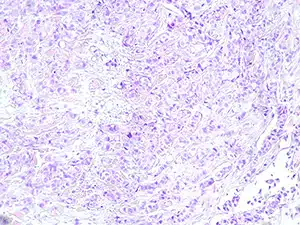
Imlunestrant is a selective estrogen receptor degrader (SERD) that functions by binding to the ER protein. This leads to degradation of ER and suppression of ER-mediated tumor growth. Imlunestrant and other SERDs are designed to be effective against ER whether or not it is mutated. Preclinical characterization of imlunestrant was described in a 2025 study published in Cancer Research, a journal of the American Association of Cancer Research (AACR).
Abemaciclib inhibits cyclin-dependent kinases 4 and 6 (CDK4 and CDK6), key regulators of cell cycle progression that are frequently overactive in many cancers. By blocking these kinases, abemaciclib slows cancer cell proliferation and inhibits tumor growth. This approval expands on imlunestrant’s earlier approval as a monotherapy, extending its use to include combination therapy with abemaciclib.
The approval was supported by results of EMBER-3, a randomized, open-label, active-controlled, multicenter phase III trial. Results of the trial were presented at the San Antonio Breast Cancer Symposium in 2024 and 2025, a conference co-organized by AACR.
In EMBER-3, 874 patients with ER-positive, HER2-negative, locally advanced or metastatic breast cancer who previously had treatment with an aromatase inhibitor, as a single agent or in combination with a CDK4/6 inhibitor, were randomly assigned (1:1:1) to receive standard endocrine therapy (investigator’s choice of fulvestrant or exemestane), imlunestrant monotherapy, or imlunestrant plus abemaciclib.
In the overall population, patients who received imlunestrant plus abemaciclib had a statistically significant improvement in progression-free survival (PFS) compared with those treated with imlunestrant alone. However, increased PFS was not observed for patients receiving imlunestrant alone when compared with standard endocrine therapy.
In 159 patients whose cancer had an ESR1 mutation, as detected by ctDNA analysis, those who received imlunestrant plus abemaciclib had a 47% reduction in the risk of disease progression or death compared to those on imlunestrant monotherapy. Patients on the combination therapy experienced a median of 11.1 months without disease progression or death, compared to 5.5 months for those taking imlunestrant alone. Furthermore, 35% of patients treated with the combination therapy had a treatment response, compared to 15% in the monotherapy arm.
The recommended dosage of imlunestrant is 400 mg taken orally once daily on an empty stomach (at least two hours before food or one hour after food). The recommended combination dose of abemaciclib is 150 mg taken orally twice a day (with or without food). Both treatments should be continued until disease progression or unacceptable toxicity.
Aside from skin cancer, breast cancer is the most common type of cancer among women. The ER-positive, HER-2 negative subtype makes up approximately 70% of all cases. While ER-positive breast cancer is often initially responsive to estrogen therapy, about 18% become resistant due to mutations in the ESR1 gene. According to federal statistics, it was estimated that 321,910 individuals would be diagnosed with breast cancer and 42,140 patients would die of the disease in the United States in 2026.
The FDA rendered its decision on September 18, 2026. Check this resource for updated information on all therapeutics regulated by the FDA.