
March 12: The Week in Cancer News
Lung cancer screening recommendations expand to include more smokers, and more news of the week from Cancer Today.

Lung cancer screening recommendations expand to include more smokers, and more news of the week from Cancer Today.
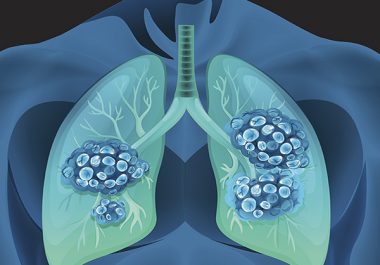
By Nicholas Warren, PhD Lung cancer is the deadliest cancer in the United States, killing more than 135,000 Americans every year. More than half of all lung cancers are diagnosed after the cancer has...

The FDA approved the molecularly targeted therapeutic tivozanib to treat certain adult patients with the most common type of kidney cancer. The U.S. Food and Drug Administration (FDA) has approved tivozanib (Fotivda) to treat...

A patient advocate and researcher argue that the U.S. has set insufficiently ambitious cervical cancer screening goals, and more news of the week from Cancer Today.

The FDA granted accelerated approval to a CAR T-cell therapy for certain adult patients with follicular lymphoma, a common type of non-Hodgkin lymphoma. The U.S. Food and Drug Administration (FDA) granted accelerated approval to...

Cancer Survivors are more likely than others to walk slowly or have mobility problems that are also linked to higher risk of death, a study found.
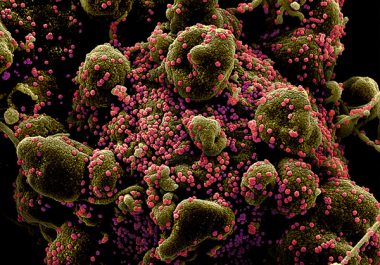
Numerous studies have shown that individuals with cancer fare worse than the general population if they contract COVID-19, with higher rates of hospitalization, severe disease, and death. Studies from recent months highlight another new...

The FDA has approved an immune checkpoint inhibitor – a type of cancer immunotherapy – as a first-line therapeutic for certain patients with non-small cell lung cancer.

Nonprofits provide support to young cancer patients in need of fertility preservation, and more news of the week from Cancer Today.

Tool outperformed preexisting mathematical models and a previously established artificial intelligence tool

AACR Fellow Lewis C. Cantley, PhD, leads a national effort targeting triple-negative breast cancer and ovarian cancer with a novel drug combination.
Learn More