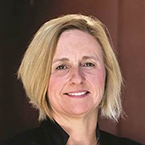
Scientific Areas of Expertise: Cellular Immunotherapy, Pediatric Immuno-oncology, T cell Homeostasis
For pioneering contributions to the fields of pediatric oncology, immunology, and immunotherapeutics including the discovery of the role of IL-7 in T cell homeostasis, significant efforts to advance the use of CAR-T cell therapies, and for consistent and groundbreaking translational research dedicated to establishing novel treatments for pediatric cancer patients.
A pioneering leader in pediatric cancer immunotherapy, Dr. Mackall has consistently translated fundamental principles of human immunology into therapies that have transformed clinical oncology. Her early clinical and translational research defined key mechanisms governing immune reconstitution following cytotoxic therapy, including the role of interleukin 7 in supporting T cell recovery and immune competence after treatment. These insights informed early clinical strategies to rebuild antitumor immunity after intensive therapy and positioned Dr. Mackall to lead first-in-human and first-in-child trials spanning dendritic cell vaccines, cytokines, natural killer cell therapies, and genetically engineered T cells. Together, this body of work established a durable framework for coupling immune recovery with effective cancer immunotherapy.
Building on this foundation, Dr. Mackall played a central role in advancing engineered T cell therapies into pediatric oncology through foundational trials of CD19 directed CAR T cells that demonstrated clinical activity in pediatric B cell acute lymphoblastic leukemia. Recognizing antigen escape as a major driver of relapse, she led the development and clinical testing of CD22 directed CAR T cells, which established an option for patients resistant to CD19 targeted therapy, and expanded access to durable remissions for children with relapsed leukemia. In parallel, Dr. Mackall’s team defined the transcriptional and epigenetic programs underlying T cell exhaustion to address limitations in cellular immunotherapy durability. This work led to the concept of reversible CAR signaling rest induced through a drug regulated pause that restores T cell function and memory-like properties. Extending immunotherapy beyond hematologic malignancies, Dr. Mackall identified GD2 as a therapeutic target in diffuse midline glioma and provided evidence that CAR T cells can achieve clinical activity in the central nervous system. Spanning discovery, engineering, and early phase clinical investigation, Dr. Mackall has established a rigorous, patient centered framework that continues to broaden the reach, safety, and durability of immunotherapy for children with cancer.
Selected Awards and Honors
2022 Nobility in Science Award, Sarcoma Foundation of America, Damascus, Maryland
2022 Elected Member, National Academy of Medicine, Washington, DC
2021 AACR-St. Baldrick’s Foundation Award for Outstanding Achievement in Pediatric Cancer Research, American Association for Cancer Research, Philadelphia, Pennsylvania
2021 AACR-Team Science Award for the Pediatric Cancer Dream Team, American Association for Cancer Research, Philadelphia, Pennsylvania
2021 Pediatric Oncology Award and Lecture, American Society for Clinical Oncology, Alexandria, Virginia
2021 Richard V. Smalley Award and Lectureship, Society for the Immunotherapy of Cancer, Milwaukee, Wisconsin
2019 Lila and Murray Gruber Memorial Cancer Research Award and Lectureship, American Academy of Dermatology, Rosemont, Illinois
2018 Top 10 Clinical Research Achievement Award, Clinical Research Forum, Washington, DC
2015 Elected Member, Association of American Physicians, Tucson, Arizona
2015 William Hathaway Visiting Professor Award, University of Colorado, Boulder, Colorado
2013 Director’s Award, National Institutes of Health, Bethesda, Maryland
2007 MERIT Award, National Institutes of Health, Bethesda, Maryland
2005 Elected Member, American Society for Clinical Investigation, Ann Arbor, Michigan
2004 Distinguished Alumni Award, Northeastern Ohio University College of Medicine, Rootstown, Ohio
2003 PHS Commendation Medal, United States Public Health Service, Department of Health and Human Services, Washington, DC
2003 Director’s Award, National Cancer Institute, National Institutes of Health, Bethesda, Maryland
2000 Distinguished Clinical Teacher Award, National Institutes of Health, Bethesda, Maryland
[Institutional affiliations listed for Fellows reflect those held at the time of their induction into the AACR Academy.]