AACR-Merck Cancer Disparities Research Fellowships
The AACR-Merk Cancer Disparities Research Fellowships represent an effort to encourage and support postdoctoral or clinical research fellows to conduct research in cancer disparities and to establish a successful career path in this field.
2024 grantees
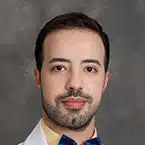
Research
Significant differences in glioblastoma (GBM) incidence and survival rates have been noted between sexes, with males experiencing poorer outcomes compared to females. These differences suggest that biological sex plays a crucial role in the development of GBM. Dr. Halaoui has been studying the role of the SWI/SNF chromatin remodeling complexes, particularly cBAF, PBAF, and ncBAF, in GBM. Their preliminary data has shown that knockdown of specific BAF subunits have sex-dependent effects on GBM cell proliferation and clonogenic potential. In this project, he aims to continue to elucidate the epitranscriptomic impact of BAF depletion and assess sex-specific effects on GBM progression and survival.
Biography
Dr. Halaoui earned his undergraduate degree in nutrition and nietetics and medical degree from the American University of Beirut, where he also completed 2 years of neurosurgery residency training. He is currently a postdoctoral scholar in the department of neurosurgery at the University of California, San Diego where he focuses on the sex-specific roles of chromatin remodeling complexes in GBM and aims to uncover gender-tailored therapeutic strategies.
Acknowledgment of Support
“Receiving the AACR-Merck Cancer Disparities Research Fellowship will significantly advance my career by providing vital resources and recognition, enabling me to deepen my investigation into sex-specific chromatin remodeling in glioblastoma. This support will enhance my ability to develop targeted therapeutics strategies, ultimately contributing to improved patient outcomes and advancing the field of cancer research.”

Research
Sleep is a crucial, understudied, and modifiable lifestyle behavior which regulates metabolism and immune response, both of which are critical in cancer care. Marginalized groups and those with a cancer diagnosis have higher levels of stress and poorer sleep quality. The overall objective of this research is to elucidate longitudinal sleep duration and sleep quality by racial-ethnic group and underserved communities (rural, urban, Appalachian), while exploring social factors, stress, and the built environment among breast cancer patients from treatment into survivorship. Dr. Hery plans to evaluate sleep quality in stage 1-3 breast cancer patients over the course of treatment into survivorship, using surveys, wearable devices and non-invasive biospecimen collection (saliva, buccal, hair).
Biography
Dr. Hery received her undergraduate degree in behavioral neuroscience from Northeastern University, a master’s degree in epidemiology, and a doctorate in public health – epidemiology from The Ohio State University. Currently a postdoctoral researcher at The Ohio State University, training in sleep health and cancer health disparities, her research focuses on the behavioral and biological aspects of sleep health in minoritized racial and ethnic groups and medically underserved cancer populations. Her work aims to reduce disparities in cancer outcomes by studying differences in sleep quality among underserved populations.
Acknowledgement of Support
“The AACR-Merck Cancer Disparities Research Fellowship will allow me to gain expertise collecting novel sleep data with innovative biospecimen collection among breast cancer patients which will help guide and support my long-term career goal of becoming an independent investigator focusing on lessening cancer disparities by exploring variations in sleep.”