AACR-Sontag Foundation Brain Cancer Research Fellowship
The AACR-Sontag Foundation Brain Cancer Research Fellowship represents a joint effort to encourage and support a postdoctoral or clinical research fellow to conduct brain cancer research and to establish a successful career path in this field. The proposed project may be basic, clinical, translational, or epidemiological in nature and must have direct applicability and relevance to brain cancer.
2025 Grantee
Scientific Statement of Research
More than 70% of childhood hemispheric ependymomas bear recurrent ZFTA-RELA fusions. Despite existing knowledge of the underlying molecular drivers, there are no effective treatments, targeted therapies, or clinical trials for ZFTA-RELA ependymomas. Previous unbiased metabolomic studies identified elevated itaconate production to be an important metabolic pathway in these cells. Dr. Natarajan aims to define molecular mechanisms of ZFTA-RELA fusion-driven itaconate metabolism and determine the therapeutic potential of inhibiting itaconate production in these tumors.
Biography
Dr. Natarajan received his doctoral degree in molecular and cellular pathology from the University of Michigan, studying how altered metabolism shapes the epigenetic landscape in posterior fossa ependymomas and IDH1-mutant gliomas. He is currently a postdoctoral fellow at the University of Michigan where his goal is to determine how itaconate, an immunomodulatory metabolite, is a central driver of aggressive, ZFTA-RELA fusion ependymomas.
Acknowledgement of Support
“My vision involves pursuing an academic career focused on cancer research. I aspire to merge my expertise in tumor immunology and metabolism to explore how tumor-derived metabolites promote aggressive pediatric brain tumors. The AACR-Sontag Foundation Brain Cancer Research Fellowship is a significant opportunity that will enrich my academic journey and provide a platform to learn from esteemed leaders in pediatric cancer biology. I am immensely honored and grateful to be a part of both AACR and the Sontag Foundation.”
2023 grantee
Research
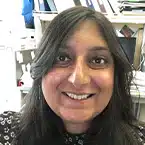
Medulloblastoma (MB), the most common malignant brain tumor in children, arises in the cerebellum. Group 3 (G3) MBs show poor overall survival (<50%) and recurrent metastases within the central nervous system and have frequent amplifications of both MYC and TGFβ pathway effectors. Remarkably, some tumors have no reported mutations, suggesting roles for aberrant epigenetic mechanisms in remodeling the transcriptional landscape of G3MB. Dr. Qadeer is utilizing a unique model of MYC-driven G3MB based on human induced pluripotent stem cells differentiated to neuroepithelial stem cells to investigate therapeutic vulnerabilities. Dr. Qadeer will investigate the chromatin landscape of G3MB and screen for epigenetic factors that cooperate with MYC to promote therapy resistance using high-resolution Perturb-seq. This technique combines multiplexed CRISPRi with scRNA-seq, integrating genetic/therapeutic perturbations to transcription phenotypes.
Biography
Dr. Qadeer completed her doctorate in Biomedical Sciences at Icahn School of Medicine at Mount Sinai investigating epigenetic dysregulation in neuroblastoma. She is currently a postdoctoral fellow at University of California, San Francisco, where her studies focus on utilizing innovative humanized stem cell-based models to identify drivers of medulloblastoma progression. Her goal is to understand the chromatin and transcriptional landscape of these tumors and to integrate these findings to identify new targets to overcome resistance and recurrence. Dr. Qadeer was a recipient of the Damon Runyon-Sohn Pediatric Cancer Fellowship as well as the Alex Lemonade Stand Foundation Young Investigator award.
Acknowledgment of Support
“I am immensely honored to receive the 2023 AACR-Sontag Foundation Brain Cancer Research Fellowship. This award will help me build the foundation for my independent scientific career and make an impact in pediatric brain tumors. I am grateful to be a part of the incredible AACR, and Sontag research communities.”