The Enduring Importance of Cancer Disparities Research
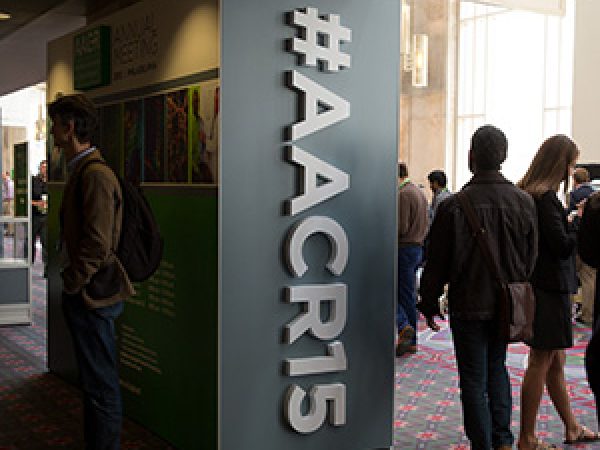
The path to progress is rarely without adversity, especially in efforts to close health disparities. In the shadow of the uncertainty surrounding threats to National Cancer Institute funding, staffing terminations, and canceled research grants, scientists gathered in Baltimore for the 18th American Association for Cancer Research (AACR) Conference on the Science of Cancer Health Disparities, held September 18 to 21, 2025.
In his keynote address at the opening session, Robert Winn, MD, FAACR, director of VCU Massey Comprehensive Cancer Center, reminded attendees of the resilience of disparities researchers through the history of medicine. Winn encouraged attendees to celebrate and share the gains researchers have already made in improving outcomes and reducing health disparities. Often, he said, people don’t hear as much about these successes as they do about how much work still needs to be done. Winn said he speaks to people outside the medical community who feel a lung cancer diagnosis is hopeless because they are unaware of treatment advances and rising survival rates in the disease.

The Need for Community
As a patient advocate and Hodgkin lymphoma survivor, Ysabel Duron has years of experience pressing researchers and policymakers to engage with communities and advocates to improve care.
When former President Joe Biden called for more research funding as part of his Cancer Moonshot initiative, Duron told representatives of government agencies that research alone was not enough to reduce cancer deaths, she recalled. “You need community voices at the table, community health workers in the street, and plenty of investment in community to get the job done,” Duron said during the patient advocate keynote address at the opening session.
Duron has worked to bridge the gap in various ways, including through efforts to build a Spanish-language website for the All of Us research program to reach people who don’t speak English as their first language. She also stresses the importance of disaggregating information. For example, many datasets categorize individuals by race instead of ethnicity, which means Latinos are often characterized as “white.” Thus, researchers cannot measure the potential differences in cancer incidence or outcomes of these groups.

Reducing Disparities in Real-world Practice
John M. Carethers, MD, FAACR, a gastroenterologist at UC San Diego Health who provided the AACR Distinguished Lectureship on the Science of Cancer Health Disparities during the opening session, discussed ways to improve access to colorectal cancer screening to decrease disparities in diagnosis and mortality.
One promising development is the increased adoption of stool- and blood-based screening tests. Colonoscopy is the most common screening method for colorectal cancer in the United States. However, colonoscopies require a patient to fast for the day and to undergo bowel preparation and sedation. Blood draws can be done in just a few minutes, and samples for stool-based tests can be collected at home and mailed in. Studies are currently exploring how to use these new methods to best increase screening.
Some findings Carethers discussed explored the potential of patient navigation to promote screening and help patients find the appropriate care after a positive result. He mentioned a Delaware program in which nurse navigators and care coordinators promoted cancer screening and helped patients connect with appropriate follow-up care at hospitals between 2002 and 2009. During that period, screening uptake increased across the board, and gaps in screening between Black people and white people nearly disappeared. Before the program launched in 2002, only 47.8% of Black people in the state underwent screening, but by 2009, that figure had risen to 74%, equaling the screening proportion for white Delaware residents. Among Black people diagnosed with colorectal cancer in the state, the percentage of those diagnosed with regional or advanced colorectal cancer dropped, and the share of early-stage diagnoses increased. The colorectal cancer mortality rate in Black people declined by 42% between 2002 and 2009 and was nearly the same as the rate in white residents.

Persevering Through Adversity
Disparities research, Winn pointed out, is not small and is not new. In fact, the work in Delaware incorporates patient navigation, a concept first pioneered by Black physician Harold Freeman, MD, in the 1990s. Winn discussed the history of disparities research, starting with W.E.B. DuBois, PhD, who studied the conditions of Black people living in Philadelphia in the 1890s. He highlighted large epidemiological studies in the late 1960s that set out to measure mortality and health differences between different classes. He finished with Freeman’s work to help reduce high breast cancer death rates among poor Black women in Harlem.
This work and the efforts of many other scientists have often been done under tremendous adversity. Winn cited Gladys West, PhD, whose contributions laid the groundwork for GPS technology, and Percy Julian, PhD, a chemist whose work synthesizing plant chemicals made pain medications more affordable and widely available. Both Black researchers worked in the era of widespread segregation and discrimination that could have stopped them from making these contributions. West, Julian, and many others give researchers a playbook for how to handle today’s challenges, Winn said, and serve as a reminder that “what we have to do as scientists and the gift we have to give to the world is the best science that we can do.”
This article was originally published on the Cancer Today website. Cancer Today is a quarterly magazine for cancer patients, survivors, and caregivers published by the American Association for Cancer Research. Subscriptions to the magazine are free.