Cancer in 2025: Funding, New Treatments, and Breakthrough Ideas
Each year adds new chapters to the story of cancer discoveries. The hope is that one day the story will end with cancer’s ultimate defeat thanks to the efforts of researchers around the world who continue to work on ways to prevent, treat, and cure the hundreds of diseases known as cancer. Until then, each breakthrough, new treatment approval, and tale of survival brings us one page closer to that conclusion.
So, what was added to the story of cancer in 2025? On Cancer Research Catalyst, the official blog of the American Association for Cancer Research (AACR), we have published over 100 posts about cancer this year. From all of those stories, here is a look at six key topics that emerged in 2025.
The Medical Research Funding Crisis
Throughout the year, one topic was constantly in the news cycle: the impact of the Trump administration’s cuts to the National Institutes of Health (NIH). At Cancer Research Catalyst, we covered the Senate forum on “Cures in Crisis: What Gutting NIH Research Means for Americans with Cancer, Alzheimer’s, and Other Diseases,” where witnesses included former NIH Director Monica Bertagnolli, MD, who shared her own experience as a cancer survivor and how NIH-funded research helped save her life. She emphasized how she was far from the only one—between 1991 and 2002 NIH-funded research contributed to a 34% decrease in the death rate from cancer in the United States.
We also shared the perspectives of researchers who spoke at the AACR Annual Meeting 2025 about the disruptions these cuts can have on research. One such disruption: a delayed NIH clinical trial that left stage 4 head and neck cancer patient Richard Schlueter in limbo for 10 weeks. Researchers also specifically addressed the outlook of health disparities research under this administration during the 2025 AACR Conference on the Science of Cancer Health Disparities.
Treatment Advances for Pediatric Gliomas and Cancers of the Head and Neck, Esophagus, Lung, and More
At the AACR Annual Meeting 2025, potentially practice-changing results from the phase III KEYNOTE-689 clinical trial were announced. Data showed the use of the immunotherapy pembrolizumab (Keytruda) before and after surgery for patients with locally advanced head and neck squamous cell carcinoma led to a 13.7% increase in major pathologic response rate and a 34% reduction in disease recurrence. A few months later, the U.S. Food and Drug Administration (FDA) approved pembrolizumab for this indication based on the results of that trial—representing the first new approval for head and neck squamous cell carcinoma in decades.
In 2025, the FDA also approved the first-ever therapy for recurrent diffuse midline glioma (DMG) with an H3 K27M mutation, which is a very rare but aggressive type of pediatric brain cancer in which most patients only live 11 to 15 months after diagnosis. The inaugural AACR Pediatric Cancer Progress Report details the approval for dordaviprone (Modeyso)—as well as decades-worth of pediatric cancer breakthroughs—and how dordaviprone has benefited 14-year-old Kaley Ihlenfeldt.
Other treatment advances this year included a new indication for tislelizumab-jsgr (Tevimbra) for the first-line treatment of advanced esophageal cancers; the combination of avutometinib and defactinib (Avmapki Fakzynja Co-pack) for a rare form of ovarian cancer known as low-grade serous ovarian cancer that helped save the life of patients like Mary Katherine Riley; and zongertinib (Hernexeos), a novel HER2 small-molecule inhibitor that was also presented at the AACR Annual Meeting 2025 before being approved for adult patients with non-squamous non-small cell lung cancer.
Those represent only a handful of the more than 50 FDA approvals in oncology in 2025. You can read about all of them in Cancer Research Catalyst’s quarterly FDA approval roundups.
The Rise of Early-onset Cancers
While cancer incidence in the United States has stabilized overall, a growing concern is the rise of early-onset cancer, which is typically defined as cases in individuals under 50. This trend was covered in a post examining the different cancer types with increases in early-onset cancer incidence, including melanoma, plasma cell neoplasms, cervical cancer, stomach cancer, and cancer of the bones and joints.
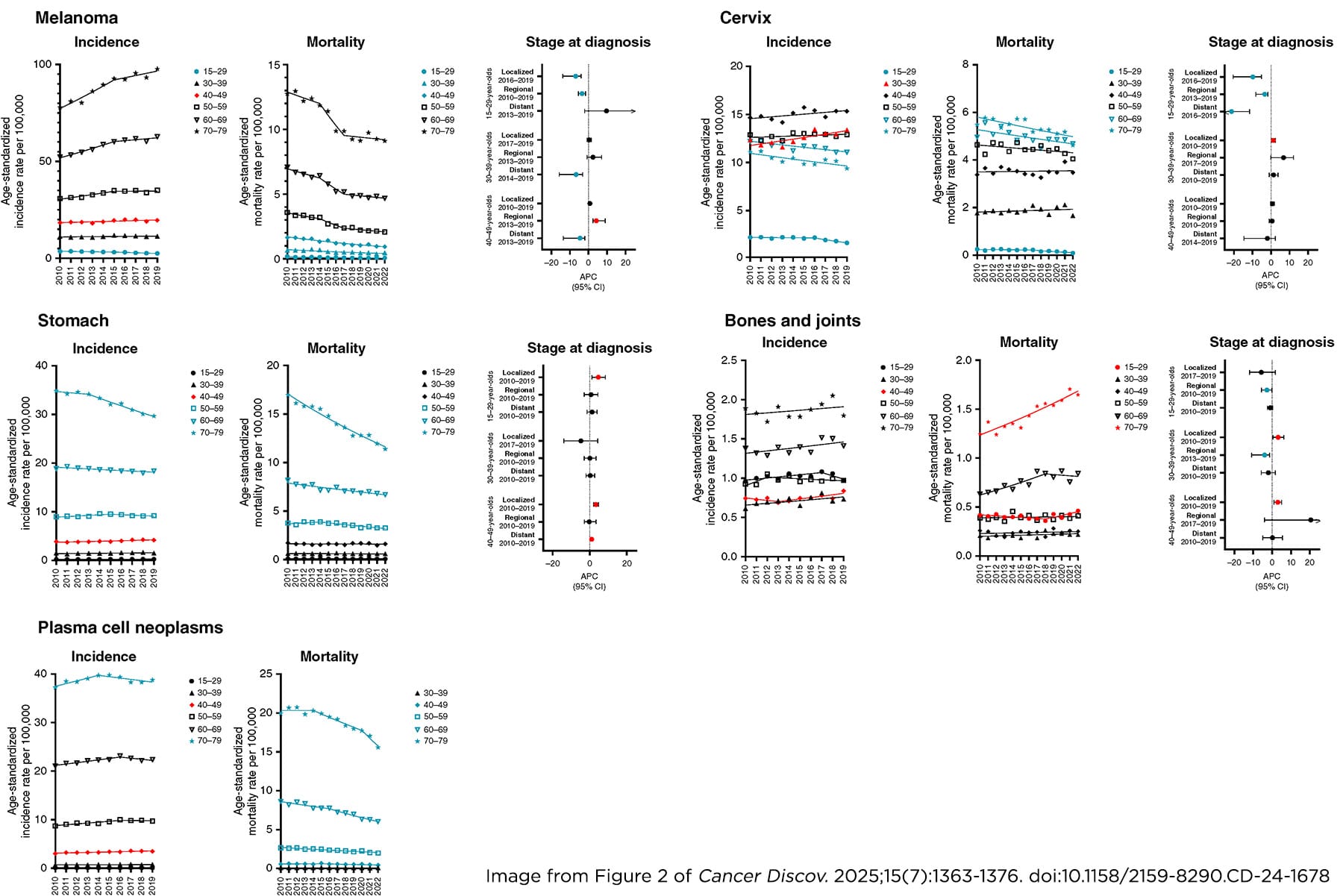
This year, the AACR also launched the AACR Special Conference on the Rise of Early-onset Cancers—Knowledge Gaps and Research Opportunities. Prior to the conference, the cochairs—Elizabeth M. Jaffee, MD, FAACR, Timothy R. Rebbeck, PhD, FAACR, and Andrea Cercek, MD—spoke with Cancer Research Catalyst about some of the leading hypotheses for why early-onset cancers are rising.
Exploring Cancer Interception
Another topic discussed at the AACR Special Conference on Early-onset Cancers was the potential to intercept cancers in its earliest stages. One avenue researchers are exploring to accomplish this is through vaccines that can prime the immune system to detect and target malignant cells before they form a tumor or progress to an invasive cancer.
For example, Olivera Finn, PhD, is studying the use of vaccines to target cells with MUC1 proteins that have a distinct pattern indicating they are precancerous or cancerous. This approach showed very early success in colorectal cancer and she is currently testing it for breast cancer.
Meanwhile, Frank McCormick, PhD, FAACR, who was honored with the inaugural Stephenson Global Prize earlier this year for the significant achievements he has already accomplished in pancreatic cancer, is examining another interception strategy. In inherited conditions like neurofibromatosis type 1 (NF1), the loss of RAS regulation can lead to the progression of benign tumors toward malignancy. So, McCormick is investigating if the KRAS inhibitors can be used to prevent cancer in people with elevated risk, including patients with NF1 as well as older adults who naturally have a higher risk of cancer.
What Patients Want to Know: Gleason Score, Impact of Alcohol, and Ultraprocessed Foods
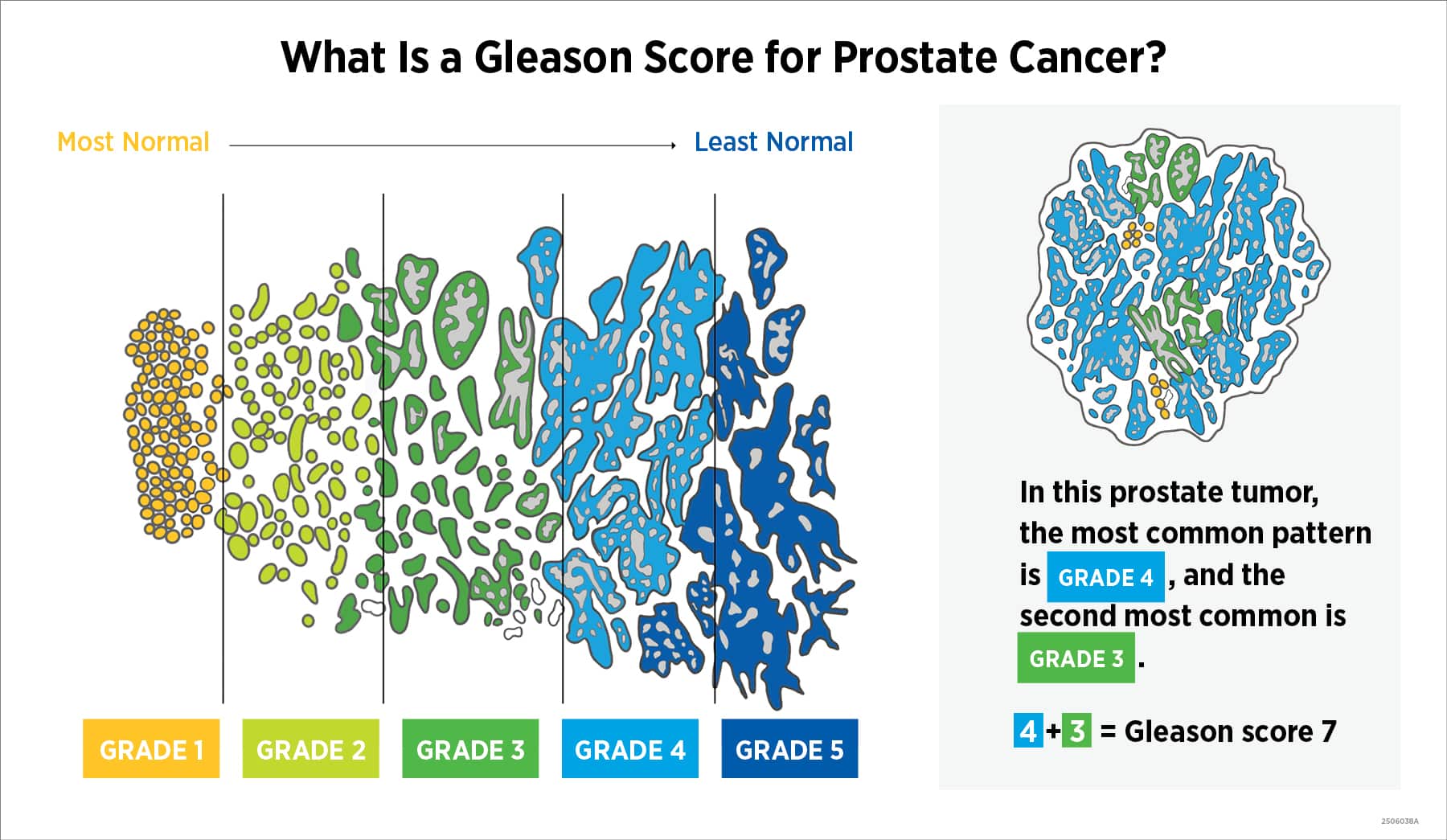
To help the public better understand different cancer-related topics, Cancer Research Catalyst publishes an ongoing “What Is” educational series. This year, the most visited post in that series was: What Is a Gleason Score for Prostate Cancer? Following President Biden’s prostate cancer diagnosis, many articles indicated that his Gleason score was 9, but not everyone may understand what a Gleason score is. Our post broke down how the score is calculated, why a score of 7 could mean two different things, and how the score may influence prostate cancer treatment.
Other queries that were popular among our visitors were educational posts about how alcohol consumption impacts cancer risk, whether ultraprocessed foods are increasing cancer risk, and what studies have revealed about the benefits of exercise for cancer survivors.
Exciting Discoveries in ctDNA, Immunotherapies, AI, and New Technologies
At the beginning of each year, Cancer Research Catalyst publishes our “Experts Forecast” featuring leaders in cancer research who share what advancements they are most looking forward to in their respective fields. So, what discoveries matched the expectations of this year’s experts?
AACR President Lillian L. Siu, MD, FAACR, expected to see more trials incorporate the detection of circulating tumor DNA (ctDNA) to help guide cancer treatment. At the AACR Annual Meeting 2025, Yelena Y. Janjigian, MD, presented a study in which ctDNA was used to determine which patients with early-stage, DNA mismatch repair-deficient solid cancers should receive immunotherapy following surgery and the results were stunning. Read more about the results and other advances in leveraging liquid biopsy to improve the care of cancer patients in this post.
Siu was also excited about the advances being made in developing KRAS inhibitors beyond those targeting the G12C mutation. At this year’s AACR-NCI-EORTC International Conference on Molecular Targets and Cancer Therapeutics, among the first-in-class therapeutics presented were two KRAS G12D degraders that use proteolysis-targeting chimeras (PROTACs) technology.
Vinod P. Balachandran, MD, was interested in the expanding research into cancer vaccines for therapeutic use. In this post, we examined the early promising results from a phase I trial for a personalized neoantigen vaccine used to treat patients with advanced clear cell renal cell carcinoma.
John E. Dick, PhD, FAACR, was intrigued by the continued advancement of chimeric antigen receptor (CAR) T-cell therapies, especially those developed to specifically target multiple receptors associated with leukemia to help spare healthy cells. In our quarterly “From the Bench” series, which looks at creative research approaches, we wrote about a new kind of CAR T-cell therapy dubbed “ELECTRIC CARs” that are modified to recognize and attack three targets. Another post in this series examined the ability to generate CAR T cells in the body—both from the patient and healthy donors—which could cut down on manufacturing timelines and expand access of these therapies to more patients. (For more advances in hematological malignancies, check out our “Bloodlines” series.)
Regina Barzilay, PhD, was particularly excited about the use of AI for multimodal analysis to discover new treatment approaches. At the AACR Special Conference on Artificial Intelligence and Machine Learning, researchers spoke about such translational applications of AI to find precision targets for prostate cancer as well as identify tumor neoantigens to develop a personalized vaccine to treat pancreatic cancer. (For more advances in AI, check out our “Eye on AI” series.)
Scarlett Lin Gomez, PhD, MPH, spoke about the continued importance of devoting attention to populations that have traditionally not been studied. The enduring importance of this type of research was a central theme of this year’s AACR Conference on the Science of Cancer Health Disparities. And addressing global cancer disparities was the topic of the Presidential Symposium at the AACR Annual Meeting 2025 by AACR Immediate Past President Patricia M. LoRusso, DO, PhD(h), FAACR.
Subscribe to Cancer Research Catalyst so you don’t miss what new chapters are added to cancer’s story in 2026.