Capturing China’s Growing Scientific Momentum in AACR Journals
By Robert Kruger, PhD, Senior Executive Editor, Cancer Discovery and Editorial director of AACR’s Publishing Division, and Elizabeth S. McKenna, PhD, Executive Editor, Cancer Discovery
The mission of Cancer Discovery, a journal of the American Association for Cancer Research (AACR), is to bring together a broad spectrum of cancer researchers and clinicians to catalyze a discussion of the most impactful and innovative science across all areas of cancer biology. That goal is not limited by geography as we strive to publish the most forward-looking cancer research no matter where it originates. Recently, that has led us to China, which has become one of the most active and productive regions conducting cancer research in the world.
Over the last few years, we have collectively traveled to conferences and visited institutions in Beijing, Chengdu, Guangzhou, Hong Kong, Kunming, Shanghai, Hangzhou, Tianjin, and Xi’an. During these visits we have engaged in face-to-face meetings with leading researchers and the next generation of scientific leaders. We have also partnered with the Chinese Anti-Cancer Association to host special Cancer Discovery-themed sessions at the past two Chinese Congress on Holistic Integrative Oncology (CCHIO) meetings. CCHIO is the largest annual basic cancer biology meeting in China with annual attendance of over 60,000, and we plan to return to this year’s meeting in Changsha with another Cancer Discovery session where we will showcase the work of emerging leaders in cancer research in China, many of whom have recently published in Cancer Discovery.

These trips have provided us the opportunity to learn firsthand about new data not yet presented or published, expand the journal’s network to meet new potential authors and reviewers, and make a real connection over informal conversations while learning about the culture and research landscape. Our goal is to continue to ensure that Cancer Discovery—and all of AACR’s peer-reviewed journals—reflect the full landscape of the best science from around the world. In recent years, China has become one of the biggest producers of research articles about cancer, and the AACR journals are a natural home for those studies.
The Growth of Cancer Research in China
We’re seeing important advances across many areas of cancer research in China, but a few themes really stand out. Chinese investigators are doing remarkable work in multiomics-driven discovery, integrating genomic, transcriptomic, proteomic, and single-cell data at very large scale. There is also a great deal of innovation in artificial intelligence, particularly in areas like diagnostic modeling, biomarker discovery, and drug development.
On the clinical side, we’re seeing increasingly impressive early-phase trials that introduce new therapeutic approaches and first-in-class agents. In fact, China now has a large number of innovative drugs under development, and an increasing number of new small-molecule cancer drugs submitted to the U.S. Food and Drug Administration (FDA) for permission to begin U.S.-based clinical trials were initially developed in China.

We are also seeing Chinese scientists increasingly presenting their work at international meetings. For example, at the AACR Annual Meeting 2025, 8% of all abstracts presented were from China, 16% of all clinical trials presented were from China, and eight oral clinical trial presentations had presenting authors from China. We are looking forward to welcoming many Chinese researchers to this year’s Annual Meeting in San Diego, where the AACR journal editors hope to convene some special events and hold one-on-one meetings.
Strengthening AACR Connections in China
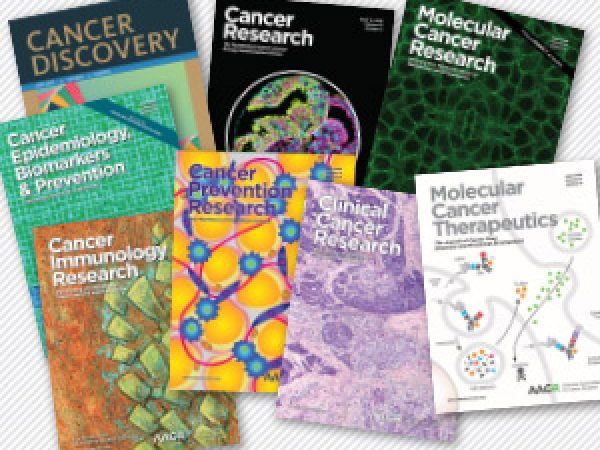
On our recent trips to China, we have worked to raise awareness of the AACR journals program: what we publish, how we evaluate submissions, and the kinds of high-impact studies we’re most excited to feature. While we welcome submissions across all areas of cancer biology, epidemiology, and medicine, we’re particularly excited about studies in emerging areas and technologies or those that originate from unique datasets. That includes mechanistic work with translational potential, new insights from multiomics, innovative uses of artificial intelligence, and early-phase clinical trials that explore new therapeutic ideas.
At Cancer Discovery, we have added several Chinese researchers to the editorial board over the past several years who are enthusiastic supporters of the journal and who have helped increase the connections between Cancer Discovery and the Chinese cancer research community. We were grateful for the opportunity to recently visit two editorial board members, Qiang Gao, MD, PhD, from Zhongshan Hospital, Fudan University, and Shengtao Zhou, MD, from West China Second University Hospital, Sichuan University, and for their participation in the Cancer Discovery Symposium at the 2025 CCHIO meeting.

More broadly, we’re very interested in identifying and supporting the next generation of scientific leaders in China. Beyond our various visits and ongoing interactions with potential authors, we are also taking steps to increase the visibility of the AACR journals on communication platforms used by Chinese researchers, like WeChat, and doing more webinars to highlight impactful studies from China through AACR channels. These efforts are all aimed at strengthening our connections with the Chinese research community, increasing AACR membership and engagement, and ensuring that the AACR journals serve as trusted sources of cutting-edge cancer science for readers and authors in China.
We are ready to build on this progress in engaging with the Chinese cancer research community and plan to expand on these efforts in the coming years. We have a long list of institutions that we hope to visit and will also engage in more author workshops and outreach to early-career investigators. We’re also open to new collaborations and will continue to identify emerging areas where research momentum is especially strong.
Ultimately, our goal is to build a sustained dialogue with the scientific community in China because we believe that researchers, drug developers, and clinicians around the world should not be working in isolation or duplicate efforts, but collaborating to advance our understanding of cancer and improve outcomes for patients. In the end, we are all working toward the same goal.
View more photos from our trips to China in the gallery below.