AACR D3 Offered a Peek Into the Cancer Drug Pipeline, Innovative AI Tools, and More
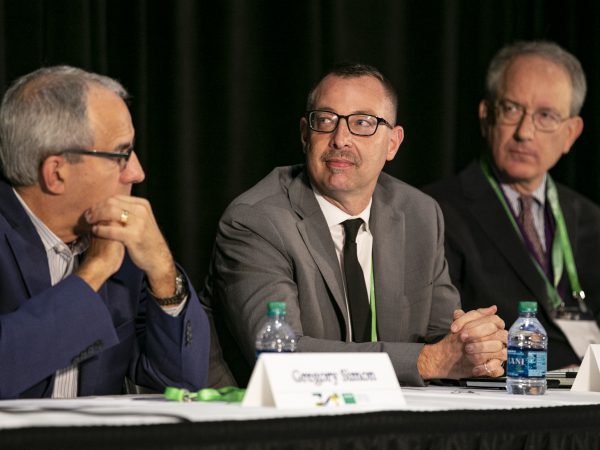
The inaugural AACR Drug Discovery and Development (AACR D3) meeting, held July 21-24 in Boston, showcased a wide range of therapeutic innovations through its plenary sessions, keynote lectures, panel discussions, poster sessions, and more.
A unique set of Biotech Spotlight sessions even gave researchers the opportunity to deliver short pitch-style presentations to the meeting’s diverse audience about the therapeutics in their pipelines—giving attendees from venture capital, academia, industry, regulatory agencies, and patient advocacy a glimpse into the advances waiting just around the corner.
Several key themes emerged from the dozens of presentations, including the promise of artificial intelligence (AI) to transform drug discovery and development, the power of molecular degraders, and creative strategies to drug “undruggable” proteins.
Molecular Degraders: Targeting KRAS Proteins, MYB mRNA, and More
Molecular degraders have made a big splash lately, with the first proteolysis-targeting chimera (PROTAC), vepdegestrant (Veppanu), approved in May. The excitement surrounding PROTACs and other molecular degraders was palpable at AACR D3 2026, and several presentations reported diverse applications of these therapeutic modalities.

A popular target for degrader technologies was KRAS, a protein mutated in about 25% of all cancers. With the recent unprecedented efficacy of daraxonrasib, an investigational inhibitor of the active (ON) form of multiple RAS mutants, for pancreatic cancer, the question of how KRAS-targeted degraders would compare to this drug was front of mind.
Katie Smith, PhD, of Arvinas, shared updated results on a KRAS G12D-targeted PROTAC, ARV-806, that promotes degradation of both the inactive (OFF) and active (ON) forms of this cancer driver. Building on earlier results showing preclinical efficacy in models of colorectal, lung, and pancreatic cancer, Smith reported that ARV-806 had “equivalent efficacy” to daraxonrasib. But unlike daraxonrasib, ARV-806 did not result in upregulation of KRAS G12D expression, suggesting that resistance through this mechanism may be less likely.
Smith also shared results from an oral pan-KRAS PROTAC that shrank tumors in multiple preclinical models. Compared with pan-RAS-ON inhibitors, the PROTAC induced more cell death, greater infiltration of antitumor immune cells into tumors, and fewer markers of immune suppression.
A different approach for degrading KRAS was presented by Anita Bellail, PhD, of HB Therapeutics and Indiana University. The approach she discussed uses a molecular glue degrader to simultaneously degrade KRAS and the downstream protein c-RAF. Because activation of c-RAF can allow cells to bypass KRAS inhibition, codegradation of c-RAF and KRAS may help prevent treatment resistance. In preclinical models, Bellail and colleagues found that the codegrader induced greater apoptotic signaling than daraxonrasib.

Presenters also reported progress on degrading other cancer-promoting proteins, including ARID1B, cyclin D1, CDK4/6, BCL6, and the as-yet-undruggable PIN1 protein, among many others.
While most approaches presented at the meeting focused on degrading proteins, Pete Smith, PhD, of Remix Therapeutics, discussed a molecule that instead degrades mRNA to prevent expression of an oncogenic protein. REM-422 is an oral mRNA degrader of the transcription factor MYB that works by inducing the insertion of a poison exon into MYB mRNA. The poison exon contains a premature stop codon that leads to mRNA degradation via nonsense-mediated decay. In a phase I trial, REM-422 led to tumor responses in 43% of patients with adenoid cystic carcinoma, a rare salivary gland cancer with limited treatment options, with some responses lasting about two years. Smith shared that REM-422 is moving into a phase II trial, and they are also testing the potential of this therapeutic for acute myeloid leukemia.
Drugging MYC, p53, and Other Undruggable Proteins by Modulating Posttranslational Modifications
About a third of cancer-driving mutations occur in histone-modifying epigenetic regulators, according to Johnathan Whetstine, PhD, of Fox Chase Cancer Center, who was one of the many presenters to discuss epigenetic-targeting therapies. He noted that targeting cancer-promoting histone modifications through enzymatic inhibitors, degraders, stabilizers, disruptors of protein-protein interactions, and other mechanisms could allow researchers to go after the expression of proteins considered undruggable.

As one example, Whetstine highlighted the potential of using epigenetic modulation to target the cancer driver MYC, which has not been successfully targeted in the clinic. He explained that histone demethylation by the KDM4C lysine demethylase promotes copy number amplification of many oncogenes, including MYC, and shared that he and colleagues are testing how KDM4C inhibition will impact MYC gene amplification in both chromosomal and extrachromosomal DNA.
Jian Jin, PhD, of Icahn School of Medicine at Mount Sinai, discussed multiple investigational therapeutics that modulate posttranslational modifications on cancer-promoting proteins. Among these was MS78, an investigational acetylation-targeting chimera (AceTAC) that induced acetylation of p53, another “undruggable” protein. Acetylation of p53 is required for the protein’s tumor suppressor activity; accordingly, MS78-mediated acetylation led to upregulation of cell death pathways and suppression of tumor growth in mouse models.
AI Tools to Accelerate Drug Discovery and Development
During the opening session of the meeting, experts agreed on the power of AI to accelerate progress. Amidst the many new therapeutics reported at AACR D3 2026, researchers also shared innovative AI-driven tools that aim to enhance various aspects of the drug discovery and development process.
Lei Shi, PhD, of Acrivon Therapeutics, described Acrivon Predictive Precision Proteomics (AP3), an AI-driven, proteomics-based tool for rational drug design. Shi explained that the platform analyzes the dysregulated pathways that drive disease to identify potential therapeutic strategies and candidate drug compounds. As an example, he shared that AP3 identified mechanisms underlying resistance to WEE1 inhibition and suggested dual inhibition of WEE1 and PKMYT1 as a strategy to combat resistance. AP3 also guided the discovery of ACR-2316, a WEE1/PKMYT1 dual inhibitor. ACR-2316 led to tumor regression in preclinical models and is currently being tested in a phase I clinical trial for patients with solid tumors.

Sarah Skerratt, PhD, of Isomorphic Labs, discussed the power of their AlphaFold 3 model to guide drug discovery, particularly for challenging cases like targets with flexible and cryptic pockets or intrinsically disordered regions. She explained that AlphaFold 3 can predict the structure of proteins, DNA, RNA, and small molecules, including when these components are in complex with one another, and can design small-molecule inhibitors, molecular glue degraders, peptides, and antibodies.
Benjamin Haibe-Kains, PhD, of the University of Toronto in Canada, noted that further progress in using AI for drug discovery will require more experimental data on protein-ligand interactions on which to train AI tools. To that end, he and colleagues in the Structural Genomics Consortium are working “to find a hit for every human protein by 2035.”
On the other end of the spectrum, AI tools are also showing potential to improve clinical testing. Jorge Reis-Filho, MD, PhD, of AstraZeneca, shared the development of multimodal foundation models that enhance patient selection, biomarker development, and the development of combination regimens with the ultimate goal of increasing the success of late-stage clinical trials. By combining different types of information, including insights from patient advocates, their models help overcome the data sparsity that he says currently hinders drug development.
Advances in Immunotherapy, ADCs, and Beyond
The AACR D3 2026 meeting featured countless other advances across cancer treatment. Emerging enhancements for chimeric antigen receptor (CAR) T-cell therapy included armored designs and in vivo production. New ADC designs—including dual payloads, targeted therapy payloads, radioconjugates, and multispecific antibodies—were prevalent, as were discussions about the importance of biomarkers for patient selection. Researchers reported novel synthetic lethality combinations, discussed strategies to overcome resistance to a wide range of therapeutics, and brainstormed ways to address global competition, investment challenges, and regulatory hurdles.
In all, this first-of-its-kind meeting lived up to its goal to spark bold ideas, catalyze innovation across disciplines, challenge conventional paradigms, and help redefine the future of oncology drug development.
Read more blog coverage of AACR D3 2026: