Beyond Hangovers: Binge Drinking and the Risk of Early-onset Breast and Colorectal Cancers
Who binge drinks more often: young men or women? Twenty-five years ago, the answer was unquestionably young men—with rates twice as high as young women. But today, rates among young women have caught up to and even slightly surpassed those of young men.
This shift has led researchers to ask whether binge drinking could be one of many factors contributing to the rise of early-onset breast cancer.
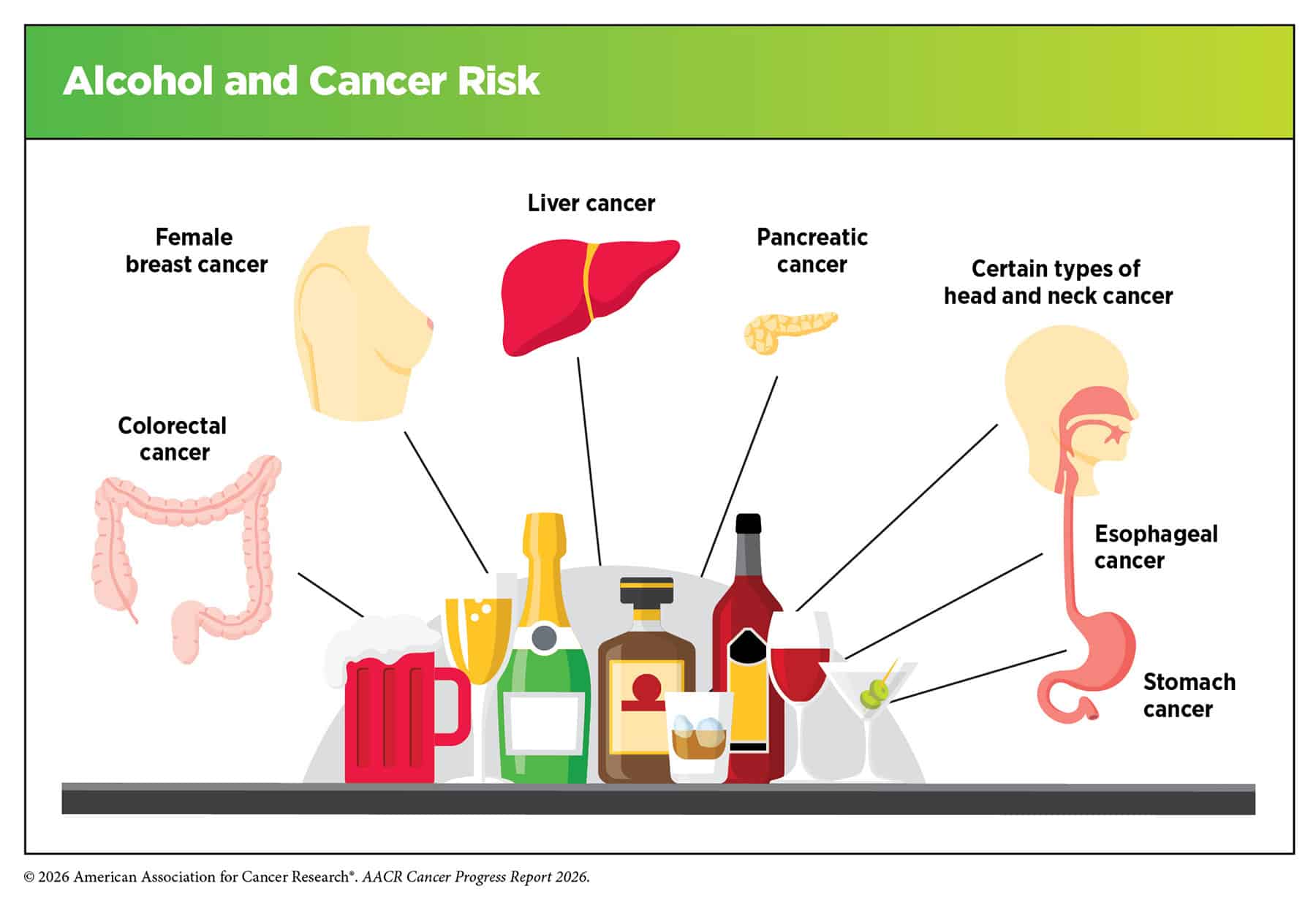
Alcohol consumption at any level is known to increase the risk of certain cancers, including breast, colorectal, liver, stomach, esophageal, and some types of head and neck cancers, according to the AACR Cancer Progress Report 2026. In fact, even one drink per day raises the risk of breast cancer. However, various studies have established a dose-response relationship between alcohol and cancer, meaning higher levels of alcohol consumption can lead to a higher risk of these cancers.
“Biologically, it makes sense why heavy, fast consumption of alcohol could be more damaging than slower, more chronic exposure,” said Mary Beth Terry, PhD, a professor of epidemiology and environmental sciences at Columbia University, who has been studying the relationship between alcohol and breast cancer risk, and presented a talk on this subject at the San Antonio Breast Cancer Symposium (SABCS) 2025. In an interview with Cancer Research Catalyst, Terry pointed to animal studies that have demonstrated the physiological impact of binge drinking.
When you drink alcohol, Terry explained, your body first converts ethanol into a harmful toxin called acetaldehyde, and then quickly converts acetaldehyde into a harmless substance called acetate. However, the more alcohol you drink, the harder it is for the body to process acetaldehyde fast enough. A build-up of this toxin can then cause DNA damage, which is one of the ways that alcohol consumption can lead to cancer.
In addition to that biological rationale, Terry said the rise of binge drinking in young women has corresponded with a concerning trend in cancer incidence.
“We have seen an increase in the number of women under 40 getting breast cancer at the same time binge drinking in young women has gone up,” Terry explained, “so we wanted to take a closer look to see if there could be a connection.”
Can Binge Drinking Lead to Breast Cancer in Young Adults?
To better understand whether binge drinking could play a unique role in breast cancer, Terry and colleagues examined national breast cancer incidence data collected between 2010 and 2019 and paired it with drinking-pattern data from 2000 to 2019.
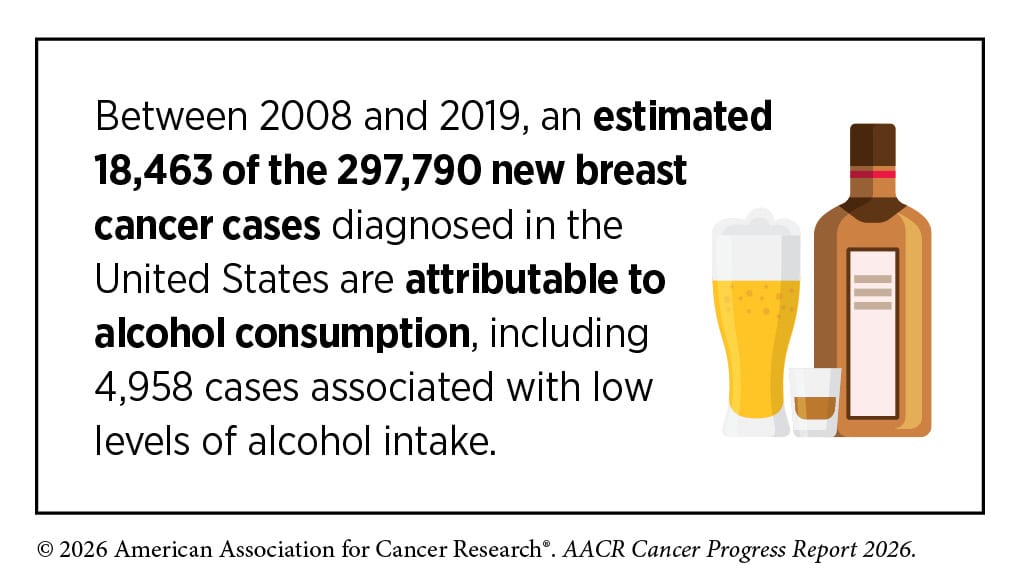
Past studies have identified a greater association between breast cancer risk and binge drinking compared with moderate alcohol use, specifically in cases of premenopausal breast cancer, which is generally diagnosed in women under 50. To further understand the association, her team examined four subtypes of breast cancer (luminal A, luminal B, ERBB2-enriched, and triple-negative) in 20- to 39-year-old women with population-based data on the following alcohol consumption categories: binge drinking, daily drinking of one or more drinks per day, and daily drinking of two or more drinks per day.
They evaluated the data in two models: a 10-year lag model that examined alcohol exposure a decade prior to cancer diagnosis to account for the time it takes for cancer to develop and a cumulative model that combined the sum of alcohol consumed over the 10 years leading up to diagnosis.
“We were interested in examining whether alcohol exposure affected cancer risk only after a certain time had passed or whether the total amount of alcohol was more important,” Terry explained. “Generally, when exposures like alcohol can affect tumor initiation and growth you would expect the cumulative exposures to matter more.”
In both models, however, greater rates of binge drinking were associated with higher rates of luminal A breast cancer (5% greater in the 10-year-lag model and 6% in the cumulative model). Binge drinking prevalence was not associated with a higher rate of ERBB2-enriched or triple-negative breast cancers, and only the cumulative model found it was associated with the rate of luminal B breast cancers.
This, Terry explained, is consistent with what we know about the role of alcohol and the development of hormone receptor (HR)-positive breast cancers, as alcohol can alter hormone levels. While both luminal A and luminal B are HR-positive cancers, the luminal B subtype typically has lower levels of HR expression. ERBB2-enriched cancers can be HR-positive or HR-negative, but can also have lower HR expression, while triple-negative cancers are HR-negative.
“While a 5% to 6% increase in cancer risk may seem modest, even a small percent increase for a common cancer like breast cancer can still have public health importance,” Terry said. “From a public health perspective, we know that it may be difficult to get people to stop drinking entirely—which would be ideal given any amount has been shown to be causal for breast cancer—but we can at least explain the dangers of binge drinking and explain why it is important to cut back.”
Even if that advice may sound obvious, Terry emphasized that most individuals are not receiving it. A study from the U.S. Centers for Disease Control and Prevention (CDC) found that only about 38% of adults were asked by their doctor if they binge drink, and if they reported doing so, 80% were not advised to reduce their drinking.
Concerning Trends in Binge Drinking
A CDC study from 2020 reported that the total number of drinks consumed annually during binge-drinking sessions increased significantly, between 2011 and 2017, from 472 to 529, with the largest increases among those 35 to 44 years old (26.7%), individuals with less than a high school diploma (45.8%), and those with household incomes under $25,000 (23.9%).
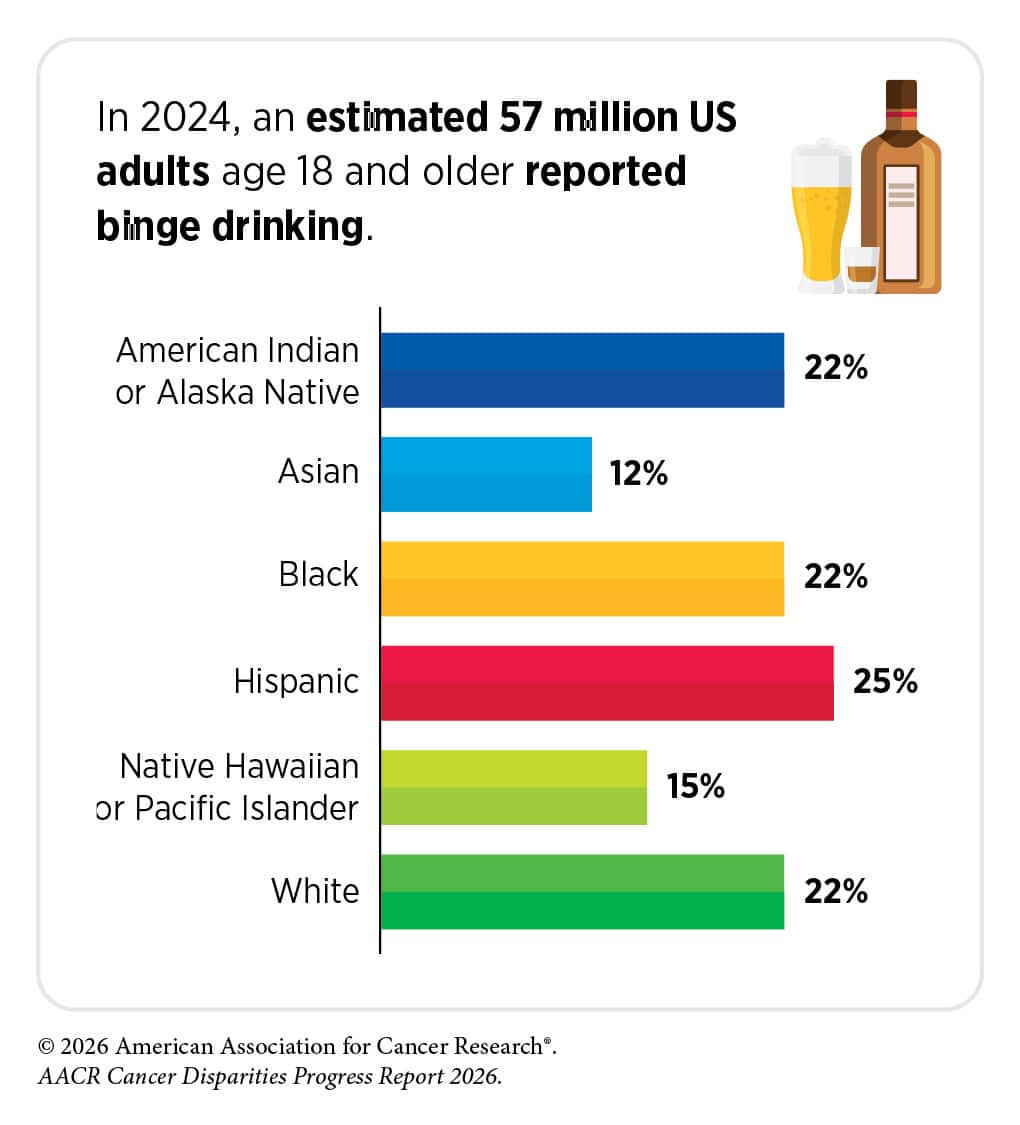
In 2024, an estimated 57 million adults 18 or older reported binge drinking, according to the AACR Cancer Disparities Progress Report 2026, which highlighted how patterns vary considerably across races, ethnicities, and demographics. For example, some studies suggest that experiences associated with structural racism may contribute to higher rates of binge drinking among affected populations. The report also highlighted higher rates of binge drinking among veterans who served in combat zones (24.8%) compared with those who did not (19.4%).
More recently, binge drinking across all ages groups is on the decline—dropping from 21.7% to 19.5% between 2021 and 2025, according to the 2025 National Survey on Drug Use and Health from the Substance Abuse and Mental Health Services Administration. However, 18- to 25-year-olds reported the highest percentage of binge drinking at 26.7%, which represents 9.6 million young adults. And while those under the legal drinking age (12 to 20) reported drinking less (a drop from 15.6% to 13.7%), their rates of binge drinking have remained stable since 2021.
Is Binge Drinking Linked to Early-onset Colorectal and Gastrointestinal Cancers?
To this point, the long-term impact of binge drinking on early-onset cancers has been most documented in breast cancer, but that is only one of several types of cancer becoming more commonly diagnosed in individuals under 50. And Yin Cao, ScD, MPH, a professor of surgery and molecular epidemiologist at Washington University School of Medicine in St. Louis, said there are reasons to suspect binge drinking could contribute to other early-onset cancers, such as colorectal and gastrointestinal cancers.
“Limited human evidence suggests that binge drinking may promote the passage of gut-derived bacterial products into circulation, while experimental studies in mice indicate that chronic binge drinking can exacerbate intestinal inflammation and increase susceptibility to intestinal infection,” explained Cao, who co-leads the Cancer Grand Challenges Team PROSPECT investigating the global rise of early-onset colorectal cancer. Researchers are examining how impaired intestinal barrier integrity and chronic inflammation could contribute to early-onset colorectal cancer.
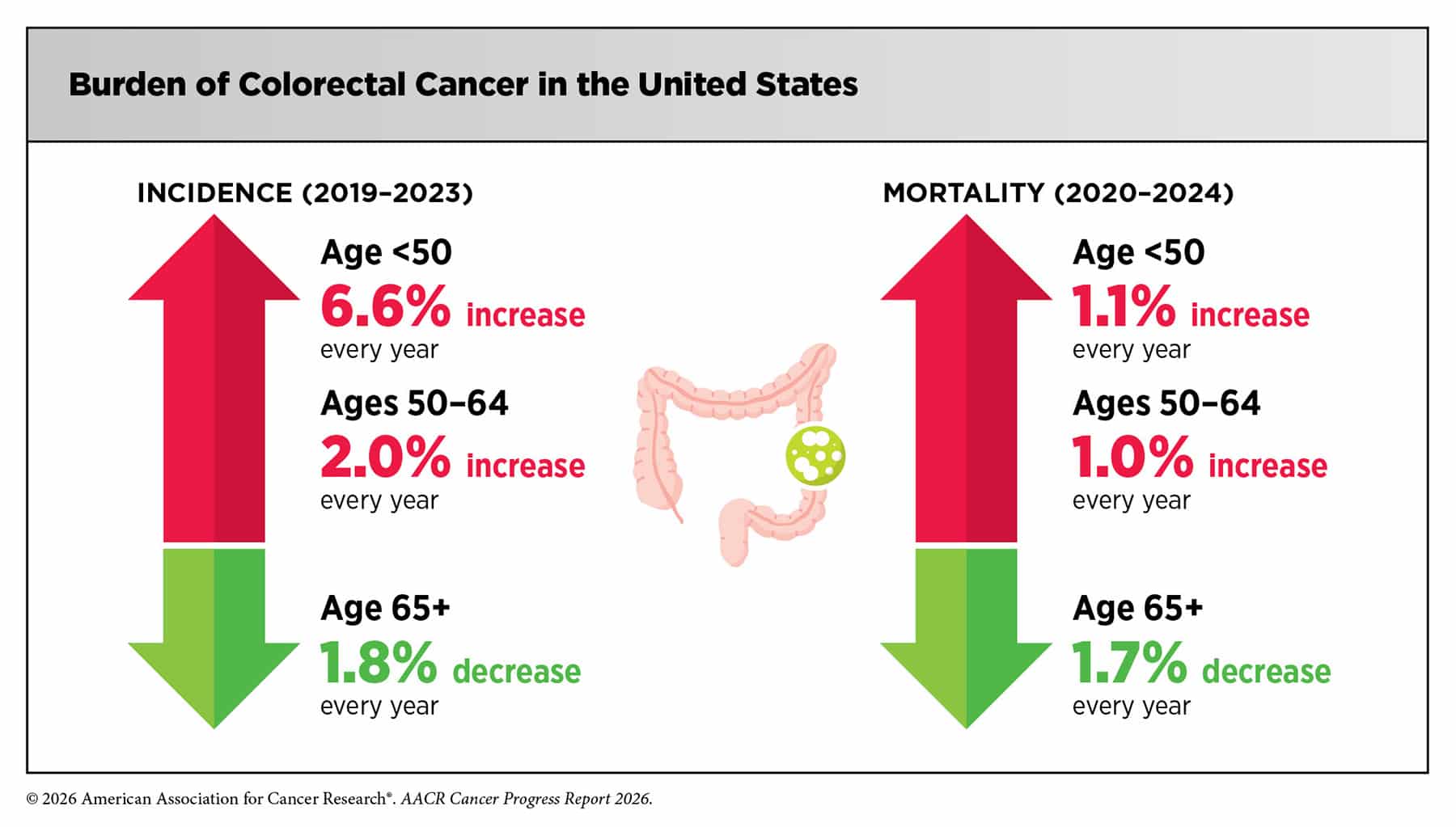
Samantha Rees, PhD, MPH, a postdoctoral fellow at the BC Cancer Research Institute in Canada, has been focused on better understanding modifiable risk factors related to colorectal and breast cancers. At last year’s AACR Special Conference in Cancer Research: The Rise in Early-onset Cancers—Knowledge Gaps and Research Opportunities, she presented a study that examined the differing risk factors between early-onset colorectal cancers and late-onset colorectal cancers.
In results that have since been published, Rees and her colleagues found that those with early-onset colorectal cancer were 3.22 times more likely to engage in binge drinking during their peak alcohol consumption years vs. those with late-onset colorectal cancers.
“We were able to identify important hypotheses regarding the role of alcohol consumption in early-onset colorectal cancer development, but ultimately these associations are worth exploring using more rigorous study designs,” Rees said. “But, in general, educating the public about known risk factors for cancers is important and alcohol consumption, extending to binge drinking, is a known carcinogen and a behavior that can be modified.”
Beyond binge drinking, Cao’s team is interested in examining the impact of other modern drinking habits, such as consuming alcohol without meals.
“Increasingly, more young adults deliberately skip meals before drinking to offset the calories in alcohol, become drunk faster, or save money for alcohol,” Cao explained.
In a cohort study of 347,591 current drinkers in the UK Biobank, Cao and her colleagues discovered that after adjusting for total alcohol intake, drinking without meals resulted in a 10% higher risk of gastrointestinal cancers (gastric, liver, and rectal) compared with those who drank with meals. Additionally, drinking without meals had a stronger association with earlier-onset gastrointestinal cancers.
“My message to the scientific community is we need to do a better job of capturing data and elucidating the impact of emerging drinking habits,” Cao said. “Otherwise, we will lose the opportunity to settle how these habits could be contributing to cancer’s development.”
Cao also echoed Rees’ message about educating the public regarding the need to reduce total alcohol consumption. “Even though it’s one of our prime social behaviors, it is important from a cancer prevention perspective,” she said.