New Pembrolizumab Formulation Approved for Subcutaneous Injection
The FDA approved pembrolizumab and berahyaluronidase alfa-pmph as an injectable therapy for multiple tumor types.
The U.S. Food and Drug Administration (FDA) has approved pembrolizumab and berahyaluronidase alfa-pmph (Keytruda Qlex) for subcutaneous (under the skin) injection for solid tumor indications in which intravenous pembrolizumab (Keytruda) is approved.
This covers certain patients with cancers of the bladder, breast, cervix, colon and rectum, endometrium, esophagus, head and neck, kidney, liver and biliary tract, lung, mesothelium, skin (squamous cell carcinoma, melanoma, and Merkel cell carcinoma), and stomach, in addition to patients with other solid tumors that have specific biomarkers associated with responses to pembrolizumab. These biomarkers include high microsatellite instability (MSI-high), DNA mismatch repair deficiency (dMMR), or high tumor mutational burden (TMB-H). The full list of FDA-approved indications for pembrolizumab and berahyaluronidase alfa-pmph is available online.
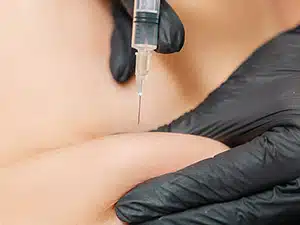
Pembrolizumab is an immune checkpoint inhibitor, a type of immunotherapy that prevents cancer and other cells from suppressing immune responses against tumors. Berahyaluronidase alfa-pmph is an enzyme that degrades a component of the framework surrounding cells in order to increase permeability and allow a drug—in this case, pembrolizumab—to be better absorbed by tissues.
This approval was based on results from the multicenter, randomized, open-label, active-controlled phase III Study MK-3475A-D77 trial, in which 377 patients with previously untreated non-small cell lung cancer lacking EGFR, ALK, or ROS1 alterations were randomly assigned (2:1) to receive either pembrolizumab and berahyaluronidase alfa-pmph subcutaneously or intravenous pembrolizumab, along with chemotherapy.
The trial met all of its endpoints, first demonstrating that subcutaneous pembrolizumab and berahyaluronidase alfa-pmph led to similar concentrations of pembrolizumab in the blood, both the overall exposure after the first treatment cycle and the lowest drug concentrations measured just before the next dose, compared to when pembrolizumab was administered via standard infusion. Additionally, there were no significant differences in response rates between the subcutaneous (45%) and intravenous (42%) administration routes, both of which also led to similar rates of progression-free survival and overall survival in patients. Thus, the data demonstrate that clinical benefit was not compromised when delivering pembrolizumab using this new method.
There are two recommended doses for pembrolizumab and berahyaluronidase alfa-pmph, depending on the specific indication: either 395 mg of pembrolizumab and 4,800 units of berahyaluronidase alfa-pmph every three weeks or 790 mg of pembrolizumab and 9,600 units of berahyaluronidase alfa-pmph every six weeks until disease progression, unacceptable toxicity, or according to the prescribing information
According to federal statistics, it was estimated that, collectively, more than 1.2 million individuals would be diagnosed with cancers of the bladder, breast, cervix, colon and rectum, endometrium, esophagus, head and neck, kidney, liver, lung, skin (melanoma), and stomach in the United States in 2025, and approximately 348,000 would die of these diseases.
The FDA rendered its decision on September 19, 2025. Check this resource for updated information on all therapeutics regulated by the FDA.