Red Meat and Colon Cancer: A Link Is Found
It has long been suggested that consumption of red meat increases the risk of colon cancer. Scientists have now demonstrated a possible mechanistic link between the two in human tumors
Since 1993, the AACR has awarded more than $542 million in grants to fund meritorious research projects across the spectrum of cancer science, including basic, translational, and clinical research. See how the AACR grants program has contributed to the AACR's mission.
It has long been suggested that consumption of red meat increases the risk of colon cancer. Scientists have now demonstrated a possible mechanistic link between the two in human tumors
The AACR-Bristol Myers Squibb Midcareer Female Investigator Grant is the AACR’s first dedicated funding mechanism for midcareer scientists, as well as the first dedicated for women. The goal is to ensure that midcareer female researchers have the resources they need to successfully establish themselves as independent investigators with productive research labs.
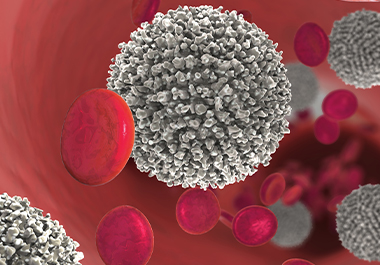
A team of investigators led by 2015 KureIt-AACR Grantee Dr. Eliezer Van Allen and Dr. Toni Choueiri probed the changes in the tumor and immune system in advanced renal cell carcinoma patients who received immune check point blockade (ICB).
Growing up in Australia, Charles Mullighan knew he wanted to be a doctor but never thought about working in Memphis, Tennessee. But that is exactly where he ended up, at a hospital named for the patron saint of impossible causes.
Grantees Sahand Hormoz, PhD, and Robert Eil, MD, show the potential of out-of-the-box thinking as they pursue projects that take on major challenges in cancer research with the hope of transforming future clinical practice.
May is Ocular/Uveal Melanoma Cancer Awareness month. The AACR- Ocular Melanoma Foundation (OMF) partnership supports the next generation of ocular melanoma cancer researchers. AACR-OMF Fellows have made progress in identifying new treatment strategies for ocular/uveal melanoma.
With a little help from the AACR, a fascination with cancer-associated viruses has turned into a successful career in research for Blossom Damania, PhD, of the University of North Carolina at Chapel Hill – a career that has gone global with research projects on four continents.
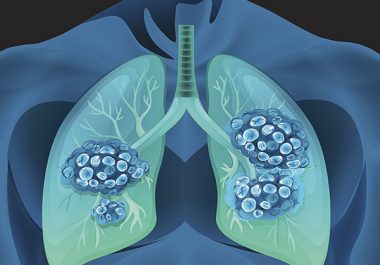
2018 AACR-AstraZeneca Lung Cancer Fellow Sushil Kumar demonstrated how inhibition of an epigenetic regulator, arginine methyltransferase CARM1, resulted not only in enhanced anti-tumor activity of T cells but also increased susceptibility of tumor cells to T cell-mediated killing.
Kimberly Kelly, PhD, the CEO of a biotech startup called ZielBio, received an AACR-PanCAN Career Development Award for Pancreatic Cancer Research as one of the first grants of her independent academic career. The value of the grant, she says, is more than the money.
The AACR NextGen Grants for Transformative Cancer Research represent the AACR’s flagship funding initiative to stimulate highly innovative research from young investigators. 2017 NextGen grantee, Hani Goodarzi, PhD, shares the impact of this grant on his career and on metastasis research, especially in colorectal cancer.