Robert H. Vonderheide, MD, DPhil, FAACR, Elected as American Association for Cancer Research President-Elect for 2026-2027
Five new AACR Board of Directors members elected
PHILADELPHIA – The members of the American Association for Cancer Research (AACR) have elected Robert H. Vonderheide, MD, DPhil, Fellow of the AACR Academy, as the AACR President-Elect for 2026-2027. Vonderheide will become President-Elect on Monday, April 20, during AACR’s Annual Business Meeting of Members at the AACR Annual Meeting 2026 in San Diego, California. He will assume the Presidency in April 2027 at the AACR Annual Meeting in Orlando, Florida.
Vonderheide is director of the Abramson Cancer Center of the University of Pennsylvania and the John H. Glick, MD, Abramson Cancer Center’s Director Professor in Penn’s Perelman School of Medicine. He is vice dean for cancer programs at the Perelman School of Medicine; vice president of cancer programs and lead physician for the cancer service line for the University of Pennsylvania Health System; and president of the Abramson Family Cancer Research Institute.
Vonderheide is an internationally renowned cancer immunotherapy and translational research expert. Through his integration of basic and clinical investigations, he has advanced the establishment of cancer treatment strategies and defined the immunobiology of tumor microenvironments using genetically engineered laboratory models. Over the course of his career, he has deciphered mechanisms of cancer immune surveillance and developed novel immunotherapeutics—such as vaccines, antibody-based therapies, and adoptive T-cell therapies—for patients with pancreatic cancer, melanoma, and breast cancer. He is well recognized for driving the development of agonist CD40 antibodies, now in clinical trials as potential immunotherapeutics across many types of cancers. Vonderheide discovered that telomerase is a universal tumor antigen and has led efforts to develop telomerase vaccination for both cancer therapy and the prevention of cancer in healthy individuals, and he has helped lead a team to show that stereotactic radiation therapy in combination with dual checkpoint blockade represents a synergistic path for immune activation in cancer. More recently, he has investigated the potential of KRAS inhibition to intercept pancreatic cancer.
As AACR’s next President-Elect, Vonderheide will work with the Officers and Directors of the AACR Board and the AACR membership at large, which includes more than 62,600 members residing in 143 countries and territories, to further AACR’s mission to prevent and cure all cancers through research, education, communication, collaboration, science policy and advocacy, and funding for cancer research.
“As the full power of discovery science is being unleashed to treat and cure more cancer patients than ever before, now is the time to accelerate and double down on cancer research,” said Vonderheide. “I am so proud to serve as AACR president during such transformative progress in our field. AACR is a special organization that is uniquely positioned to draw on the tremendous talent and drive of its members to ensure support and passion for cancer research in every setting: research labs, classrooms, boardrooms, community centers, and halls of government. The imperative is clear: science improves and saves lives. Together, we are meaningfully changing what it means for patients to hear ‘You have cancer.’”
“Dr. Vonderheide is an exceptional physician-scientist and innovative leader whose work integrating basic and clinical research has led to remarkable progress for patients with cancer,” said Margaret Foti, PhD, MD (hc), chief executive officer of AACR. “Over many years, he has played an instrumental role in advancing the mission and activities of AACR through his dedicated service in numerous leadership positions, including as an elected member of the AACR Board of Directors, chair of the AACR Annual Meeting Program Committee, and deputy editor of Cancer Immunology Research, among many other vitally important positions. Dr. Vonderheide’s commitment to AACR and its membership, his expertise in translational research on the leading edge of cancer immunotherapy, and his dedication to mentoring and supporting his fellow cancer researchers make him extremely well suited to serve as President of AACR. We extend our warmest congratulations to Dr. Vonderheide on his election as AACR’s 2026-2027 President-Elect and 2027-2028 President. It will be a great honor to work closely with him during this time of great promise in cancer research.”
Vonderheide has been a member of AACR since 2005 and was elected as a Fellow of the AACR Academy in 2025. He served with distinction as a member of the AACR Board of Directors from 2022-2025 and was program chair of the AACR Annual Meeting 2023.
Vonderheide has contributed significantly to various AACR committees, journals, and scientific conferences over the years. He is currently a member of the AACR Science Policy & Government Affairs Committee and serves as chair of the AACR Trailblazer Cancer Research Grants Scientific Review Committee. He was chair of the AACR Lifetime Achievement Award in Cancer Research Selection Committee (2024) and chair of the PanCAN-AACR Pancreatic Cancer Research Grants Scientific Review Committee (2012-2014). A member of the AACR Cancer Immunology Working Group (CIMM) since 2006, Vonderheide served as AACR CIMM chair in 2013-2014 and on the AACR CIMM Leader Nomination Committee in 2018. He was a member of the AACR-MPM Transformative Cancer Research Grants Scientific Review Committee (2019-2020), AACR-Cancer Research Institute Lloyd J. Old Award Selection Committee (2012-2013), AACR Publications Committee (2011-2014), and AACR Cancer Progress Report Steering Committee (2011).
Vonderheide currently serves on the editorial board of the AACR journal Cancer Discovery. He was previously a deputy editor of the AACR journal Cancer Immunology Research (2012-2025) and on the editorial boards of the AACR journals Clinical Cancer Research (2003-2014) and Cancer Research (2009-2012).
He was cochair of the AACR-Cancer Vaccine Consortium Cancer Vaccine Think Tank (2025-2026), cochair of the AACR Special Conference on Pancreatic Cancer (2016, 2021, 2022), cochair of the AACR Special Conference on Tumor Immunology (2016), and cochair of the AACR Annual Meeting Program Committee (2015).
Vonderheide was elected as a member of the National Academy of Medicine in 2023 and has received numerous other awards and honors throughout his career, including the Jill Rose Award for Scientific Achievement from the Breast Cancer Research Foundation (2025), the Breakthrough Challenge Zent Family Award (2024), and the DuPont Guerry Award for Outstanding Mentorship (2016) and William Osler Patient Oriented Research Award (2012), both from the University of Pennsylvania. He was the co-leader of the Stand Up To Cancer (SU2C)-Lustgarten Foundation Pancreatic Cancer Convergence Dream Team and the leader of a New Therapies Challenge Research Team funded under the Pancreatic Cancer Collective, a strategic partnership between the Lustgarten Foundation and SU2C. AACR is the Scientific Partner of SU2C.
Vonderheide earned his undergraduate degree from the University of Notre Dame, his doctoral degree in immunology from Oxford University, where he was a Rhodes Scholar, and his medical degree from Harvard Medical School. He completed his medical training at Massachusetts General Hospital and Dana-Farber Cancer Institute.
DOWNLOAD A PHOTO OF VONDERHEIDE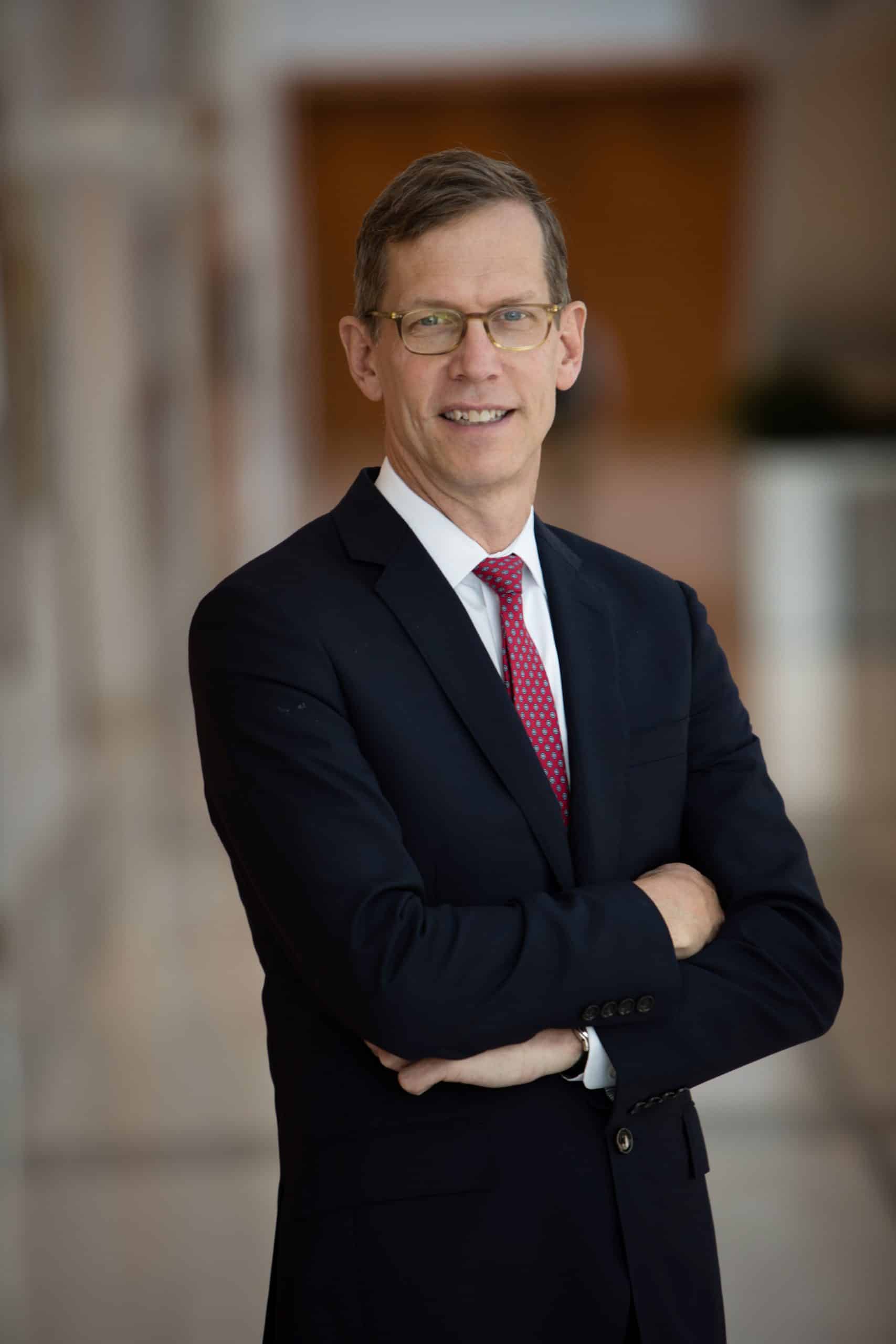
Newly Elected Members of the AACR Board of Directors
The members of AACR have also elected five individuals to serve on the AACR Board of Directors for the 2026-2029 term:
Ross L. Levine, MD, FAACR, is Chief Scientific Officer of Memorial Sloan Kettering Cancer Center, where he also holds the Edward P. Evans Endowed Chair for Myelodysplastic Syndromes. In addition, he is a professor of medicine at Weill Cornell Medical College.
Christopher I. Li, MD, PhD, is the vice president for faculty development and Helen G. Edson Endowed Chair for Breast Cancer Research at Fred Hutch Cancer Center. He is also the associate director for faculty development and advancement for the Fred Hutch/University of Washington/Seattle Children’s Cancer Consortium.
Sheila A. Stewart, PhD, is the Gerty Cori Professor and vice chair of the Department of Cell Biology and Physiology at Washington University School of Medicine in St. Louis and associate director for basic science at Siteman Cancer Center at Barnes-Jewish Hospital and WashU Medicine.
Ashani T. Weeraratna, PhD, is the Bloomberg Distinguished Professor of Cancer Biology at Johns Hopkins University, the E.V. McCollum Chair of Biochemistry and Molecular Biology at the Johns Hopkins Bloomberg School of Public Health, and associate director of laboratory research at the Sidney Kimmel Comprehensive Cancer Center at Johns Hopkins.
E. John Wherry III, PhD, FAACR, is the Barbara and Richard Schiffrin President’s Distinguished Professor and chair of the Department of Systems Pharmacology and Translational Therapeutics at the University of Pennsylvania Perelman School of Medicine, director of the Institute for Immunology and Immune Health (I3H), and director of the Colton Center for Autoimmunity at Penn Medicine.