Keeping Hope Alive—Why the Schlueters Rally for Medical Research
When Richard Schlueter was getting treatment at the National Institutes of Health (NIH) for stage 4 head and neck squamous cell carcinoma, his wife, Michelle, was blown away by the level of care.
“The hospital is unbelievable. It is a magical, magical place,” she said. “They are doing the most wonderful things there.”
They quickly understood why patients affectionately called the NIH by another name: the National Institutes of Hope.

Richard beamed about the level of dedication of every scientist he met. “They’re so mission-oriented and driven. They could be making much more money in the private sector, but they’re so committed to solving the issues of cancer,” he explained.
Michelle was grateful for their attention to detail, saying, “Any other hospital, I probably would’ve stayed with him each night, but at NIH they have round the clock care for him.”
And they both couldn’t stop listing examples of the genuine empathy the people displayed there. When Richard struggled to eat, one of the fellows offered to get him the salt and vinegar chips he craved. Another helped set up a TV in his room. And yet another spent the night watching a Braves game with him (he’s from Georgia).
But all of this almost never happened.
The treatment Richard was hoping would be a cure for his metastatic disease was delayed by five weeks because of the actions of the Department of Government Efficiency (DOGE).
“These cuts were being publicly justified as eliminating waste, fraud, and abuse from federal agencies,” Richard said. “The staff who make NIH clinical trials and research possible are not waste, fraud, and abuse. I was devastated and I was furious.”
During the delay, Richard’s cancer progressed, his bones weakened—some even broke—and his blood counts dropped and have remained dangerously low.
Experiencing firsthand what funding cuts mean to patients, Richard and Michelle have felt called to share their story. Most recently, they took their message to Capitol Hill at the Rally for Medical Research on September 18.
DOGE and the Delay in Richard’s Care
For 13 years, the mission of the Rally for Medical Research has been to advocate for robust and sustained funding for the NIH. With the American Association for Cancer Research (AACR) as a founding organizer and lead sponsor, more than 400 organizations across every area of medical research unite to spread this message.
During each meeting with congressional representatives or their staff, Richard shared his story, which is available in the 15th AACR Cancer Progress Report, released the day before the Rally.
The day he was diagnosed in February 2024, his oncologist was blunt: “This disease will end your life.” The only available options were intended to provide palliative care—to ease his symptoms and possibly prolong his life for a few months. So, Richard sought out clinical trials being conducted at some of the top institutions in the country.
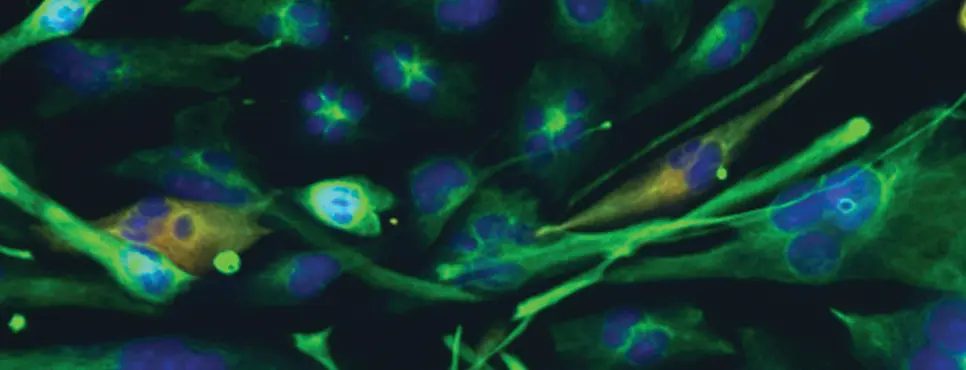
Eventually, he ended up at the NIH to see Steven A. Rosenberg, MD, PhD, FAACR, who is chief of surgery at the National Cancer Institute (NCI) and a pioneer of immunotherapy. Rosenberg’s current research involves treating cancer by extracting a patient’s own tumor-infiltrating lymphocytes (TILs), which are then expanded outside of the body and delivered back into the patient where they can trigger the immune system to fight cancer.
In January 2025, when Richard visited the NIH to have his TILs harvested, Rosenberg told him, “I have big plans for you.”
“For the first time in months, I felt a glimmer of hope,” Richard said.

In March 2025, the TILs were confirmed as viable for treatment. When his disease progressed, he was told it would take three weeks to prepare the TILs for reinfusion into his body.
But that wait became eight to 10 weeks. As part of DOGE’s purge of probationary employees in early 2025, two of the technicians in Rosenberg’s lab, who would help prepare the TILs for Richard, were let go.
While he waited for treatment, Richard was only allowed to undergo radiation therapy to treat the cancer that spread to his bones. However, the radiation lowered his blood counts to the point where he no longer qualified for the TIL trial. Fortunately, his oncologist worked with the NIH to secure a single-use access from the FDA, and he finally received his TIL infusion on August 1.
“But the fallout from this initial delay has lingered,” Richard explained. “These weakened counts not only complicate my recovery now, but could delay or even disqualify me from standard of care treatment and other clinical trials if this does not succeed.”
So far, the results from the infusion have been mixed. A scan after four weeks showed that while some of his tumors shrunk, others grew. Richard was told that since this was the first time a TIL therapy was used in his cancer type, it is possible a response may just take more time. He can only wait and hope.
Poll Results Show Americans Support Federally Funded Medical Research
Richard and Michelle were far from the only ones who felt it was imperative to emphasize the importance of funding the NIH. More than 430 people from 40 states participated in over 200 meetings at this year’s Rally—making it one of the largest ever.
As one cancer researcher and first-time Rally participant put it: “It is obvious people felt the call this year. I know I did.” Another first-time attendee who works in nursing said, “I felt an obligation.” A heart surgeon made this his first Rally because “there is a lot of shrinking going on, and that’s a bad way to do things.”
Meanwhile, a postdoc who has been attending various Hill Days related to health policy since he was 17 said, “What kind of country are we if we cut biomedical research? That is not America.”
He isn’t the only American who feels that way. The day before the Rally, the AACR released the results of a poll of 1,001 American voters in which:

- 89% favor the federal government using taxpayer dollars to fund medical research to fight diseases and improve public health;
- 83% favor increasing funding for cancer research, including 75% of Republicans, 75% of MAGA supporters, 93% of Democrats, and 75% of independents; and
- 77% feel more favorable toward their congressional representative if he or she voted to increase federal funding for cancer research over the next decade.
“The takeaway is clear: Americans are united in the fight against cancer and all diseases,” said Margaret Foti, PhD, MD (hc), chief executive officer of the AACR. “Encouragingly, this sentiment permeates through our elected officials in Congress.”
Both the Senate and House have summarily rejected the current administration’s proposal of a 40% cut to NIH funding. Instead, the Senate is recommending a $400 million increase to the NIH budget in fiscal year 2026, and the House is recommending a $99 million increase.
“Our goal is to pass bipartisan appropriations bills into law to prevent the type of chaos and disruptions that we have seen at research institutions across the country this year,” Senator Tammy Baldwin (D-WI), ranking member on the Senate Labor Health and Human Services and Education Appropriations Subcommittee, said during a reception to celebrate medical research the evening before the Rally. “And I’m going to keep fighting for that and to support the lifesaving work that all of you are dedicated to.”

Reed Jobs and Katie Couric Also Felt the Call
Thanks to the actions of both the Senate and the House—and their long-standing bipartisan support of medical research—appreciation was a core component of Rally participants’ messages.
Richard and Michelle were especially eager for the chance to thank Senator Raphael Warnock (D-GA) in person for advocating on Richard’s behalf. Warnock led the effort on a bipartisan letter to NIH Director Jay Bhattacharya, MD, PhD, which Richard believes was the key to getting one of the lab techs rehired and enabled Richard to finally get his TIL infusion.
“The people at NIH are so talented and even if it doesn’t impact me personally, I know they’re unlocking the secrets of cancer and are making great strides there,” Richard said.
Continuing to fund the basic research that works to unlock those secrets will be the key to developing the next breakthroughs in treatment, Reed Jobs, son of Apple founder Steve Jobs, explained during the Rally reception. Jobs launched Yosemite, one of the largest venture capital firms focused solely on oncology, following the death of his father from a pancreatic neuroendocrine tumor. His goal is to change the way funding for cancer treatments is developed and disseminated, but he emphasized that NIH research will remain essential. That’s because his firm only invests in research once it is ready for translation and clinical development—after years of successful work from scientists across the globe, especially those at the NIH.
“All of [our work] is standing on the shoulders of decades of NIH investment,” Jobs said.

Katie Couric, who also spoke during the reception, was similarly inspired by losses from cancer. After both her husband and sister died because of cancer, Couric cofounded Stand Up To Cancer where she has helped raise nearly $800 million for biomedical research. AACR is the Scientific Partner of Stand Up To Cancer. Couric also credits advances in research as the reason she is still alive today after being diagnosed with breast cancer three years ago.
“Every life extended or saved begins with medical research,” Couric said. “We have made such tremendous progress. We need to keep the momentum going … because according to Carl Sagan, ‘somewhere, something incredible is waiting to be known.’”
Richard hopes that somewhere researchers are close to discovering the key to treating his cancer. He is continuing his search by looking into clinical trials at The University of Texas MD Anderson Cancer Center as well as another at the NIH.
“If you don’t have hope, it is a really dark place to be,” Richard said. “But I have it and I want to keep it.”
As the Rally, the poll, and the actions of Congress have made clear, Americans stand firmly behind the NIH—the institution that drives discovery, saves lives, and offers hope to millions of people in their darkest moments.