The Cancer Aftermath of the 9/11 Attacks on First Responders
A quarter century has now passed since September 11, 2001, a date that continues to live in infamy—an infamy that, increasingly, is remembered in the same abstract manner as other episodes in the sprawling tide of history.
But the effects of the 9/11 attacks still define lives, especially those of the first responders whose health continues to be impacted by the exposures to toxins and irritants they incurred at ground zero. The intervening 25 years since 9/11 have indeed allowed the biological insults of the attacks to transform into detrimental health effects—including cancer.
On the 25th anniversary of the attacks, Cancer Epidemiology, Biomarkers & Prevention has published a new study investigating cancer incidence among responders who were there that fateful day, as well as those who participated in the cleanup that followed. In memory of those who lost their lives or families as a result of what happened on September 11, 2001, this edition of Cancer Research Catalyst reviews the effects of the attacks and showcases the new research being conducted in the 9/11-responder population.
Falling Towers, Rising Carcinogens
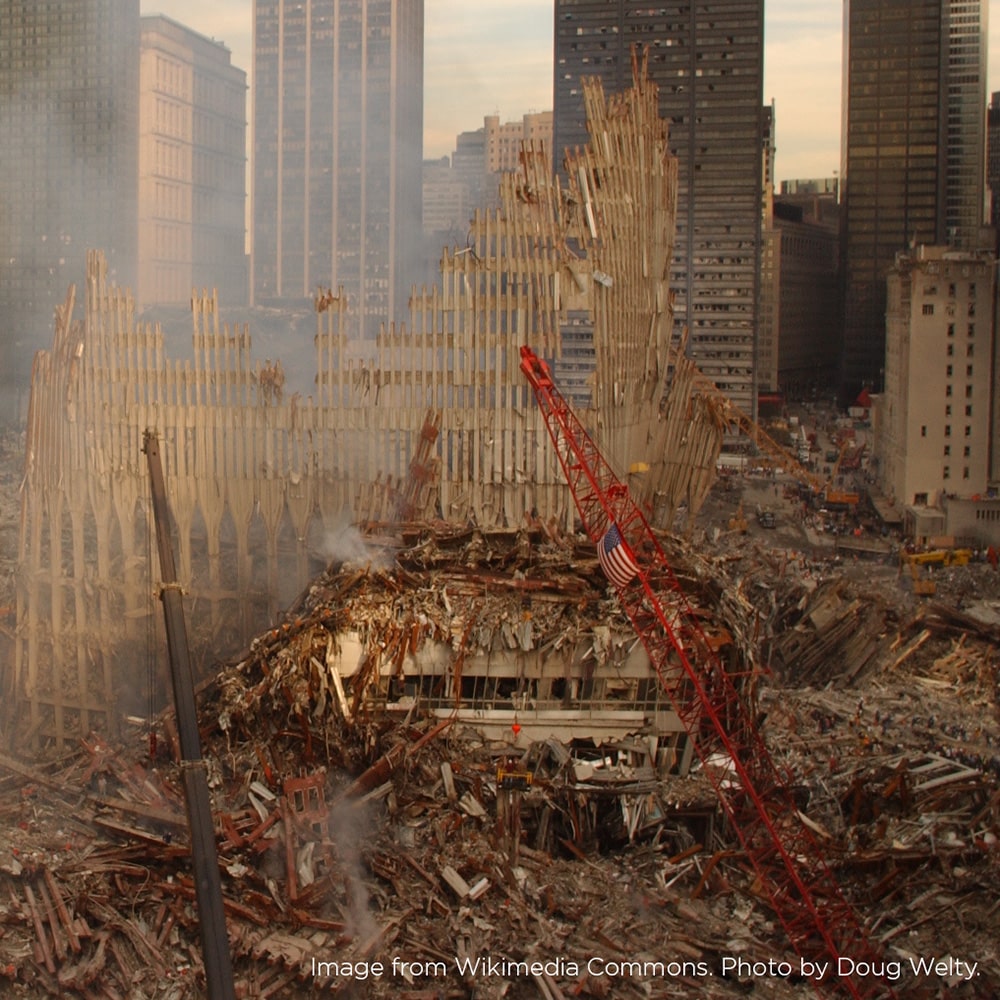
Cancer Research Catalyst covered the relationship between the attacks and cancer in 2022, and, as discussed in that post, the debris from the attacks have been associated with increased risks of thyroid cancer, prostate cancer, and possibly leukemia and lymphoma in the first responders who were exposed to the dust and smoke from the collapse of the World Trade Center.
One persistent throughline that should be noted, however, is the role of heightened awareness and screening in identifying these cases. As discussed in the 2022 blog post, the proactive screening efforts among individuals who were at ground zero on 9/11 could, by creating a relative increase in cancer detection, explain some of the observed increased cancer incidence.
However, there is solid evidence that the toxic dust and smoke that choked lower Manhattan was indeed quite toxic in and of itself. The authors of a 2025 study published in Cancer Discovery note that the towers’ collapse led to a massive proliferation of airborne carcinogens and genotoxic substances.
Additionally, their paper showed that 9/11 first responders experienced elevated levels of clonal hematopoiesis, an abnormal expansion of mutated blood cells that can be a precursor of a hematological cancer.
Clonal hematopoiesis can increase as a function of standard aging, but the Cancer Discovery paper found that younger 9/11 first responders demonstrated clonal hematopoiesis that was elevated for their age and notable for the inclusion of mutations in DNA damage repair pathways. The first responders with clonal hematopoiesis had odds of developing leukemia that were more than five times higher than their counterparts without clonal hematopoiesis.
Multiple Primary Cancers in 9/11 Responders
In the newly published study from Cancer Epidemiology, Biomarkers & Prevention, the authors tackled the question of multiple primary cancers among responders to the 9/11 attacks. Multiple primary cancers—two or more distinct, unrelated cancers that occur within the same person—tend to affect cancer survivors more than the general population.
Led by Emanuela Taioli, MD, PhD, who serves as the director of the Institute for Translational Epidemiology at Mount Sinai’s Icahn School of Medicine, the researchers compared the incidence of multiple primary tumors in 4,815 male 9/11 responders from the World Trade Center Health Program who had at least one primary cancer against the National Cancer Institute’s Surveillance, Epidemiology, and End Results (SEER) Program cohort of cancer patients.

Standardized for age, the proportion of responders with multiple primary cancers was 84% higher than the general SEER population. This was especially pronounced among the responders who received their first cancer diagnoses at younger ages.
Responders who were first diagnosed with cancer between ages 20 to 44 had a proportion of multiple primary cancers that was 3.76 times higher than their counterparts in the SEER cohort. This effect continued at a weaker level in those first diagnosed between ages 45 and 54—among whom first responders had a proportion of multiple primary cancers that was 36% higher than SEER patients—but the effect inverted for those who were diagnosed at age 65 and older. These older first responders had a proportion of multiple primary cancers that was 21% lower than SEER patients.
As time goes by, the exposures that responders experienced may continue to increase their risk for developing cancers.
Thankfully, the James Zadroga 9/11 Health and Compensation Act of 2010 established the World Trade Center Health Program, which provides free medical care for 9/11-related conditions to all responders and survivors of the attacks through the year 2090.
The 9/11 attacks may be a quarter-century past, but their effects continue the shape the world we live in—especially the worlds of those whose heroism has cost them their health.