Editors’ Picks, November 2026: Less Toxic Immunotherapy, Targeting the Breast Cancer Microenvironment, Clinical Trials, and More
We hope you’re hungry, because this month, we have quite a feast for you: a groaning board of piping-hot research articles, specially selected by the editors of the 10 peer-reviewed journals of the American Association for Cancer Research (AACR).
Savor a study of how immune checkpoint inhibitor therapy could be made less toxic without compromising its effectiveness. For a second helping of immunotherapy investigation, there’s also a study showing how the tumor microenvironment of metastatic breast cancer could be sensitized to dual checkpoint inhibition.
If clinical trials are more to your taste, there are two on offer this month: a phase II trial of neoadjuvant nivolumab (Opdivo) and chemotherapy for head and neck cancer, and a phase II trial of neoadjuvant pembrolizumab (Keytruda) and chemotherapy for non-small cell lung cancer.
And one highlighted study this month shows how tumor cells can acquire memories of stiff surrounding tissue that helps them proliferate as they spread.
Fresh studies taste best while they’re hot, so eat up—full-text access to the Editors’ Picks for November 2026 is freely available for a limited time.
Journal: Blood Cancer Discovery
The pathobiology of multiple myeloma is influenced by cells of the bone marrow (BM), but whether tumor support is organized in a spatially defined tumor microenvironment (TME) remains unclear. Using spatial transcriptomics and imaging mass cytometry, we show that myeloma cells initially exist as scattered cells throughout the marrow, yet with disease evolution condense into a spatially defined TME. Dense tumor nodules contain a cellular ecosystem distinct from the surrounding marrow, enriched for macrophages, conventional dendritic cells, and CD8+ T cells, as well as endothelial cells and THY1+ mesenchymal stromal cells. Conversely, neutrophil lineage cells are absent from this TME but interact with scattered myeloma cells outside of dense nodules. The presence of the dense tumor architecture at diagnosis confers a worse prognosis, emphasizing the relevance of spatial organization of the BM. Together, these findings define a discrete spatial and cellular myeloma TME that provides spatially guided insights into patient stratification and disease pathobiology.
Significance: This study provides identification of a topographically defined TME for multiple myeloma, with a specific cellular ecosystem. This TME develops during disease evolution and is linked to worse outcomes in newly diagnosed patients. Our work provides insight into the interplay of tumor evolution and spatial organization in multiple myeloma.
This article was highlighted in the November issue.
Journal: Cancer Discovery
A Pan-Cancer Single-Cell Analysis of Intratumoral Copy-Number Diversity and Evolution

Aneuploidy is a hallmark of human tumors. Although patient-level copy-number alteration (CNA) differences have been investigated extensively in large cohorts, their intratumoral heterogeneity remains understudied. In this study, we conducted a pan-cancer analysis of 94 human tumors at single-cell resolution, representing seven cancer types: bladder, breast, colon, glioblastoma, kidney, lung, and ovarian. Single-cell copy-number profiling was used to analyze 62,646 aneuploid cells, in addition to bulk exome sequencing of most patients and single-nucleus RNA sequencing of six samples. In many cancer types, increased subclonal diversity was associated with higher CNA burden, whole-genome doubling (WGD), TP53 mutations, and increased geographic diversity. Cancer cells from each patient shared a set of truncal CNAs, suggesting evolution from a single ancestral cell. Many tumors accumulated CNAs in bursts of evolution, suggesting that punctuated evolution is common in diverse cancer types. This study greatly improves our knowledge of intratumoral chromosome diversity across human cancers.
Significance: This study presents one of the largest pan-cancer single-cell DNA sequencing analyses, profiling intratumoral copy-number heterogeneity across seven major cancer types. The data identified punctuated evolution, clonal origins, subclonal WGD, spatial heterogeneity, and associations between copy-number and transcriptional diversity, with implications for both cancer diagnosis and treatment.
This article was featured on the cover of the November issue, where it was highlighted.
Journal: Cancer Epidemiology, Biomarkers & Prevention
Background: Guideline-concordant treatment (GCT) is a key indicator of cancer care quality, yet most studies rely on cancer registry data, which incompletely capture treatment adequacy and vary in population composition. As a result, estimates of racial and ethnic disparities in GCT may differ depending on treatment measurement and populations represented in the data.
Methods: We conducted analyses using Surveillance, Epidemiology, and End Results (SEER) 17, the National Cancer Database (NCDB), and SEER–Medicare to evaluate how treatment measurement and population composition influence disparities in guideline-concordant endometrial cancer treatment. GCT was defined according to National Comprehensive Cancer Network recommendations. Primary analyses used adequacy-based definitions incorporating treatment receipt, timing, amount, and duration, when available, whereas sensitivity analyses used receipt-based definitions based only on documented receipt. Logistic regression estimated odds ratios (OR) and 95% confidence intervals (CI) for associations between race/ethnicity and GCT within each data source. Additional sensitivity analyses evaluated influences of differences in underlying study populations.
Results: Using adequacy-based definitions of GCT, Black patients had lower GCT odds than White patients (SEER OR = 0.84; 95% CI, 0.79–0.90; NCDB OR = 0.75; 95% CI, 0.73–0.77; SEER–Medicare OR = 0.73; 95% CI, 0.62–0.85). Within both NCDB and SEER–Medicare, adequacy-based definitions of GCT yielded larger racial and ethnic disparities than receipt-based definitions.
Conclusions: The estimated magnitude of racial disparities in guideline-concordant endometrial cancer treatment is sensitive to treatment measurement and patient selection; sources capturing treatment adequacy show larger disparities.
Impact: Measuring treatment adequacy provides a more comprehensive assessment of inequities in endometrial cancer care and may improve cancer disparity research, quality measurement, and policy.
This article was highlighted in the November issue.
Learn more about disparities in uterine cancers and their rising incidence rates: Shining a Light on Uterine Cancer: Rising Incidence and Mortality, Persistent Inequities
Journal: Cancer Immunology Research

Immune checkpoint blockade (ICB) has markedly improved overall survival in various cancers but is associated with severe and sometimes fatal immune-related adverse events (irAE). Current management of irAEs involves discontinuation of ICB therapy and administration of immunosuppressive drugs, such as corticosteroids, which have been associated with decreased antitumor efficacy. Although irAE development is associated with ICB response, it is currently unknown whether their underlying mechanisms are shared or distinct. To identify early and targetable drivers of irAEs, we performed proteomic analyses on the serum of patients with cancer treated with anti–programmed cell death protein 1 (PD-1) and anti–cytotoxic T lymphocyte–associated protein 4 (CTLA-4) combination ICB. We identified a significantly increased concentration of p40, a subunit of interleukin (IL) 12/IL23, shortly after the start of ICB but before the onset of clinically apparent irAEs. Importantly, increased p40 levels were not associated with ICB efficacy. Neutralizing p40 mitigated ICB-induced toxicity in various mouse models without impairing ICB-induced antitumor efficacy. In conclusion, we demonstrated that IL12/IL23p40 is a key mediator of ICB-induced toxicity while being redundant for ICB antitumor efficacy. This shows that the mechanisms underlying ICB toxicity and efficacy can be uncoupled and provides a rationale for p40 blockade in clinical trials with ICB treatment to prevent irAEs in patients.
This article was featured on the cover of the November issue.
Journal: Cancer Prevention Research
TP53-Mutated Preneoplastic Colonies, Adaptive Immune Response, and Risk for Lung Cancer and COPD
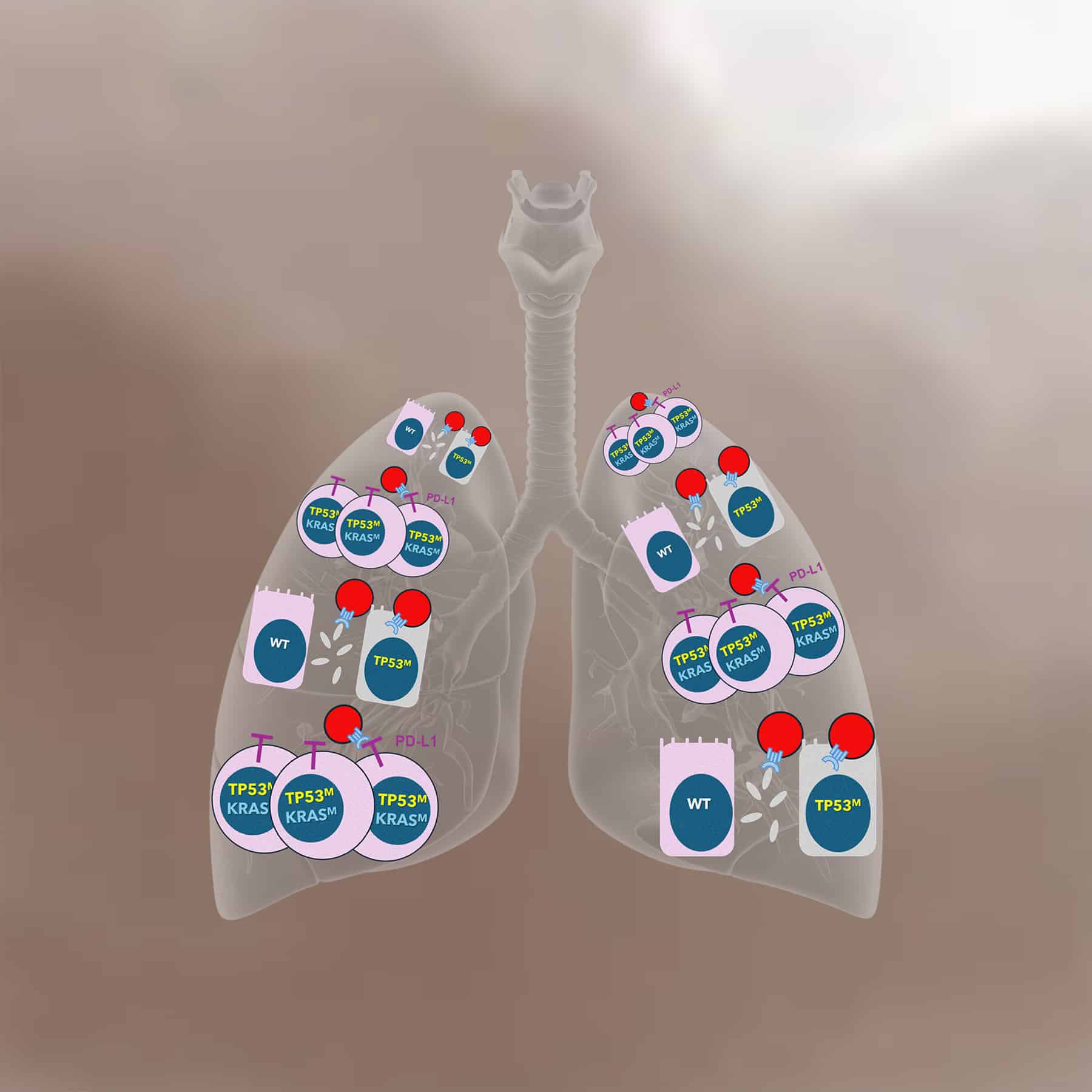
The purpose of this study was to better characterize the prevalence and size distributions of TP53-mutated preneoplastic colonies in relation to the risk for lung cancer and chronic obstructive pulmonary disease (COPD). Ultrasensitive next-generation sequencing was used to assess colonies comprising as few as 100 cells in airway epithelium. Specimens from 59 subjects with a heavy smoking history were assessed in four cohorts: lung cancer with (n = 14) or without COPD (n = 16) and non–lung cancer with (n = 7) or without COPD (n = 22). TP53-mutated preneoplastic colony prevalence was higher in lung cancer subjects with or without COPD and in COPD subjects without lung cancer (P < 0.01). A higher prevalence of colonies driven by the subset of TP53 mutations known to be neoantigenic in cancer tissue was nominally significant (P < 0.05). TP53-mutated colony distributions skewed to larger sizes among lung cancer subjects and skewed greater among subjects with both COPD and active cigarette smoking (P < 0.01), each of which is associated with adaptive immune inflammation. Thus, TP53-mutated colony prevalence and size distribution measured in nonmalignant airway epithelium improved characterization of lung cancer and COPD risk. Further, these colonies may stimulate the adaptive immune response and inflammation that is mechanistically associated with COPD. A skew to larger colonies is consistent with selection for immune surveillance avoidance characteristics and may provide a metric for both lung cancer risk and immune surveillance function. Among healthier non-COPD smokers who are ineligible for lung cancer screening based on demographic criteria, a positive TP53 biomarker test may identify lung cancer risk sufficiently high to warrant screening eligibility.
Prevention Relevance: TP53-mutated colony prevalence and size distribution measured in nonmalignant airway epithelium improved characterization of lung cancer and COPD risk. The observed skew to larger colonies in lung cancer subjects is consistent with selection for immune surveillance avoidance and may enable measurement of immune surveillance function to guide the development of prevention therapeutics.
This article was featured on the cover of the November issue.
Journal: Cancer Research (November 1 issue)
Matrix Stiffness–Encoded Mechanical Memory Maintains Proliferative Dominance in Metastatic Tumors
Primary and metastatic lesions share similar biological properties despite existing in different microenvironments. A better understanding of the mechanisms underlying the maintenance of phenotypic homogeneity in heterogeneous microenvironments could help identify strategies for suppressing metastasis. In this study, we found that mechanical memory enabled tumor cells to resist biomechanical stress and sustain malignant traits. Matrix stiffness activated the RhoA–ROCK1 signaling pathway, leading to actin cytoskeletal remodeling and suppression of mitochondrial fission. The dysregulation of mitochondrial dynamics enhanced fatty acid β-oxidation, leading to the accumulation of acetyl coenzyme A and subsequent histone hyperacetylation. The stiffness-mediated epigenetic reprogramming was mitotically heritable, allowing progeny cells to retain a proliferative advantage after detachment from stiff environments. Inhibition of RhoA–ROCK1 disrupted mechanical memory, thereby reducing metastasis. These findings suggest that targeting mechanical memory may be a strategy for preventing metastasis.
Significance: Matrix stiffness induces metabolic and epigenetic rewiring that creates a lasting memory in cancer cells that supports metastasis, revealing mechanical memory as a potential target for metastasis prevention.
A related commentary was published in the November 1 issue.
Journal: Cancer Research (November 15 issue)

High levels of immune suppression are a common intrinsic mechanism of resistance in metastatic breast cancer that calls for developing immunotherapeutic combinations to broaden treatment responses. Histone deacetylase (HDAC) inhibitors can sensitize tumors to dual checkpoint inhibition in patients. Here, we investigated the tumor microenvironment (TME) of breast metastases by combining experimental and clinical data with theory to elucidate the mechanism of response to treatment with the HDAC inhibitor entinostat combined with anti–PD-1 and anti–CTLA-4. Knowledge-guided subclustering of single-cell RNA-sequencing (scRNA-seq) data and cell circuit analyses from murine breast-to-lung metastases identified 39 cell states and salient interactions, of which myeloid, T-cell, and B-cell subpopulations were most affected. Analyses of patient biopsy specimens and blood via spatial proteomics and flow cytometry corroborated the preclinical findings, showing increased T- and B-cell activation, mature tertiary lymphoid structures, and increased CD8+ T cell–macrophage distances in responders to entinostat + nivolumab + ipilimumab. Combination treatment increased immunoglobulin production in patients and mice, and murine studies demonstrated increased tumor-targeting IgG and implicated B cells as necessary for treatment response. Inhibition of the intercellular adhesion molecule 1 and IFNγ pathways in myeloid cells partially recapitulated treatment effects on CD8+ T cells observed via scRNA-seq. Mathematical modeling of tumor-immune dynamics implicated simultaneous modulation of multiple TME interactions as required for response to the combination treatment. Overall, this study identifies lymphoid and myeloid cell contributions to response to treatment with HDAC inhibitors and immune checkpoint blockade, providing a framework for discovering interactions driving responses in complex TMEs.
Significance: Integrative data analysis and mathematical modeling reveal immune interactions that sensitize the metastatic tumor microenvironment to checkpoint inhibition, validating the potential of cancer systems immunology approaches to uncover mechanisms of immunotherapeutic response.
This article was featured on the cover of the November 15 issue, where a related commentary was also published.
Journal: Clinical Cancer Research (November 1 issue)
Purpose: In locally advanced resectable squamous cell carcinoma of the head and neck (SCCHN), patients treated with neoadjuvant chemotherapy with major pathologic response (MPR) or pathologic complete response (pCR) have overall survival (OS) rates superior to those of patients with poorer pathologic responses. To improve efficacy, we added the PD-1 inhibitor nivolumab to neoadjuvant chemotherapy and evaluated the combination.
Patients and Methods: In this single-arm, open-label phase II trial, patients with newly diagnosed stage III to IV human papillomavirus (HPV)–negative SCCHN in the oral cavity, oropharynx, hypopharynx, and larynx or stage II to III HPV-positive oropharyngeal SCCHN received neoadjuvant carboplatin and paclitaxel (6 weeks) plus nivolumab (every other week), followed by surgery and adjuvant radiotherapy ± chemotherapy. The primary endpoint was pCR at the primary site.
Results: Thirty-four patients were enrolled and received neoadjuvant therapy. Thirty-three patients received surgery (R0 resection = 100%). Disease sites included the oral cavity (79%), oropharynx (12%), hypopharynx (6%), and larynx (3%). Twenty-eight (85%) patients had stage IVA disease. The median postsurgical follow-up was 35.3 months. Fourteen (41%) patients had grade 3/4 treatment-related adverse events. Twenty-seven (82%) patients completed all cycles of neoadjuvant therapy. Twenty-four (73%) patients had at least an MPR at the primary site, and 15 (45%) had a pCR. In an unplanned analysis at 3 years, recurrence-free survival and OS were 74% and 83%, respectively.
Conclusions: This phase II trial of neoadjuvant nivolumab plus carboplatin and paclitaxel in previously untreated, locally advanced, resectable SCCHN was well tolerated and reached its primary endpoint of pCR at the primary site. A phase III confirmatory study is warranted in advanced-stage, resectable HPV-negative SCCHN.
A related commentary was published in the November 1 issue.
Learn more about how giving immunotherapy before and after surgery is changing treatment for head and neck cancer: Pembrolizumab’s Perioperative Power in Head and Neck Cancer
Journal: Clinical Cancer Research (November 15 issue)
Purpose: Neoadjuvant chemoimmunotherapy improves outcomes in resectable non–small cell lung cancer (NSCLC), yet the spatial immune features associated with treatment response remain unclear.
Patients and Methods: In this single-arm phase II trial (NCT05383716), patients with resectable NSCLC received neoadjuvant pembrolizumab plus platinum-based chemotherapy, followed by surgery and adjuvant immunotherapy. The primary endpoint was major pathologic response (MPR). Digital spatial profiling was performed on resected tumors and paired draining lymph nodes from 22 patients, with additional tumor samples collected for validation.
Results: Among 80 enrolled patients, 55 underwent surgery, achieving an MPR rate of 37.5% and a pathologic complete response rate of 26.3%. Grade 3 to 4 treatment-related adverse events occurred in 26.3% of patients. Spatial transcriptomics showed that MPR tumors were enriched for T- and B-cell activation pathways and infiltration of CD8+ T cells, B cells, plasma cells, and T follicular helper cells, whereas non-MPR tumors exhibited stress adaptation and immune suppression signatures. Two immune phenotypes were identified within MPR samples: myeloid-enriched (ME) and lymphoid-enriched (LE) subtypes. The LE subtype was associated with improved response and survival in validation cohorts, whereas higher ME scores showed a trend toward poorer survival. An 18-gene LE signature was developed as a potential biomarker for adjuvant immunotherapy benefit.
Conclusions: Neoadjuvant pembrolizumab plus chemotherapy demonstrated encouraging efficacy and manageable safety in resectable NSCLC. Spatial profiling identified distinct immune phenotypes associated with response and may inform patient stratification for adjuvant therapy.
A related commentary was published in the November 15 issue.
Journal: Molecular Cancer Research

Breast cancer metastasis remains the leading cause of disease-related mortality, yet the regulatory mechanisms enabling tumor cells to adapt to distant tissue environments remain poorly defined. In this study, we generated a multiomic resource integrating transcriptomic (RNA sequencing) and chromatin accessibility [Assay for Transposase-Accessible Chromatin using sequencing (ATAC-seq)] profiles from estrogen receptor–positive primary breast tumors and matched liver and lung metastases obtained from the same patients, including diagnostic and postmortem specimens. This design enabled direct intrapatient comparisons of primary and metastatic regulatory landscapes. We identified extensive reprogramming of chromatin accessibility and gene expression in metastatic lesions relative to primary tumors, indicating widespread regulatory remodeling. Peak-to-gene correlation analysis uncovered thousands of metastasis-associated enhancer–gene linkages, with metastatic samples exhibiting significantly increased enhancer connectivity. These rewired enhancer networks preferentially targeted clinically relevant genes, including receptor interacting serine/threonine kinase 4, inositol-3-phosphate synthase 1, and Ras-related protein Rab-3D, which were associated with three or more enhancers in metastases but not in primary tumors. Furthermore, ATAC-seq footprinting combined with gene expression analysis revealed distinct, tissue-specific transcription factor (TF) activity profiles in liver and lung metastases, including ESR1, that were not explained by TF expression levels alone. Together, these data provide a resource of metastasis-specific regulatory elements and their cognate TFs, revealing new regulatory vulnerabilities that may be therapeutically exploitable.
Implications: These findings support a model in which breast cancer metastasis is driven by enhancer regulatory reprogramming, allowing tumor cells to adapt to a variety of microenvironments.
This article was featured on the cover of the November issue, where it was highlighted.
Journal: Molecular Cancer Therapeutics
Tissue factor (TF) protein is involved in activating the extrinsic blood coagulation cascade. TF expression is normally anatomically limited to the perivascular space, but TF is overexpressed in many malignancies, including pancreatic, cervical, prostate, and head and neck cancers, which makes TF an ideal antibody–drug conjugate (ADC) target. The TF-ADC tisotumab vedotin is approved for cervical cancer treatment but induces substantial side effects including ocular toxicities, peripheral neuropathy, and bleeding, limiting its further clinical development and warranting optimized ADC design to improve the therapeutic window. ADCE-T02 is a novel TF-ADC comprising the monoclonal antibody Ab-T02 conjugated via a self-immolative linker to the topoisomerase 1 inhibitor exatecan at an average drug-to-antibody ratio of 4.5. In contrast to tisotumab, Ab-T02 does not inhibit coagulation factor X activation. ADCE-T02 binds TF with high affinity inducing ADC internalization, exatecan release, cancer cell death, and bystander cytotoxicity in vitro. In vivo, ADCE-T02 is highly efficacious across a range of cell line–derived and patient-derived xenograft models including hard-to-treat models with large tumors, resistance to standard of care, low and/or heterogeneous expression of TF, and multidrug resistance. Importantly, ADCE-T02 demonstrates favorable pharmacokinetic properties and is well tolerated in nonhuman primates and in contrast to tisotumab vedotin and other auristatin-based ADCs shows no evidence of ocular, skin, and lung toxicities; peripheral nerve damage; or bleeding. In summary, ADCE-T02 constitutes a novel TF-ADC with a much improved preclinical therapeutic window. Phase I clinical development of ADCE-T02 in patients with advanced solid tumors is ongoing (ClinicalTrials ID: NCT06597721).
This article was featured on the cover of the November issue, where it was highlighted.
Learn more about next-generation antibody-drug conjugates: Smart Chemotherapy Gets Smarter: Advances in Antibody-drug Conjugates
Journal: Cancer Research Communications
Endocrine therapy that inhibits estrogen receptor (ER)–mediated signaling is a cornerstone treatment for ER-positive breast cancer, a subtype that accounts for more than 75% of all breast cancer cases. However, resistance to endocrine therapy occurs in a significant proportion of patients, and hotspot missense point mutations of the ESR1 gene that codes for ERα are one of the major underlying mechanisms for such resistance. Although recent research has provided novel insights into the functions and activities of mutant ER, effective therapeutics that can overcome this mutant ER-mediated endocrine resistance remain elusive. Using a circulating tumor cell line derived from a patient with metastatic breast cancer and harboring the ESR1 Y537S mutation, together with genetically engineered breast cancer cell lines carrying the same mutation, we identified a novel enhancer region that is preferentially occupied by Y537S mutant ER. Deletion of this enhancer region reduced cell proliferation and adhesion in vitro, decreased tumorigenicity in vivo, and enhanced sensitivity to fulvestrant specifically in cells harboring the Y537S ER mutation. We subsequently identified insulin-like growth factor–binding protein 3 as a functional downstream target of this enhancer and validated its contribution to a subset of the phenotypes associated with the Y537S mutant ER.
Significance: Mutations in the ER can drive treatment resistance in advanced breast cancer. We identify a previously unrecognized DNA regulatory region that supports growth and drug resistance in tumors carrying the common Y537S mutation, revealing a new mechanism of resistance and a potential therapeutic vulnerability.