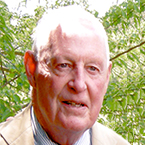
Bayard D. “Barney” Clarkson, MD, FAACR, a Past President of the American Association for Cancer Research (AACR) and a Fellow of the AACR Academy who pioneered the development of targeted therapies aimed at cancer stem cells, died December 30, 2025, at the age of 99.
Clarkson was deeply involved in the AACR and is the only individual to have ever held four major AACR leadership positions—President, Treasurer, member of the Board of Directors, and President and Founding Chairman of the Board of Trustees of the AACR Foundation, the AACR’s philanthropic arm.
“Barney was truly an icon in the field of cancer research and a deeply beloved colleague, mentor, and friend to me and to so many colleagues in the AACR community,” said Margaret Foti, PhD, MD (hc), chief executive officer of the AACR. “His legacy is characterized by the profound and enduring impact that he had on cancer research and on AACR. Through his pioneering research on cancer stem and progenitor cells, Barney helped advance discoveries in translational and clinical research that have improved the lives of countless cancer patients. Equally transformative was his visionary leadership of the AACR Foundation, which has strengthened and expanded the resources essential to accelerate our vital mission to prevent and cure all cancers. He will be remembered and profoundly missed not only for his expertise and scientific contributions, but also for his extraordinary leadership, wisdom, generosity of spirit, and commitment to excellence in everything he did throughout his long and productive life. Throughout his career in cancer research, he inspired the work of both senior and junior scientists. The world needs more people like him who are selfless and dedicated to the cause.”
Born in New York City in 1926, Clarkson graduated from Yale University and earned his medical degree from the Columbia University College of Physicians and Surgeons in 1952. In 1958, he completed a Lasker Fellowship in clinical chemotherapy at Memorial Hospital (which later merged with the Sloan-Kettering Institute to become Memorial Sloan Kettering Cancer Center).
He joined the faculty at Memorial Sloan Kettering in 1959 and stayed there for the remainder of his impressive career, serving for 19 years as Chief of the Hematology/Lymphoma Service; 10 years as Director of the Hematology and Medical Oncology Fellowship Training Program; and as Associate Chairman for Research in the Department of Medicine. He also held the Enid A. Haupt Chair of Therapeutic Research.
When Clarkson first arrived at what would become Memorial Sloan Kettering, he worked with three pioneers of chemotherapy—David Karnofsky, Cornelius Rhoads, and Joseph Burchenal—to develop early therapeutic regimens that proved effective for the treatment of acute leukemia. For more than 50 years, he studied the kinetics of cellular growth and the differentiation of normal, leukemic, and other cancer stem and progenitor cells with the goal of developing improved forms of treatment.
Clarkson is revered for his characterization of the intracellular signaling pathways altered by the BCR/ABL fusion gene, a primary genetic abnormality that promotes the onset of certain types of leukemia. His later work focused on elucidating the biology of quiescent cancer stem cells and defective quorum sensing and defining the obstacles that they present to curing cancer. Collectively, his robust research efforts resulted in more than 400 peer-reviewed, scholarly publications.
An AACR member since 1962, Clarkson served as a member of the Board of Directors from 1978-1981, AACR President in 1980-1981, and AACR Treasurer from 1994-2010. And, in 2000, he was the driving force behind the launch of the AACR Foundation, which supports the AACR’s mission to prevent and cure all forms of cancer. He served as the AACR Foundation’s first President and Founding Chairman of the Board of Trustees and continued to serve as President Emeritus of the Foundation until his death.
In 2007, the AACR Board of Directors honored Clarkson for his stellar contributions to cancer science and medicine by establishing the Bayard D. Clarkson Symposium, a symposium held annually during the AACR Annual Meeting that highlights impactful research involving stem cells and related areas of cancer research. He also received the 2012 AACR Distinguished Service Award. In 2013, he was elected to the inaugural class of Fellows of the AACR Academy for his major scientific contributions that have advanced scientific innovation and progress against cancer.
Clarkson also served as a member of the Board of Trustees of Cold Spring Harbor Laboratory from 1968-1992, and as President of the American Society of Clinical Oncology in 1973-1974. Additionally, since 1967, he served on the Board of Trustees of Clarkson University in Potsdam, New York, which was founded by his forebears.
In December 1943, Clarkson enlisted in the U.S. Navy’s aviation program. Having been judged ineligible for active military service in World War II because of a diagnosis of inactive tuberculosis, he then joined the American Field Service and drove ambulances for the British army in Italy and Germany, where he volunteered to assist in the evacuation of the concentration camp at Bergen-Belsen.
“Barney was a legend in cancer research, a respected leader at AACR, and a wonderful friend to us all,” said Dr. Foti. “AACR will be forever indebted to him for his brilliance and dedication to our organization.”
Career Highlights
2012 Distinguished Service Award, AACR
2001 Founder, President, AACR Foundation for the Prevention and Cure of Cancer
1994-2010 Treasurer, AACR
1980-1981 President, AACR
1978-1981 Board of Directors, AACR
1980 Enid A. Haupt Chair of Therapeutic Research
1977 Associate Chairman for Research, Department of Medicine, Memorial Hospital
1976 Director, Hematology and Medical Oncology Fellowship Training Program, Memorial Hospital
1975-1989 Chief, Hematology/Lymphoma Service, Memorial Hospital
1973 President, American Society of Clinical Oncology
1970 Chief, Hematology Service, Memorial Hospital
1968-1992 Trustee, Cold Spring Harbor Laboratory
1958 Lasker Fellowship, Clinical Chemotherapy, Memorial Hospital
1952 MD, Columbia University College of Physicians and Surgeons