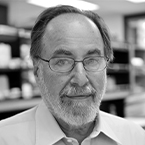
David Baltimore, PhD, FAACR, a Fellow of the AACR Academy and a towering figure in modern biology whose insights reshaped cancer research and biomedical science, died on September 6, 2025, at the age of 87.
Baltimore’s career was defined by transformative discoveries. In 1975, he was awarded the Nobel Prize in Physiology or Medicine, alongside Renato Dulbecco and Howard Temin, for elucidating how tumor viruses interact with the genetic material of the cell. His discovery of reverse transcriptase overturned one of the central dogmas of molecular biology by showing that genetic information could flow from RNA back to DNA. This single revelation opened countless new frontiers in virology, immunology, oncology, and genetics, laying the foundation for decades of scientific advances influencing the fundamental understanding of retroviruses such as HIV, and driving the development of modern gene therapies and mRNA-based technologies.
Following his groundbreaking work in virology, Baltimore expanded his focus to the immune system, pioneering research on how mammalian immunity can be harnessed to combat cancer. His quintessential vision and curiosity fueled entire fields of inquiry, and his scholarship bridged basic science with clinical potential.
Born in New York City in 1938, Baltimore earned his undergraduate degree from Swarthmore College and a doctorate from Rockefeller University in 1964. His early independent research at the Massachusetts Institute of Technology (MIT) and the Salk Institute quickly established him as one of the most original scientific thinkers of his generation. At just 30 years old, he became an associate professor at MIT, where he would spend much of his career shaping both science and the careers of a plethora of researchers who would subsequently establish themselves as leaders in the global cancer research community.
Baltimore served in distinguished leadership roles throughout his storied career, including as president of Rockefeller University and later of the California Institute of Technology (Caltech), where he guided the institution through a decade of growth and scientific excellence. At Caltech, he held the Robert Andrews Millikan Professorship of Biology, and later the Judge Shirley Hufstedler Professorship of Biology, titles that underscored his standing as both a scientist and mentor with an enduring legacy.
Beyond the laboratory and university walls, Baltimore’s voice carried weight in national and international science policy forums. He was a leading advocate for federal investment in AIDS research, co-chaired the National Academy of Sciences Committee on a National Strategy for AIDS in 1986, and led the NIH AIDS Vaccine Research Committee a decade later. He also played an active role in shaping consensus guidelines on genetic engineering, thereby ensuring that scientific innovation proceeded with ethical responsibility.
Throughout his lifetime, Baltimore received innumerable honors, including election to the National Academy of Sciences, the Institute of Medicine, and the American Academy of Arts and Sciences. He was recognized with the National Medal of Science, the AMA Scientific Achievement Award, and the Lasker-Koshland Special Achievement Award in Medical Science. He also served as president of the American Association for the Advancement of Science and was elected to the inaugural class of Fellows of the AACR Academy in 2013.
Perhaps as significant as his discoveries, was Baltimore’s role as a mentor. He trained and inspired generations of scientists who themselves went on to make landmark contributions in cancer biology, immunology, and virology. Many of his mentees later achieved the highest levels of recognition in the field, including election as Fellows of the AACR Academy. His intellectual generosity and willingness to champion young investigators created a legacy of discovery that continues to reverberate to this day and will help to advance future researchers in the years to come.
David Baltimore’s life was one of restless inquiry, bold imagination, and unwavering dedication to science. His revolutionary discoveries continue to transform cancer medicine and deepen our understanding of life itself. The cancer research community—and indeed, all of biomedical science—mourns the loss of one of its most visionary and impactful leaders.
Leave your remembrance of Dr. Baltimore below (limit 1,000 characters).
A pillar of 20th- and 21st-century science. Irreplaceable loss to the entire scientific community. His vision and the ability to identify most important scientific questions and solve them were remarkable. Personally, I feel blessed to be his mentee.
Dr. David Baltimore was an inspiration whose discoveries forever changed how we understand life and disease. His work on reverse transcriptase reshaped medicine, but it was his vision, mentorship, and advocacy that truly touched so many. He inspired generations of scientists to pursue knowledge with courage and purpose. His legacy will endure in the lives saved, the minds shaped, and the hope he gave to science and humanity.
I may not have had the opportunity to meet him in person, but his contributions to science have laid a strong foundation for my studies as a graduate student in Cancer Research and Molecular Biology from Nigeria. I have read about his great works in various books, and while it saddens me to learn of his passing, I am grateful for the lasting impact he has had on the field of Molecular Biology.
David Baltimore, PhD. will never be forgotten, and his work will continue to speak highly of him for decades to come.
My condolences to the family.