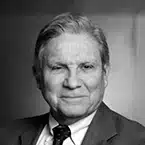
Pelayo Correa, MD, FAACR, a longtime AACR member and Fellow of the AACR Academy whose work defining the histological stages of the development of gastric cancer fundamentally advanced our understanding of the pathology, epidemiology, and prevention of the disease, died November 20, 2025, at the age of 98.
Beginning in 1975, Correa proposed a model of gastric carcinogenesis in humans in which disease progressed in several identifiable stages. Later, he linked it to Helicobacter pylori infection in many cases. The model and its stages, known as Correa’s cascade, are frequently referenced in describing the disease.
Born in Sonson, Colombia, in 1927, Correa received his medical degree from the University of Antioquia in Medellin, Colombia, in 1949 and completed an internship there. He completed a residency in pathology at Emory University School of Medicine and Grady Hospital in Atlanta in 1954. He then served as chair of pathology and associate dean at the University of Valle School of Medicine in Cali, Colombia.
Correa was a visiting scientist at the National Cancer Institute, Bethesda, Maryland, from 1970 to 1973, and professor of pathology at Louisiana State University from 1974 to 2005. He moved to the Vanderbilt University Medical Center and served there until his retirement in 2015.
Correa became an AACR member in 1980. He was the founding editor-in-chief of the AACR journal Cancer Epidemiology, Biomarkers & Prevention from 1991 to 1997. He received the AACR-American Cancer Society Award for Research Excellence in Cancer Epidemiology and Prevention in 1992. He also received the AACR-Minorities in Cancer Research Jane Cooke Wright Memorial Lectureship in 2012 and the American Gastroenterological Association Distinguished Achievement Award in 2013. In 2025, he was elected as a Fellow of the AACR Academy.
He founded the Cancer Registry in Cali, Colombia, the first population-based registry in Latin America, and helped develop the SEER Louisiana Tumor Registry in New Orleans. He also served as president of the International Association of Cancer Registries from 1979 to1983 and as president of the Association of Latin American Pathologists from 1980-1981.
Leave your remembrance of Dr. Correa below (limit 1,000 characters).
I had the fortune and privilege of having Pelayo Correa as a professor and mentor during my medical studies at the Universidad del Valle in Cali, Colombia.
As a medical student, I participated in the collection of data for the population-based Cali Cancer Registry, which he founded, and conducted my first research studies on gastric and lung cancer under his supervision.
When he moved to the US in 1970, I continued my research career at the International Agency for Research on Cancer (IARC) in Lyon, France. I kept in touch until recently, when we both were elected Doctor Honoris Causa of the Universidad del Valle and Fellows of the AACR Academy. s
I was fortunate and privileged to have Pelayo Correa as my mentor at the Medical School of the Universidad del Valle in Cali, Colombia. He was a pathologist and self-made epidemiologist who made significant contributions to gastric carcinogenesis and to the control of gastric cancer. As founder of the first population-based cancer Registry in Colombia, he pioneered population-based cancer surveillance in Latin America.
We lost an eminent researcher, an exemplary mentor, and a great human being deeply committed to public health, but his legacy will endure in the numerous students and colleagues he mentored worldwide, and who will discover in epidemiology the same passion he found.
El Dr. Pelayo Correa, fue clínico, científico y epidemiólogo. Su curiosidad y búsqueda de explicaciones a la tremenda disparidad geográfica del cáncer de estómago, lo llevó a incorporar la historia de las comunidades y su origen. Mostrando cómo la salud del humano, y este cáncer en particular, no es sólo resultado del ambiente social y genético sino también la composición de la familia microbiana que el individuo adquiere desde el nacimiento. Fue un Maestro, no sólo por enseñarnos a mantener la curiosidad toda la vida, sino también por su alegría y acogida a los que nos íbamos incorporando a sus temas. Gran modelo para esta epidemióloga de Chile.
Professor Pelayo Correa leaves an enduring legacy in Colombia and in all of us who had the privilege of learning from him. I am deeply grateful for his vision in founding the Department of Pathology at Universidad del Valle and, especially, the Cali Cancer Registry—true pillars that transformed cancer epidemiology in Latin America. The Andean communities of Colombia will always remember, and greatly miss, his annual visits, where his enthusiasm, warmth, and guidance strengthened the fieldwork of the program he loved so much. We are profoundly proud that he is our Doctor Honoris Causa, a distinction that reflects both his scientific excellence and his permanent place in our academic community. Thank you, Professor Correa, for your wisdom, your humanity, and for lighting the path of our scientific journey.
Pelayo showed up at my office one day in the 1970s and we became friends forever.
We collaborated on his studies on gastric cancer, and I visited him many times in New Orleans and Colombia. It was research that brought us together, but friendship was the cement for almost a lifetime. will miss him very much.